
Dancers don’t usually break down in the studio. They break down in the gap between what the choreography asks for and what the supporting structures underneath it can hold. That gap is exactly where Pilates earns its place in a dancer’s week — building strength that protects the joints instead of just adding more output on top of an already overworked system. If you’re training along the Wasatch Front, rehearsing in Salt Lake City and driving home to Sandy or Draper with one hip that’s been talking to you for three weeks, this is the conversation worth having.
Why extra strength work isn’t the same as more dancing
Here’s the short version: dance trains range, speed and expression at the edge of what a joint can do. Pilates trains the control that owns that range. A dancer who adds reformer work isn’t getting “more conditioning” — they’re getting load placed on tissues that dance rarely loads directly, in positions dance rarely visits, at speeds slow enough that the small stabilizers have to participate instead of being outrun by momentum.
That distinction matters because the classic dancer injuries aren’t strength failures in the big movers. They’re control failures at end range, under fatigue, on one leg.
What dance loads constantly — and what it skips

Dance training is beautifully thorough in some directions and almost silent in others. The pattern repeats across styles — ballet, contemporary, competition jazz, company work, drill team.
| Heavily trained in dance | Often under-trained |
|---|---|
| Plantarflexion — rising, pointing, pushing off | Eccentric control coming down from relevé |
| External rotation held actively | Internal rotation strength and range |
| Hip flexion to high ranges | Posterior chain strength at low hip angles |
| Spinal extension and side bend | Loaded spinal flexion and anti-rotation |
| Single-leg balance, static | Single-leg load with the pelvis under tension |
| Upper back lift and carriage | Scapular control under pushing load |
Nothing on the right-hand column is exotic. It’s just that dance class doesn’t have time for it, and most dancers assume their legs are already strong enough. Strength is directional. A body can be extraordinarily strong in the exact shapes it rehearses and genuinely fragile two degrees outside of them.
How reformer work targets the structures dancers actually stress
The reformer is useful here for a mechanical reason: the carriage moves on springs, so load can be placed in directions a floor can’t provide. You can load a dancer in supine, in side-lying, in kneeling, on one foot, in positions where the pelvis is supported and the leg has to work without the usual compensations available.
A few things I look for and cue with dancers specifically:
- Who initiates the push. In footwork, the springs resist you as the carriage travels away from the footbar — heavier springs mean more load through the legs. I’m watching whether the push starts at the foot and travels up through a stable pelvis, or whether the lower back arches a half second before the carriage moves. That half second is the whole lesson.
- Whether rotation is coming from the hip or the knee. A dancer with limited hip external rotation will find it somewhere. Usually the tibia, sometimes the foot rolling in. On the reformer I can set the feet, reduce the spring, and ask the question again with fewer places to hide.
- The return, not the press. Coming back in — letting the springs recoil — is where eccentric control lives. Dancers are often magnificent on the way out and let the carriage slam on the way home. Landing from a jump is the same skill.
- Ribs over pelvis. Extension-dominant training can leave the front of the ribcage flared open. On a lighter spring in a long-lever position, that flare becomes obvious immediately, because the abdominal wall has nothing to brace against and the lumbar spine takes the line of pull.
A lighter spring is less load but less stability — which often makes it the harder setting for control, not the easier one. That’s a tool, not a consolation prize. For a dancer with plenty of raw strength, dropping the spring is frequently the more honest progression.
Strength training for dancers and the question of bulk
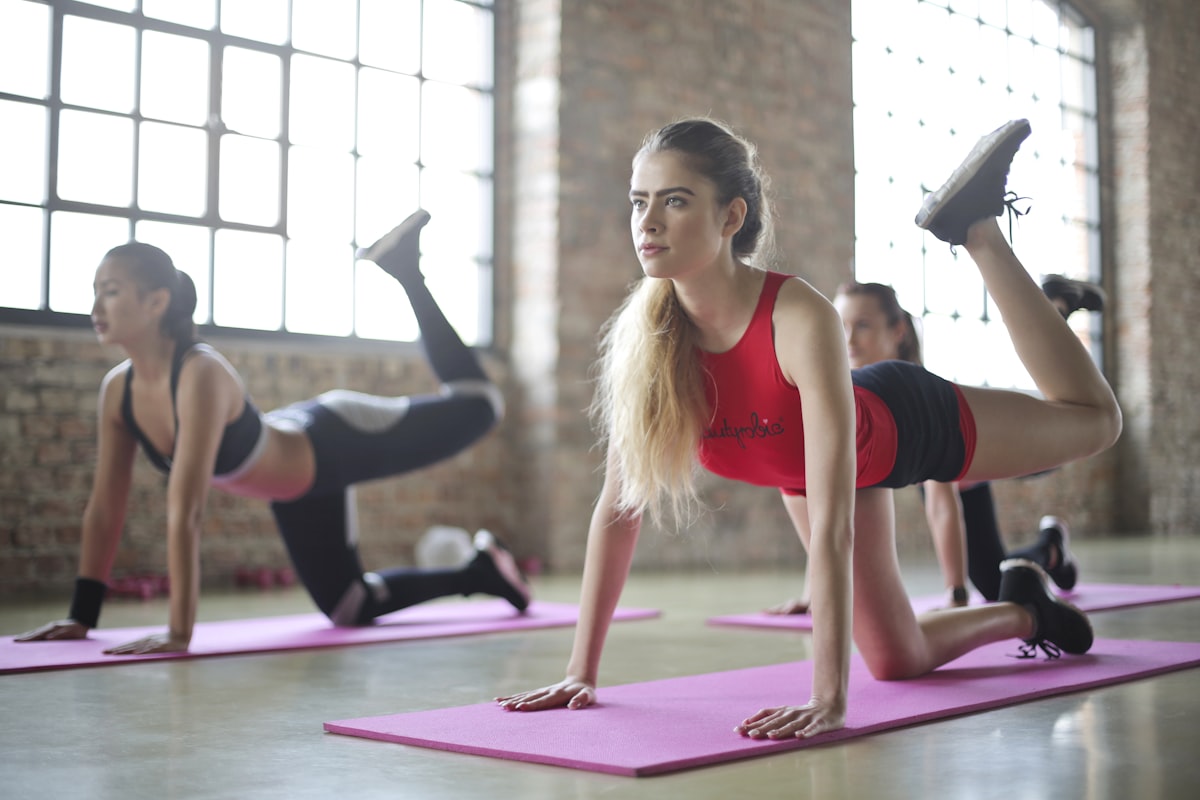
I want to be honest about something, because it gets oversold in Pilates marketing: Pilates does not “lengthen muscles.” Muscle length is governed by where the tendon attaches and how the nervous system permits range. What Pilates does well is build strength through range and improve the control that lets your nervous system allow more range safely. That’s a real mechanism and it’s worth a lot. It just isn’t magic, and it isn’t anti-hypertrophy.
It’s also worth saying that barbell work, plyometrics and traditional resistance training are excellent for dancers — particularly for tendon resilience and jump capacity. Pilates isn’t a replacement for loading heavy if that’s what your body or your company needs. If you’re weighing options, I wrote a longer comparison of reformer work versus the gym that lays out where each one genuinely wins. The best answer for most serious dancers is both, sequenced intelligently.
Where Pilates tends to be uniquely valuable is in the weeks when heavy loading isn’t appropriate — in-season, mid-rehearsal-block, or while something is cranky. Spring resistance is adjustable in small increments and the supported positions mean you can keep training the pattern without feeding the irritation.
Injury prevention for dancers: what the work actually addresses
I’ll be careful with language here. Nothing prevents injury outright. Dance involves high-velocity, end-range, single-leg loading — risk is structural to the art form. What conditioning can do is change the margin: improve how much load tissue tolerates, how well you control deceleration, and how quickly you notice something drifting.
The mechanisms worth naming:
- Hip control and the pelvis. Much of what gets labeled “hip flexor pain” in dancers is a control problem at the front of the hip under repeated high flexion, where the deep stabilizers aren’t holding the femoral head centered. Side-lying and supine reformer work lets you load those positions with the trunk supported.
- Foot and ankle load tolerance. The intrinsic muscles of the foot do real work, and a footbar lets you load them through a controlled range with the body’s weight taken out of the equation. Slow, deliberate articulation is the goal — not more reps.
- Rotational and anti-rotational trunk strength. Partnering, floorwork and quick directional change all demand that the trunk resist twist. Dance class trains the twist. Less often the resisting of it.
- Eccentric capacity. Landing, lowering, catching. Tendons tolerate eccentric load specifically, and it has to be trained specifically.
- Asymmetry awareness. Most dancers have a preferred side. Reformer work makes left-right difference obvious because the spring doesn’t flatter you — the carriage either travels evenly or it doesn’t.
Fitting conditioning around a rehearsal schedule
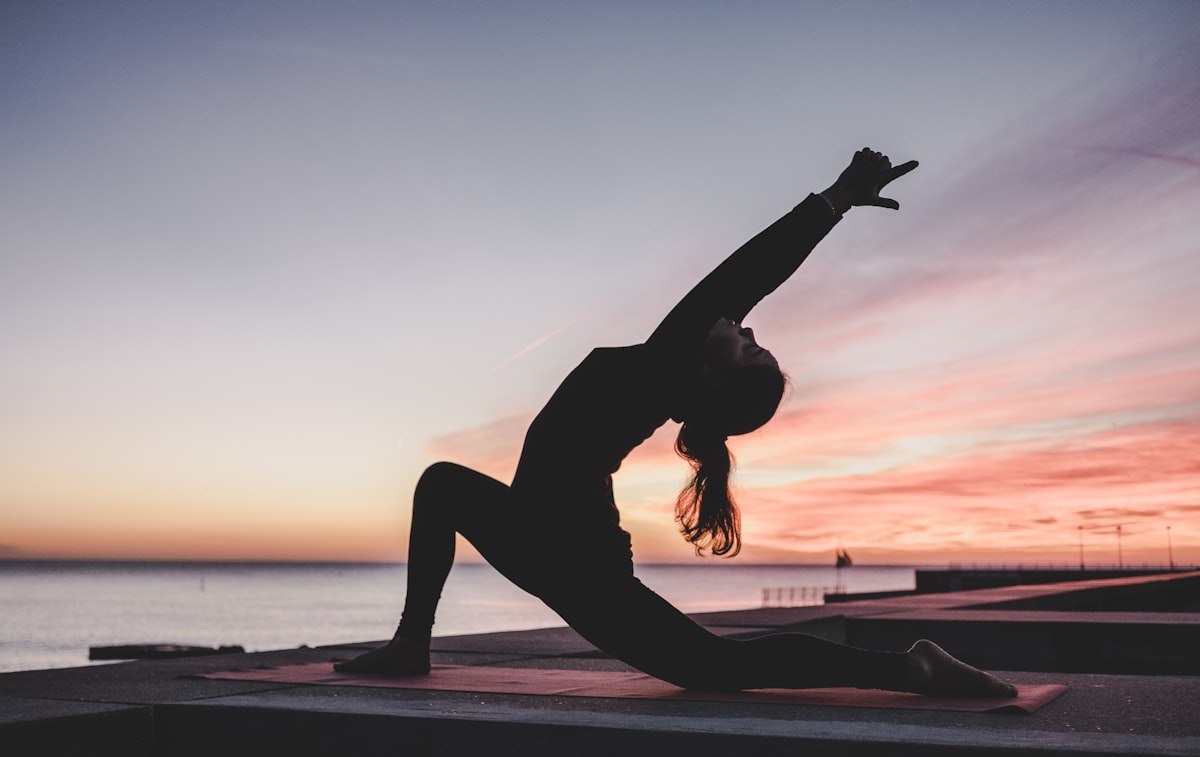
If you’re dancing five or six days a week — whether that’s a company contract, a competition season in Utah County, or a university program — the real constraint isn’t motivation. It’s recovery. Adding a hard conditioning session on top of a full technique day is how dancers get hurt, not how they stay healthy.
Some principles I’d hold to:
- Heavier, more demanding work belongs on lighter dance days or further from performance.
- In-season, the goal is maintenance and control, not progression. You’re keeping the pattern alive, not chasing PRs.
- Off-season is where you build. That’s the window for genuine strength gains, more load, and attacking the directions dance ignores.
- Something short and consistent beats something long and sporadic. Three focused sessions a month that you actually do are worth more than a plan you abandon in week two.
If you want a sense of what the work looks like in practice, the class formats page lays out the different kinds of sessions. One-on-one work tends to suit dancers best early on, simply because the asymmetries and rotation habits are specific enough that a group setting can’t fully address them. But that depends entirely on what you’re working with.
What to bring to a first session
If you’ve been seeing a physical therapist, athletic trainer or doctor, bring what they told you — the diagnosis if there is one, the movements they’ve asked you to avoid, the timeline. That information changes how I set springs and what I program, and it’s much more useful than a general “my hip has been bothering me.”
Also bring honesty about your week. A dancer who tells me they have three rehearsals and a performance in the next five days is going to get a very different session than one in an off-week. I’d rather adjust the plan than find out afterward.
And if you’re not sure whether this is the right fit — maybe you’re a parent asking on behalf of a dancer, or you’re returning from a long layoff — just get in touch and tell me what’s going on. I’d rather have that conversation first than guess.
Where strength work for dancers pays off over a season
The dancers who stay in the work long-term tend not to be the ones with the most spectacular extension. They’re the ones whose bodies can absorb a hard week and still show up Monday. Building strength that holds up under dance’s demands — and reducing the injury risk that comes with end-range, single-leg loading — is slow, unglamorous, and the most reliable investment a dancer makes. If that’s the season you’re in, ask about openings and we’ll talk through what makes sense for your schedule and your body.
— Bianca
How often should a dancer do Pilates?
It depends almost entirely on your dance load. In a heavy rehearsal or performance block, one or two shorter, control-focused sessions a week is usually sustainable without cutting into recovery. In the off-season, there’s room for more volume and heavier load because the nervous system isn’t already spent. Consistency over months matters far more than frequency in any single week.
Will Pilates make me bulky or affect my line?
Pilates is unlikely to produce significant hypertrophy at typical volumes, but that’s a function of load and reps rather than anything special about the method. What it tends to improve is control through range, which most dancers find supports their line rather than compromising it. If you’re specifically worried about size, that’s a programming conversation worth having directly.
Can Pilates help with a dance injury I already have?
Pilates is conditioning, not medical treatment, and it doesn’t replace assessment by a physical therapist or physician. If you’ve already been evaluated and cleared for movement, reformer work can be genuinely useful because spring load is adjustable in small increments and positions are supported. Bring what your clinician told you about restrictions and timelines so the session can be built around it.
Is mat or reformer Pilates better for dancers?
Both have real value, but the reformer offers something mat can’t: external resistance in directions and positions the floor doesn’t allow, including supported single-leg and side-lying loading. That matters for dancers because so much of the under-trained work happens in those positions. Mat work is excellent for body awareness and is easier to do consistently at home.
I’m a dancer in Park City with a long commute — is it worth it?
That’s a logistics question only you can answer, but consistency beats intensity, so a plan you can actually keep is the right plan. Some people combine in-person sessions with online programming to stay consistent between visits. Reach out and tell me what your week looks like, and I’ll be straight with you about whether it makes sense.

Bianca is the founder and lead instructor at Alchemize Pilates, a boutique reformer studio in Utah. She’s a certified reformer Pilates instructor who teaches small-group classes, one-on-one sessions and online programs. Read more about why she started Alchemize.
Keep reading
- Pilates for Snowboarders: Injury Prevention in Utah
- Pilates for Injury Recovery Utah
- Pilates for Rotator Cuff Injury Prevention and Rehab
- Pilates to Prevent Snow Shoveling Back Pain in Utah
- Reformer Pilates for strength: serving Utah women
- Pilates for Runners: Prevent and Heal Shin Splints
- Pilates for Triathletes: Build Unstoppable Endurance
Leave a Reply