
People ask me all the time why I keep my roster short. The honest answer is that the benefits of small class size Pilates vs large studio settings show up in the body faster than almost anything else I can control as a teacher. I can see your shoulder drifting. I can hear your breath change. In a room of twenty reformers along the Wasatch Front, I would be teaching choreography. In a small room, I’m teaching you.
The Short Answer: Why Small Class Size Pilates Beats a Large Studio for Most People
The benefits of small class size Pilates vs large studio classes come down to attention. In a small group, the instructor can see and correct every body, adjust springs and load for individual needs, and progress you at your own pace. Large studios offer more schedule options and lower per-class cost, but movement quality, hands-on cueing, and injury-aware modifications almost always improve as the room gets smaller.
That’s the compressed version. But I want to give you the honest, longer one — including the times a big studio is genuinely the better call. I’ve taught in both. They are different products wearing the same word.

What Actually Changes When the Room Gets Smaller
Reformer Pilates is a precision practice. Joseph Pilates developed the method in the 1920s, originally working with people one at a time — rehabilitating injured dancers and bedridden patients on spring-loaded apparatus he built himself. The system was never designed as a group aerobics format. It was designed as individualized corrective movement.
So what changes when you shrink the room?
- The instructor’s eyes. There’s a real limit to how many bodies a person can visually track through a moving exercise. Past a certain number, I’m scanning for safety, not for quality.
- Spring load becomes personal. In a large class, everyone gets the same spring call. In a small class, I can tell one client to drop a spring because her shoulder is compensating and tell another to add one because she’s flying through the range without control.
- Hands-on cueing becomes possible. A light touch on a rib cage does in two seconds what thirty seconds of verbal cueing can’t.
- You get asked questions. “How did that feel on the left side?” That question doesn’t get asked in a packed room. It’s the most useful question in Pilates.
- Progression is individual. Three people in the same exercise, three different variations, no one feels singled out.
Small Class Pilates vs Large Studio: An Honest Comparison
I’m not going to pretend big studios have no value. Here’s how I’d actually break it down for a friend deciding between the two.
| Factor | Small Class Pilates | Large Studio Class |
|---|---|---|
| Individual correction | Consistent, often hands-on | Occasional, mostly verbal |
| Injury & limitation support | Modifications built in per person | Generalized options offered to the room |
| Pace of learning form | Faster — errors caught early | Slower — habits can set in unnoticed |
| Schedule flexibility | More limited | Usually broader |
| Cost per class | Typically higher | Typically lower |
| Energy & anonymity | Intimate, accountable | High-energy, easy to blend in |
| Best for | Beginners, rehab, form-focused practice | Experienced movers wanting volume & variety |
Notice that last row. If you already have five years of clean reformer technique in your body and you want a sweaty, music-driven hour three times a week, a large studio can absolutely serve you. Some of the best movers I know train that way. I’d never tell them they’re wrong.
But if you’re new, if you’re coming back from an injury, if you have a hip that’s been complaining since your last ski season in Park City — the math changes.
What I See in My Studio Along the Wasatch Front

Plenty of people come to reformer work after a big-room class. They’re not unhappy people. The thought that brings them is usually some version of this: “I liked it, but I never really knew if I was doing it right.”
That sentence is the whole argument.
I had a client — Cottonwood area, mid-forties, very fit, hiked constantly — who had done reformer classes for over a year before she found me. Strong. Coordinated. And gripping her neck through every single piece of abdominal work. Nobody had told her. Not because her old instructors were bad, but because from twelve feet away in a full room, her form looked fine. It wasn’t until she was three feet from me, second row, small group, that I could see her sternocleidomastoid firing like a rope every time she curled up.
Two weeks of specific cueing. Her chronic neck tension — the thing she’d assumed was just “her desk job” — dropped noticeably. That’s not magic. That’s proximity.
Most people don’t need harder exercises. They need someone close enough to notice what they’re doing with the ones they already have.
I see this with clients constantly: pelvic tilt drifting under fatigue, one foot loading heavier in footwork, a rib cage that flares on every overhead reach. These are small things. Small things repeated a hundred times per class become the reason your low back hurts.
More Benefits of Small Class Size Pilates vs Large Studio Training
Beyond form, there are a few advantages that people don’t anticipate until they’ve experienced them.
You stop hiding
In a room of twenty, you can coast. In a room of a few, you can’t — and that’s a gift. Accountability isn’t pressure. It’s just being seen. My clients work harder in a small group because someone is genuinely paying attention, and something in us rises to meet that.
The nervous system settles
Loud music, crowded floor space, unfamiliar bodies inches away — for some people that’s energizing. For others, particularly anyone dealing with anxiety, postpartum recovery, or chronic pain, it’s another stressor stacked on top of the day. Pilates works best when the nervous system isn’t in defense mode. A quieter room makes the breathwork actually land.
Progressions arrive at the right time
In a large studio, progression is scheduled — a “level 2” class exists on the timetable. In a small group, progression is observed. I add load when your body earns it, not when the calendar says so. That’s a fundamentally different relationship to your own strength.
Questions get answered
“Why does this one feel different on my right side?” “Should I be feeling this in my hamstring or my glute?” These are the questions that turn a workout into an education. You can see the specific formats I teach on my classes page, and reach out there for current availability.
When a Large Studio Might Genuinely Be Better for You
I promised honesty, so here it is. A big studio is likely the right choice if:
- Schedule is your primary constraint. If you can only train at 5:45 a.m. on alternating Thursdays, volume of class times matters more than group size.
- Budget is the deciding factor. Smaller groups cost more to run, and that’s reflected in pricing everywhere, not just here. Movement you can afford consistently beats movement you can only afford occasionally.
- You thrive on crowd energy. Some people genuinely move better with a packed room and loud music. Know yourself.
- You already have excellent technique. If your form is dialed in and you’re chasing conditioning volume, a bigger room serves you fine.
What I’d argue is this: even if a large studio is your long-term home, a stretch of small-group or private work early on pays for itself. Build the pattern correctly once. Then take it anywhere.
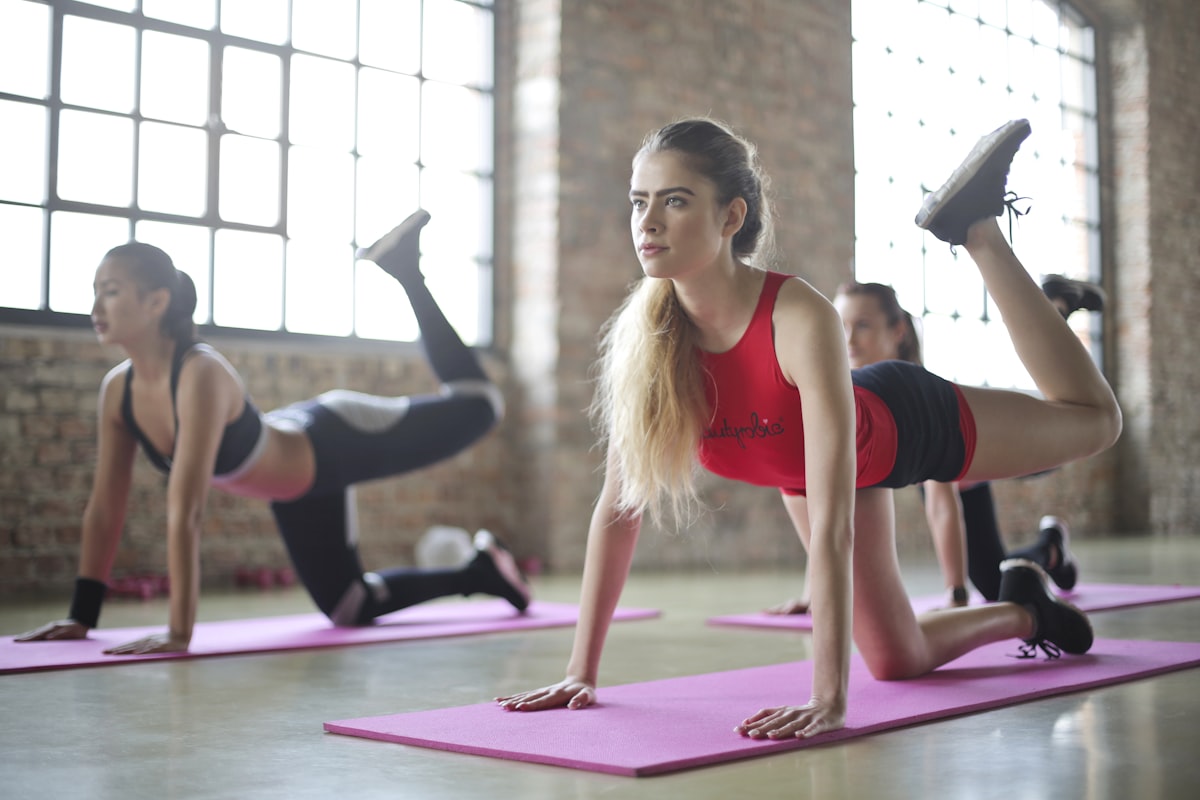
Why I Built Alchemize Around Small Groups
I’m a certified reformer Pilates instructor, and the decision to keep my classes small wasn’t a marketing strategy. It came from what I couldn’t do in bigger rooms. I’d leave a class knowing three people had needed a correction I never got to give. That accumulates. It felt like teaching around people instead of to them.
I’ve written more about that turning point in why I started Alchemize Pilates, and you can read a bit more about my background and approach on my about page.
Utah is a state full of people who move — skiers, climbers, trail runners, canyon hikers, people who spend all winter on the Cottonwood slopes and all summer chasing elevation. Those bodies come with specific asymmetries. A ski season leaves marks. So does a desk in a Lehi office park. Generic cueing doesn’t address either one.
How to Choose: Questions to Ask Before You Book Anywhere
Whether you end up with me or somewhere else entirely, ask these before your first class:
- How many reformers are in the room?
- Does the instructor offer hands-on adjustments?
- Is there an intake or conversation about injuries beforehand?
- Are modifications given by name, or just offered generally to the room?
- Can I be progressed individually, or does progression happen by class level?
A good studio of any size will answer these clearly and without defensiveness. If they can’t tell you how many people are in the room, that itself is information.
The Bottom Line on Small Class Size Pilates vs Large Studio
The benefits of small class size Pilates vs large studio training aren’t about exclusivity or atmosphere. They’re mechanical. Fewer bodies means more eyes on each one, more accurate spring loading, earlier correction of compensation patterns, and a practice built around your specific structure rather than the room’s average. Large studios have real strengths — access, affordability, energy — and I’d genuinely rather you move there than not move at all. But if you want your form to change, and your pain patterns to change with it, get in a smaller room. If you’re along the Wasatch Front and curious what that feels like, visit my classes page and reach out — we’ll find the right fit for where your body is right now.
Frequently Asked Questions
How many people is considered a “small” Pilates class?
There’s no industry standard, but generally a small group means the instructor can watch every person through a full exercise without turning away. Large reformer studios often run well over a dozen machines. When you’re comparing studios, ask directly how many reformers are in the room — the number tells you more than the marketing language does.
Is small group Pilates better than a private session?
Not better — different. A private gives you the most individualized attention possible, which is ideal for complex injuries or very specific goals. A small group gives you a strong share of that attention plus the accountability and rhythm of practicing alongside others. Many of my clients start with more one-on-one time and shift into small groups as their form stabilizes.
I’m a total beginner. Should I avoid large studios entirely?
Not necessarily, but I’d be cautious. Beginners are the group that benefits most from close correction, because you’re building the movement patterns you’ll repeat for years. If a large studio is your only option, look for a dedicated fundamentals or intro format and tell the instructor before class that it’s your first time.
Can small class Pilates help with an existing injury?
Pilates is often used as part of movement rehabilitation, and a smaller room makes it far easier for an instructor to modify around a limitation safely. That said, I’m not a medical provider. If you’re working with an injury, get clearance from your physician or physical therapist first, then tell me exactly what they said so I can teach within it.
Does small group Pilates cost more than a large studio class?
Smaller groups generally do cost more per session across the industry, simply because fewer people share the instructor’s hour. For current rates and availability at Alchemize, check the classes page or send me a message — I’d rather talk through what actually suits your goals than guess.
— Bianca

About Bianca
Bianca is a certified reformer Pilates instructor and the founder of Alchemize Pilates, a small-group studio serving clients across the Wasatch Front — from Salt Lake City and Cottonwood to Draper, Sandy, Lehi, and Utah County. She built Alchemize around small classes because she believes movement should be taught to people, not at them. Learn more about Bianca or read why she started Alchemize Pilates.
Leave a Reply