
Your quads do everything. That’s the short version of quad dominance. The front of your thigh has become the first responder for squatting, standing, climbing, hinging, and stepping — and the glutes, hamstrings and deep core that should be sharing that load have gone quiet. Not weak, necessarily. Just late.
Why the front of your thigh took over the job
Quad dominance is a sequencing problem before it’s a strength problem. In a healthy hip hinge or squat, the glutes and hamstrings initiate, the quads assist, and the trunk stays organized. In a quad-dominant pattern, that order flips. The knees drive forward, the pelvis stays tucked under, and the quadriceps absorb load that was meant to be distributed across the whole posterior chain.
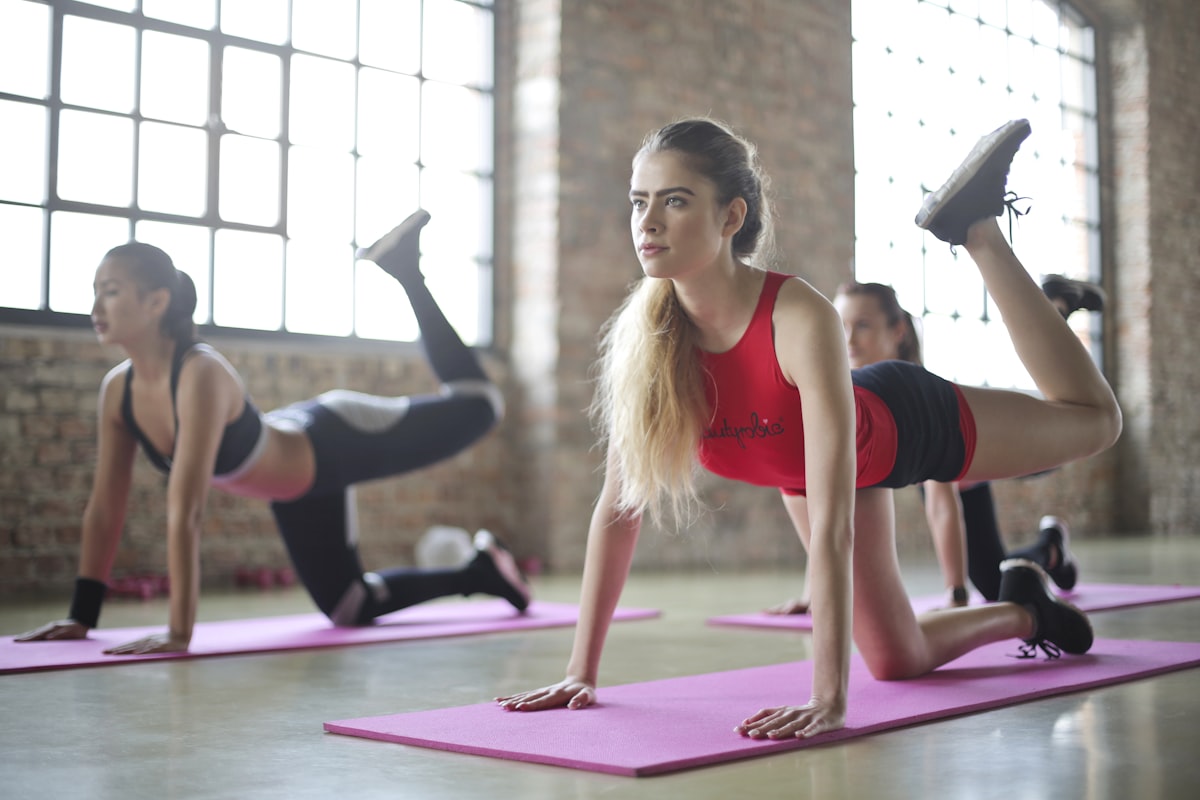
Pilates addresses quad dominance by slowing movement down until the sequence is visible, then loading the glutes and hamstrings in positions where the quads cannot easily take over — footwork on the reformer, bridging, hamstring curls, and standing lunge work with spring resistance. The goal isn’t weaker quads. It’s better timing.

The signs I look for before I call it quad dominance
I don’t diagnose. I’m a certified reformer Pilates instructor, not a clinician. But there are movement signatures I watch for, and they’re fairly consistent across bodies:
- The knees travel first. In a bridge or a squat, the knees shoot forward before the hips move back. The hinge never really happens.
- The front of the thigh fatigues before anything else. On reformer footwork, the burn arrives in the quads within the first few reps, and the glutes never report in at all.
- Cramping hamstrings in bridging. A hamstring that cramps the moment it’s asked to work is often a hamstring that hasn’t been asked in a long while.
- A posterior pelvic tilt that won’t release. Tucked pelvis, flat lumbar curve, glutes switched off at the one moment they’d be most useful.
- Heel lift. Weight migrating to the ball of the foot in a lunge or squat, which pulls the chain forward and hands the work back to the quads.
None of these is proof on its own. Ankle mobility, hip structure and plain old habit all play a part. But three or four of them together, and the pattern is usually worth working on.
What correcting a muscle imbalance actually looks like on the reformer
The reformer has one advantage here that’s hard to replicate: the carriage gives you feedback. If you push with the quads alone, the carriage leaves unevenly, it stutters, it lands hard on the return. You can hear your own imbalance.
Here’s how I think about the progression:
| Stage | What we’re after | How I’d know it’s working |
|---|---|---|
| 1. Waking the back line | Glutes and hamstrings firing at all, in low-load positions — bridging, leg presses with the heels high on the bar | You can feel the glute before you feel the quad |
| 2. Sequencing | Hips initiating, knees following — hinge patterns, hamstring curls, pelvic articulation | The carriage leaves smoothly rather than jumping |
| 3. Loading the new pattern | Heavier springs, single-leg work, standing lunges on the reformer | The pattern survives when the load goes up |
| 4. Carrying it out of the room | Stairs, hills, hikes, the gym — the pattern holds without you thinking about it | Front-of-thigh soreness stops being your default |
A muscle that fires late is a different problem than a muscle that fires weakly, and more sets of the same exercise won’t fix the first one.
Cues I use when the quads keep grabbing the work
Cueing matters more than exercise selection here. The same bridge can be a glute exercise or a quad exercise depending entirely on what I ask you to feel first.
A few of the cues I reach for:
- “Press the heels, not the toes.” On footwork, shifting pressure toward the back of the foot usually pulls the posterior chain into the conversation.
- “Lengthen the hip before you bend the knee.” This reorders the hinge without anyone having to think about anatomy.
- “Let the glutes lift you, let the spine follow.” In bridging, if the lumbar spine leads, the quads and hip flexors usually win the lift.
- “Stop before the quad takes it back.” Range is negotiable. Pattern isn’t. I’d rather you do a smaller bridge that’s correctly sequenced than a big one that’s not.
And sometimes the right adjustment isn’t a cue at all — it’s a spring. Lighter springs on hamstring work can make the back line more findable, because there’s less load for the quads to volunteer for. Heavier springs in bridging can do the opposite, giving the glutes something worth responding to. Deciding which is which is most of the job.
Why Utah living tends to reinforce the pattern
If you live along the Wasatch Front, your legs already have a job. Hiking uphill in Big and Little Cottonwood, skiing in Park City, running the Jordan River Parkway, driving the long I-15 commute from Lehi and sitting for an hour each way — these are quad-forward activities, every one of them. Uphill hiking loads the front of the thigh. Skiing is essentially a sustained quad contraction with your knees bent for hours. And prolonged sitting shortens the hip flexors while asking the glutes to do nothing at all.
That’s not an argument against any of it. I’d rather you ski and hike. It’s an argument for spending a portion of your week doing the opposite thing — loading the back of the body deliberately, in a controlled setting, so the front stops being the only system with a vote.
This is also where the difference between Pilates and lifting shows up. Both build strength. They solve different problems. I wrote about that distinction in more detail in this comparison of reformer Pilates and the gym, and the honest answer is that a well-coached strength program can absolutely address quad dominance too. Pilates just gets at it from a sequencing angle rather than a load angle, and if load alone hasn’t fixed it, sequencing may be the missing piece.
Fixing quad dominance with Pilates: what’s realistic
I want to be straight about timelines, because the internet isn’t. Changing a movement pattern you’ve reinforced for twenty years is slower than building strength. Strength responds to load in weeks. Sequencing responds to repetition and attention, and it tends to show up first in small places — the way you stand up off the floor, the way your weight settles in your feet, which muscle group you feel the day after a hike.
What the method typically does, given consistency, is make the correct pattern available. Not automatic — available. You’ll find it in a session, lose it on the stairs, find it again. That’s the work. Eventually the gap between “found it in class” and “it happened on its own” closes.
Two more honest caveats:
- Pain is a clinician’s territory. If your knee hurts, your back hurts, or something has been going on for months, see a physical therapist or physician first. Bring me what they said and I’ll work within it.
- Imbalance isn’t always correctable. Hip socket orientation, femur length and old surgeries all shape what’s possible. Sometimes the goal is a better pattern within your structure, not a textbook one.

Where to start if your quads run the show
Start with attention, not volume. Pick one movement you do daily — standing up from a chair, climbing stairs, the first step of a hike — and notice which muscle speaks first. That single piece of information is more useful than a dozen new exercises.
Then get into a setting where someone is watching the pattern, not counting the reps. In a small group, I’m watching how the carriage moves under each person and changing springs accordingly. In a one-on-one session, I can build the whole session around the sequence that isn’t firing. You can see what the class formats are like, and if you’re not sure which route fits a stubborn imbalance, get in touch and tell me what you’re feeling — I’ll tell you what’s currently open and what I’d suggest.
Quad dominance isn’t a flaw in your body. It’s a habit your body built because it worked. Fixing it just means teaching it a second option — one where the glutes show up on time, the hamstrings carry their share, and the front of your thigh finally gets to be part of the team instead of the whole team. That shift is quieter than you might expect. It’s also the one that lasts.
— Bianca
Frequently asked questions about quad dominance and Pilates
How do I know if I’m quad dominant or just have strong quads?
Strong quads are an asset; dominance is a timing issue. The clue is what fires first and what fatigues first. If your knees drive forward before your hips move back in a squat or bridge, and the front of the thigh is always the first thing to burn while the glutes stay silent, that’s a sequencing pattern rather than simple strength.
Will Pilates make my quads smaller?
That isn’t the goal and it isn’t really how it works. The aim is to redistribute the work so the glutes, hamstrings and deep core take their share, which usually means those muscles become more capable rather than the quads becoming less so. Visible change in leg shape is driven by far more than one class format.
Can I keep lifting weights while I work on this imbalance?
Yes, and in many cases you should. Strength training and Pilates address different parts of the problem — load capacity versus sequencing. The one adjustment worth making is paying attention to hinge mechanics under the bar, because a quad-dominant squat or deadlift simply reinforces the pattern you’re trying to change.
Is reformer Pilates better than mat work for correcting quad dominance?
The reformer has a specific advantage: the carriage gives immediate feedback on how evenly you’re pressing, and spring tension can be adjusted to make the posterior chain easier or harder to find. Mat work is still valuable, especially for bridging and pelvic control. The reformer just makes the imbalance more visible sooner.
Should I see a physical therapist before starting Pilates for this?
If you have pain, a recent injury, or a joint that has been bothering you for more than a few weeks, see a clinician first. Pilates is movement education, not treatment. Bring me whatever guidance or restrictions they give you and I’ll build the work around it.

Bianca is the founder and lead instructor at Alchemize Pilates, a boutique reformer studio serving movers across Utah. She’s a certified reformer Pilates instructor who teaches small-group classes, one-on-one sessions and online programs, with a focus on control, sequencing and what the body is actually doing — not how tired it feels afterward.
Read why I started Alchemize · See the class formats · Ask about openings
Leave a Reply