
Pilates for Plantar Fasciitis: Foot Exercises That Actually Help
If you’ve ever stepped out of bed in the morning and felt that searing pain through your heel, you know plantar fasciitis is more than just a foot problem — it hijacks your whole day. I’ve seen clients limp into my studio, frustrated by months of sharp pain and failed solutions, wondering if they’ll ever move freely again. That’s exactly why I started teaching pilates for plantar fasciitis foot exercises as part of my reformer classes. Because the real healing doesn’t start and end at the foot. It starts with how your entire body is organized — and that’s where Pilates shines.
Plantar fasciitis affects roughly 2 million Americans each year. It’s the most common cause of heel pain. And along the Wasatch Front, where so many of us hike, run, and ski on top of everyday life, it’s incredibly prevalent. The good news: thoughtful, targeted movement can transform your recovery.
What Is Plantar Fasciitis — and Why Standard Foot Exercises Often Fall Short

Plantar fasciitis is inflammation of the plantar fascia — that thick band of connective tissue running from your heel bone to the base of your toes. It acts as a shock absorber and supports your arch. When it’s overloaded, micro-tears develop. The result: stabbing pain, especially with those first steps in the morning.
Most people are given a foam roller, told to stretch their calves, and sent on their way. That can help — temporarily. But it rarely addresses the root cause. In my experience, plantar fasciitis is almost never just a foot problem. It’s a whole-body compensation pattern. Tight hips, weak glutes, collapsed arches, poor pelvic alignment — all of these funnel excess load straight into that tissue under your foot.
That’s the gap standard foot exercises can’t close on their own. They treat the symptom. Pilates addresses the system.
Why Pilates for Plantar Fasciitis Foot Exercises Works Differently
Joseph Pilates developed his method in the 1920s with a core principle: the body is one integrated chain. He was ahead of his time. Modern research now confirms what he intuited — that foot health is inseparable from hip stability, core control, and spinal alignment.
Here’s what makes Pilates uniquely effective for plantar fascia recovery:
- Intrinsic foot strengthening: Pilates footwork on the reformer targets the small muscles deep inside the foot that maintain arch integrity — muscles that running shoes and supportive orthotics often let atrophy.
- Ankle dorsiflexion and plantarflexion: The reformer carriage creates controlled, spring-loaded resistance through the full range of ankle motion. This improves calf flexibility and Achilles tendon resilience simultaneously.
- Posterior chain rebalancing: Exercises like bridging, leg circles, and footwork sequences strengthen the glutes and hamstrings — taking compensatory load off the calves and feet.
- Pelvic and spinal alignment: When your pelvis tips forward or your spine is misaligned, it changes how force travels down through your legs. Pilates corrects these patterns at the source.
- Low impact, high intention: You’re never pounding the foot. Every movement is controlled, precise, and progressive — ideal for inflamed tissue that needs stimulus without assault.
In my studio, I see the difference week over week. Clients who’ve been stuck for months start walking pain-free. Not because of one magic exercise — but because the whole chain starts working together again.
My Favorite Reformer Foot Exercises for Plantar Fasciitis Relief
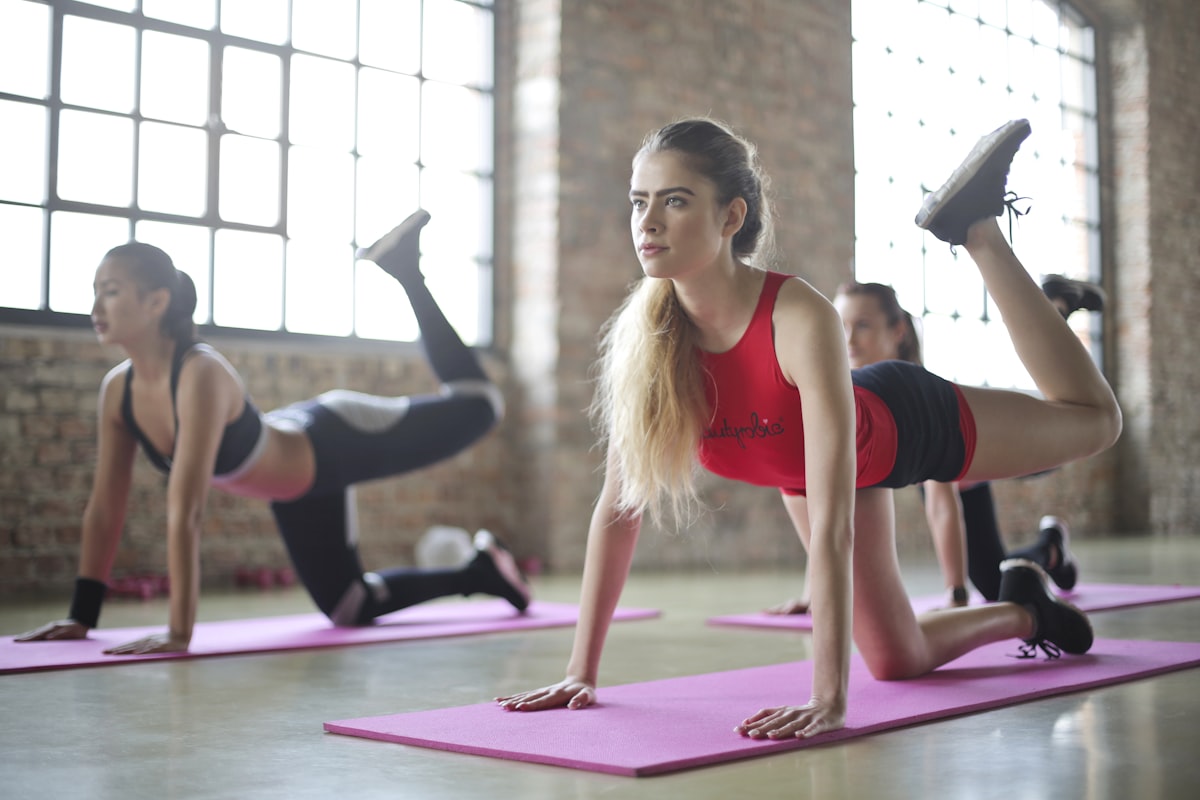
These are exercises I teach in my reformer classes at Alchemize. Some can be adapted at home, but the reformer’s spring resistance adds a dimension of feedback and support that truly accelerates healing.
1. Footwork Series — Toes, Arches, Heels
This is the foundation. Lying on your back, feet on the foot bar, you press the carriage out and draw it back in. We cycle through three positions: balls of the feet (metatarsals), full arch wrap, and heels. Each position challenges different foot muscles and encourages even weight distribution across the foot. I cue clients to “spread the toes wide” and “feel the floor through every knuckle of the foot.” This wakes up dormant intrinsic muscles.
2. Prances (Calf Raises on the Reformer)
With the carriage pressed out and feet on the bar, you alternate lowering one heel below the bar while the other rises. This creates a dynamic, eccentric calf stretch — the exact type of loading that research shows helps heal both plantar fasciitis and Achilles tendinopathy. Slow it down. Feel the stretch through the arch. This one is gold.
3. Single-Leg Footwork
Once a client is ready, we progress to single-leg work. This reveals asymmetries — and there are almost always asymmetries. One foot grips harder. One arch collapses more. Single-leg footwork on the reformer forces each foot to do its own work, building balanced strength and proprioception.
4. Toe Curls with the Towel (At Home)
Place a small towel on the floor. Using just your toes, scrunch it toward you. Simple — but deceptively challenging. This strengthens the flexor digitorum brevis and other intrinsic foot muscles that support your arch. I ask clients to do this daily. It takes two minutes.
5. Standing Roll-Downs with Foot Awareness
Stand with feet hip-width apart, weight evenly distributed across three points (big toe mound, pinky toe mound, center heel). Slowly roll down through the spine, vertebra by vertebra. The goal isn’t just spinal mobility — it’s teaching your nervous system to maintain foot stability while the rest of the body moves. This is functional integration at its best.
6. Bridging with Foot Bar Focus
Bridging on the reformer, we press through the feet to lift the hips. I cue a tripod foot — grounding evenly — while firing the glutes. This exercise links foot stability to hip strength, retraining the entire posterior chain. Clients with plantar fasciitis often have weak or “sleepy” glutes. This wakes them up.
If you’re new to reformer Pilates, I recommend reading my beginner’s guide to your first reformer class — it covers what to expect and how to prepare, especially if you’re managing an injury.
Beyond the Foot: The Full-Body Approach to Plantar Fasciitis Recovery

I want to be honest: Pilates alone may not cure severe plantar fasciitis. If you have a significant tear or bone spur, you may need medical intervention — physical therapy, cortisone injections, or even shockwave therapy. I always encourage my clients to work with a podiatrist or sports medicine doctor alongside their movement practice. There’s no competition between approaches. They complement each other beautifully.
That said, here’s what Pilates uniquely contributes to the recovery picture:
- Hip and glute activation: Weak glutes force your calves and feet to overwork during walking and running. Reformer exercises like leg press, bridging, and side-lying series rebuild that foundation.
- Core stability: A strong core keeps your pelvis neutral, which keeps your legs aligned, which keeps your feet happy. It’s a cascade.
- Fascial release: The myofascial line from your plantar fascia runs up through your calves, hamstrings, glutes, and all the way to the back of your skull. Pilates movements that articulate the spine and mobilize the hips also release tension along this entire chain.
- Proprioception and balance: Standing exercises on the reformer’s moving carriage — or even the simple act of balancing on the foot bar — retrain your body’s sense of where it is in space. Better proprioception means fewer micro-compensations that overload the plantar fascia.
I had a client here in Sandy who ran ultramarathons along the Wasatch Front. She came to me after nine months of plantar fasciitis that wouldn’t resolve. She’d done everything — night splints, rolling, stretching. Within six weeks of consistent reformer work twice a week, her pain dropped from an 8 to a 2. What changed? Her glutes finally turned on. Her ankles regained their range. Her feet stopped doing everyone else’s job.
How Often Should You Practice Pilates for Plantar Fasciitis Foot Exercises?
Consistency matters more than intensity. Here’s what I recommend for my clients dealing with plantar fascia pain:
- Reformer Pilates: 2-3 sessions per week. This gives your tissue enough stimulus to adapt without overwhelming it.
- At-home foot exercises: Daily. Towel curls, tennis ball rolling under the arch, and standing balance work. Five minutes in the morning before that first painful step.
- Rest and recovery: Don’t push through sharp pain. Dull ache during exercise is often okay. Sharp, stabbing pain is your body saying stop.
Most of my clients at Alchemize start noticing meaningful improvement within 3-6 weeks. Full resolution usually takes 8-12 weeks of consistent practice, sometimes longer if the condition has been chronic. Patience is part of the medicine.
What to Wear and How to Prepare
For reformer Pilates with plantar fasciitis, I recommend grip socks — they provide traction without compressing the foot the way a shoe does. Many of my Salt Lake City and Utah County clients come in wearing supportive shoes and switch to socks once they’re on the reformer. Let your feet breathe and work.
If you’re ready to start, you can book a session at Alchemize Pilates here. I always ask new clients about injuries during intake so I can modify exercises appropriately. You’ll never be left to figure it out on your own.
Frequently Asked Questions
Can Pilates make plantar fasciitis worse?
It can if done incorrectly — especially if exercises place excessive load on an inflamed foot without proper modification. That’s why working with an experienced instructor matters. At Alchemize, I modify spring resistance, foot positioning, and exercise selection for clients with active plantar fasciitis. Done thoughtfully, Pilates supports healing rather than aggravating it.
How long does it take for Pilates to help plantar fasciitis?
Most clients report reduced pain within 3-6 weeks of consistent practice (2-3 reformer sessions per week plus daily at-home foot exercises). Full recovery typically takes 8-12 weeks, though chronic cases may take longer. The key is consistency and gradual progression.
Is reformer Pilates better than mat Pilates for plantar fasciitis?
For plantar fasciitis specifically, yes — I believe the reformer has a significant advantage. The footwork series on the reformer provides targeted, adjustable resistance through the feet and ankles that mat work simply can’t replicate. The spring system allows you to load tissue progressively, which is exactly what healing fascia needs.
Should I do Pilates barefoot if I have plantar fasciitis?
I recommend grip socks rather than going completely barefoot. Grip socks provide enough traction for safety while still allowing your foot muscles to engage and strengthen. Shoes restrict the intrinsic foot muscles we’re trying to activate. If your feet are extremely sensitive, start with socks and gradually reduce cushioning as your feet get stronger.
What other treatments should I combine with Pilates for plantar fasciitis?
Pilates works best as part of a comprehensive approach. I encourage clients to see a podiatrist or physical therapist for diagnosis and personalized treatment. Icing after activity, wearing supportive footwear during high-impact activities, using a night splint, and rolling the arch on a frozen water bottle or lacrosse ball can all complement your Pilates practice effectively.
Your feet carry you through everything — every trail along the Cottonwood canyons, every errand through Lehi, every morning walk in Park City. They deserve more than a quick stretch and a hope for the best. Pilates for plantar fasciitis foot exercises offers a path back to pain-free movement — not by forcing the foot into compliance, but by teaching your whole body to support it.
If you’re dealing with plantar fasciitis and you’re ready to try a different approach, I’d love to work with you. This is the kind of healing I built Alchemize for.
— Bianca

Leave a Reply