
Pilates for Scoliosis Exercises: What Actually Helps (and What to Skip)
If someone told you there’s nothing you can do about your curved spine, I want you to take a breath. Then let that go. Pilates for scoliosis exercises won’t erase a curvature — let’s be honest about that — but the right movements can genuinely change how your body feels, how it functions, and how freely you move through an ordinary Tuesday. I’ve seen this shift happen hundreds of times in my studio along the Wasatch Front, and it still moves me every single time.
Scoliosis affects roughly 6 to 9 million people in the United States. Some curves are mild and discovered in adolescence. Others progress, create pain, or go undiagnosed until adulthood. Regardless of where you fall on that spectrum, targeted Pilates-based movement offers something rare: a method that addresses asymmetry directly, with control, breath, and awareness baked into every repetition.
Why Pilates Works for Scoliosis — and What the Research Says

Pilates was developed by Joseph Pilates in the 1920s as a system of “contrology” — precise, mindful movement designed to correct muscular imbalance and build a resilient center. That philosophy is almost eerily suited to scoliosis management.
Here’s the short answer for why Pilates helps scoliosis: Scoliosis creates asymmetrical loading on the spine, which leads to muscles that are chronically shortened on one side and overstretched on the other. Pilates exercises address this by training both sides of the body independently, building core stability around the spine, improving proprioception, and encouraging three-dimensional breathing — all of which reduce pain and improve posture over time.
A 2014 study published in the Journal of Bodywork and Movement Therapies found that participants with scoliosis who practiced Pilates for 10 weeks experienced significant reductions in Cobb angle measurements and pain levels. Other research supports that consistent reformer-based and mat-based work improves spinal mobility, balance, and quality of life in adults living with scoliosis.
In my studio in Utah, I work with clients whose curves range from 10 degrees to over 45. The approach changes, but the principles don’t: breathe into what’s restricted, strengthen what’s weak, lengthen what’s compressed, and always, always work with the spine you have — not an idealized version of it.
The Best Pilates for Scoliosis Exercises I Teach My Clients
Not every Pilates exercise is scoliosis-friendly. Some are. Some need modification. Some should be set aside entirely. Here’s what I return to again and again with my scoliosis clients along the Wasatch Front, from Sandy to Park City.
1. Side-Lying Breathing (Concavity Up)
This is where I start with almost every scoliosis client. Lie on your side with the concave side of your curve facing the ceiling. Place a small pillow or rolled towel under the ribcage on the bottom side for support. Breathe deeply into the upper ribs — the side that’s compressed. Five to ten breaths. That’s it. Sounds simple. It’s profoundly effective.
This exercise retrains the respiratory pattern and begins to expand tissue that’s been locked short. I see clients get emotional the first time they feel their ribs actually move on the restricted side.
2. Mermaid Stretch (Modified for Asymmetry)
The classic Mermaid is a beautiful lateral stretch on the reformer — but for scoliosis, I don’t teach it symmetrically. We spend more time stretching the concave side and strengthening the convex side. This is where working with an instructor who understands your specific curve pattern matters enormously. If you’re curious about how we approach this, take a look at our class offerings — our reformer sessions are specifically designed for this kind of individualized work.
3. Book Openings (Thoracic Rotation)
Lie on your side with knees stacked, arms extended in front of you. Open the top arm toward the ceiling and behind you, rotating through the thoracic spine. This derotation exercise is critical because scoliosis is a three-dimensional condition — the spine doesn’t just curve laterally, it rotates. Book openings gently encourage the vertebrae back toward neutral.
4. Reformer Footwork (Single Leg Emphasis)
Standard footwork on the reformer is a foundational exercise, but for scoliosis clients, I add single-leg variations and pay close attention to pelvic alignment. Often, one side of the pelvis sits higher or more rotated. The springs on the reformer give just enough resistance to wake up the stabilizers without overwhelming the system.
5. Cat-Cow with Segmental Awareness
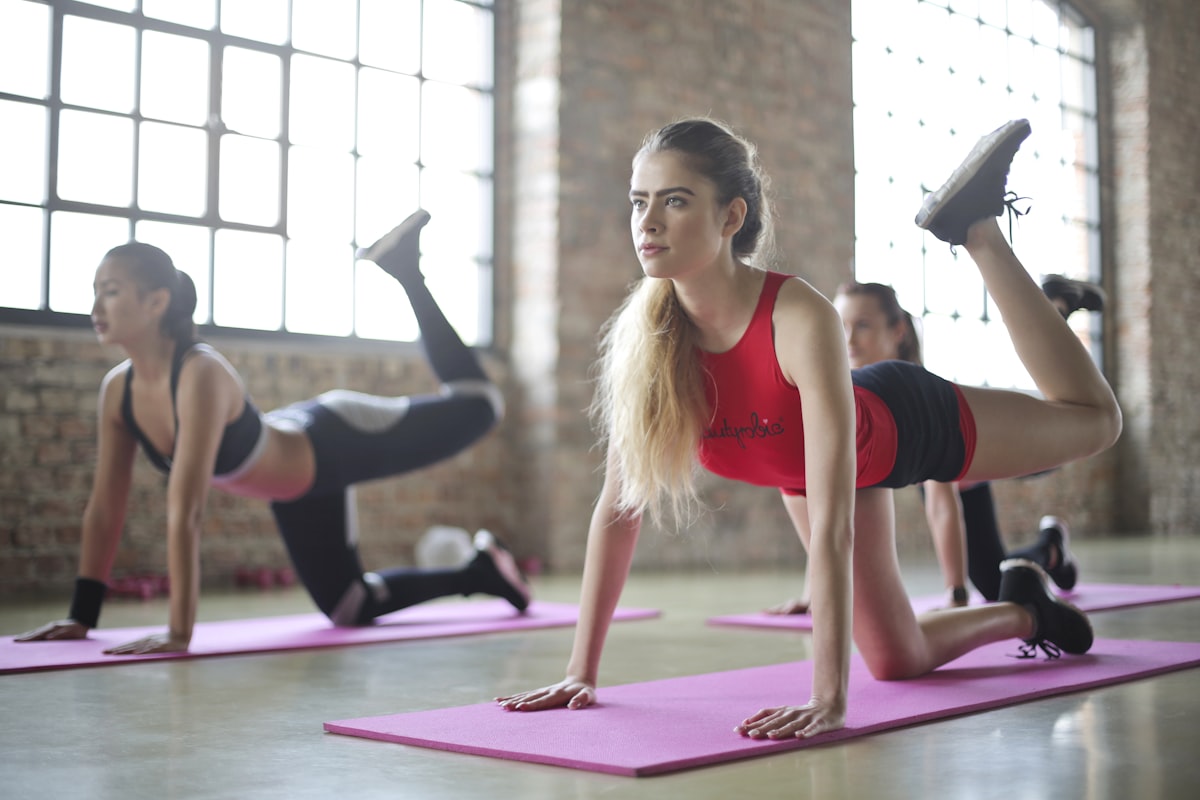
On hands and knees, move through spinal flexion and extension — but instead of treating it as one big wave, I cue segment by segment. “Start at your tailbone. Let lumbar move. Now thoracic. Now cervical.” This segmental approach helps clients discover where their spine is mobile and where it’s stuck. For scoliosis, those stuck points are goldmines of information.

6. Side Plank (Convex Side Down)
Research out of Columbia University — a widely cited 2014 study by Dr. Loren Fishman — found that holding a side plank on the convex side of the curve for as little as 90 seconds a day reduced Cobb angle by an average of 32% in participants who practiced consistently over six months. I incorporate modified versions of this on the reformer and the mat. It’s potent work.
7. Pelvic Clock
Lying supine with knees bent, imagine a clock face on your pelvis — 12 o’clock at your navel, 6 o’clock at your tailbone, 3 and 9 at each hip. Slowly tilt your pelvis around the clock in both directions. This exercise illuminates the asymmetries in pelvic mobility that scoliosis almost always creates. It’s subtle. And it changes everything about how my clients connect to their core.
What to Skip or Modify If You Have Scoliosis
I want to be straightforward here. Not all movement is helpful movement when you have a spinal curve.
- Heavy bilateral loading — exercises that load both sides of the spine equally (like heavy back squats) can reinforce asymmetry rather than correct it.
- Symmetrical stretching without modification — if you stretch both sides the same way, you’re treating a body that isn’t the same on both sides. This can actually worsen imbalances over time.
- Extreme spinal flexion or extension — deep roll-ups, full teasers, and swan dives may need significant modification depending on your curve location and severity.
- High-impact or ballistic movements — these create compressive forces through the spine that a scoliotic curve may not distribute evenly.
This isn’t a scare list. It’s a respect list. Your spine deserves precise, thoughtful programming — not a one-size-fits-all routine pulled from the internet.
How Reformer Pilates Specifically Benefits Scoliosis
The reformer is, honestly, one of the best tools that exists for scoliosis management. And I don’t say that because I own a reformer studio. I say it because the springs create variable resistance that can be adjusted side-to-side. The carriage gives feedback — if one side is pushing harder, you feel it immediately. The straps allow for unilateral arm and leg work that reveals and corrects imbalances in real time.
In my Alchemize Pilates studio, I watch clients’ bodies change over weeks and months on the reformer. The hip that hiked down begins to level. The rib cage that was compressed begins to expand. The shoulder blade that winged starts to lay flat. These aren’t miracles. They’re the result of consistent, intelligent, asymmetrical training.
If you’re near Draper, Sandy, Cottonwood, Lehi, or anywhere along Utah County and the Wasatch Front, I encourage you to experience reformer work in person. You can book a session here and we’ll design your first class around your specific curve and needs.
Building a Scoliosis-Friendly Pilates Routine at Home
Not everyone can get to a studio every day. I get it. Here’s a simple framework for a home practice that supports spinal health between sessions:
- Start with breath work (3-5 minutes) — side-lying on the concavity-up side, focus on expanding the restricted ribs.
- Mobilize (5 minutes) — cat-cow with segmental awareness, pelvic clock, book openings.
- Strengthen (10-15 minutes) — modified side plank on the convex side, single-leg bridges with pelvic awareness, bird-dog with slow, controlled movement.
- Stretch and release (5 minutes) — Mermaid stretch emphasizing the concave side, child’s pose with a slight lateral shift toward the tight side.
Do this three to four times a week. Pair it with in-studio reformer classes when you can, and you’ll build a foundation that your spine will genuinely thank you for.
A Note on Expectations and Honesty
I want to be the kind of instructor who tells you the truth. Pilates will not cure scoliosis. It will not straighten a curve that structural bone changes have set in place. If someone promises you that, walk away.
But here’s what it can do — and what I’ve watched it do over and over in my years of teaching: it can reduce pain, often dramatically. It can improve posture and the appearance of a curve. It can restore function and mobility. It can rebuild confidence in a body that feels crooked or unreliable. And it can do all of this gently, progressively, and in a way that respects where you are today.
Other approaches work, too. Schroth method physiotherapy is excellent for scoliosis and is evidence-based. Chiropractic care helps some people. Bracing is appropriate for certain adolescent cases. Movement, in general, is better than no movement. Pilates is simply one of the most precise tools available, and in my experience, the one that gives people the most agency over their own bodies.
Your spine tells a story. Scoliosis is part of that story — but it isn’t the ending.
Frequently Asked Questions: Pilates for Scoliosis
Can Pilates fix scoliosis?
Pilates cannot cure or eliminate scoliosis, especially when structural bone changes are present. However, consistent Pilates practice can significantly reduce pain, improve muscular balance around the spine, increase mobility, and improve the functional appearance of a curve. Some studies have shown measurable reductions in Cobb angle with consistent practice.
How often should someone with scoliosis do Pilates?
I recommend two to three studio sessions per week combined with a short home practice on off days. Consistency matters more than intensity. Even 15 minutes of targeted asymmetrical work at home between reformer sessions creates meaningful change over time.
Is reformer Pilates better than mat Pilates for scoliosis?
Both are valuable, but the reformer offers unique advantages for scoliosis. The spring-based resistance can be adjusted for each side of the body independently, and the moving carriage provides instant feedback about asymmetrical movement patterns. Mat work is excellent for home practice and breath-based exercises. The ideal approach uses both.
Are there Pilates exercises I should avoid with scoliosis?
Yes. Exercises that load the spine symmetrically without modification — like full teasers, deep roll-ups, or heavy bilateral loading — may reinforce existing imbalances. High-impact and ballistic movements can create uneven compressive forces. Work with a qualified instructor who understands your specific curve pattern before attempting advanced exercises.
Can I start Pilates for scoliosis as a complete beginner?
Absolutely. In fact, scoliosis is one of the most common reasons people come to my studio with no prior Pilates experience. Beginner-level exercises like side-lying breathing, pelvic clocks, and modified cat-cow are gentle, effective starting points. The key is working with an instructor who can tailor the progression to your body. You can book your first session here and we’ll meet you exactly where you are.
If you have scoliosis — whether you were diagnosed at 13 or 53, whether your curve is mild or significant — know this: your body is capable of more than you’ve been told. Pilates for scoliosis exercises are not about perfection. They’re about precision, patience, and the quiet power of showing up for yourself on the reformer, on the mat, and in your own skin. I’d be honored to be part of that journey with you.
— Bianca

Leave a Reply