
Most of what gets written about reformer Pilates for plus size beginners skips the part that actually matters: the machine was built to be adjusted. Springs change. Footbar heights change. Straps lengthen. The reformer is not a fixed shape you have to fold yourself into — it is a set of dials, and a good instructor spends the first session turning them until the equipment fits you.
The reformer adjusts to the body — not the other way around
Here is the short answer. A reformer accommodates a wide range of bodies because almost every contact point is variable: spring tension, footbar height and angle, headrest up or down, shoulder rest position, strap and rope length, and the option to use a box or props to change the distance between you and the equipment. A beginner’s first job is not to perform the exercise. It’s to find the setup where the exercise feels sane.
That matters because so much group fitness is built around one default setup and the instruction to “modify as needed,” which quietly puts the engineering work on you. On a reformer, the adjusting is the method. I change springs mid-exercise all the time. Not as a concession — as a tool.

What I actually look for in a first session
I’m not watching for how far someone can press the carriage out. I’m watching for four things, and none of them are about size.
- Does the breath keep moving? Breath that stops and locks usually means the load or the range is past what the body trusts right now. That’s a setup problem, not a willpower problem.
- Where does the effort land? If footwork is supposed to be legs and it shows up entirely in the neck and jaw, the headrest, footbar height or spring load needs attention before we add another rep.
- Can the position be held without bracing? Comfort and stability are related. A position you’re white-knuckling is not a position you’re learning in.
- What happens at the transitions? Getting on and off the carriage, rolling to the side, sitting up — these are where awkwardness lives, and they are entirely teachable.
Comfort and modifications for larger bodies, point by point
Below are the adjustments that do the most work. None of these are special-case exceptions; experienced practitioners use all of them.
| What feels off | What usually changes it |
|---|---|
| Pressure or strain in the neck lying down | Headrest position, plus a folded towel or small cushion so the head is supported in line with the spine rather than tipped back or chin-jammed. |
| Knees drifting wide in footwork, or the belly and thighs meeting before the knees bend fully | Raise the footbar, shorten the range, or widen the foot position. The carriage does not have to travel all the way in. A shorter, honest range beats a long, collapsed one. |
| Breath getting squeezed in any folded-forward shape | Open the shape. Feet wider, box or riser to sit on, hands on the footbar rather than the mat. Nothing useful happens in a position that compresses the ribs shut. |
| Straps cutting into the back of the ankle or pulling at the shoulder | Rope length, strap placement higher on the calf or into the arch, and softer spring. Loop padding exists for exactly this. |
| Kneeling work on the carriage feeling sharp | Extra padding, a different hand position, or trading the kneeling version for a seated or standing variation that trains the same thing. |
| Getting on and off feeling precarious | A plan. There is a sequence — where the hands go, which hip leads, how the carriage is kept still — and it’s one of the first things worth learning. |
One correction to a myth that circulates: lighter springs are not automatically easier. On many exercises, a lighter spring means the carriage is less supported and your body has to do more of the stabilizing. Heavier springs can be the friendlier choice for a beginner on footwork and arm work. “Add a spring” is not a downgrade.
Weight limits, equipment, and the question nobody wants to ask out loud
Reformers are manufactured equipment with published specifications, and most commercial reformers from the major builders carry substantial weight ratings — this is machinery designed for studio use, loaded, every day. If you want certainty about a specific machine, the honest move is to ask the studio what equipment they run and what the manufacturer rates it for. That’s a fair question. Any instructor worth training with will answer it plainly instead of getting weird about it.
What I’d add: the ratings are rarely the real obstacle. The real obstacle is the dread of being the person the class has to wait for. That’s a teaching problem and it’s solvable with setup done before the room starts moving.
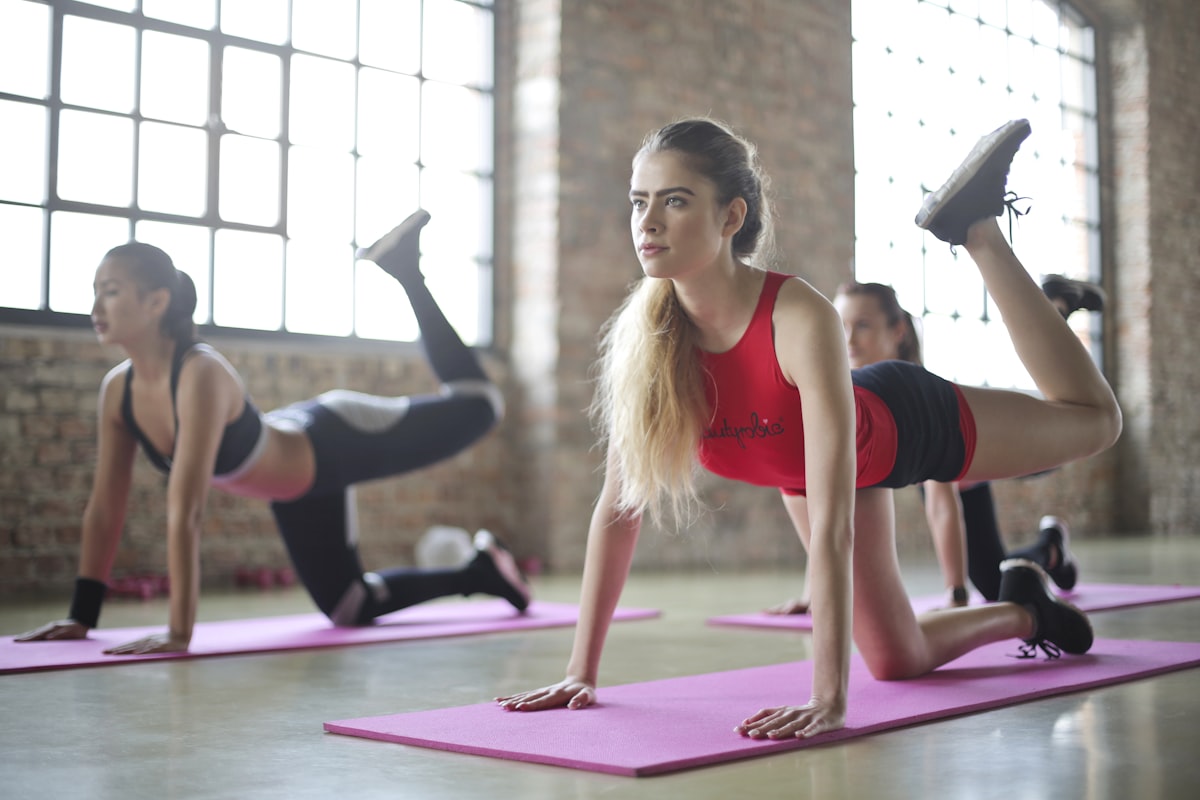
Starting with modifications that make a plus size beginner comfortable
If you live along the Wasatch Front — Sandy, Draper, Lehi, somewhere up in the Cottonwoods — you have options, and walking into a reformer room for the first time is still a big ask no matter how many studios are nearby. A few things that lower the stakes:
- Say what you want said. Telling an instructor “please adjust my setup before class starts” or “I’d rather not do anything face-down today” is useful information, not a complaint. I’d far rather hear it than guess.
- Arrive early enough to be set up, not rushed. Springs, footbar, rope length, headrest — getting those dialed in before the first cue is the single biggest comfort upgrade available.
- Wear something you can move and breathe in. Grip socks are standard on a reformer; beyond that, the clothes that let your ribcage expand are the right clothes.
- Read the room’s expectations first. My beginner’s guide to a first reformer class walks through what actually happens, which takes a lot of the unknown out.
- Consider one-on-one first if groups feel like too much. Private sessions exist so the whole hour can be spent on your setup and your questions. Reach out and I’ll tell you what’s currently open.
A note on language. You will meet instructors who treat modifications as a lesser version of the “real” exercise. That framing is wrong and it teaches people to push past sensible limits. A modification is a different lever on the same mechanism. Spinal articulation is spinal articulation whether you’re rolling down on the carriage or seated on a box.
Why control beats exhaustion as a starting measure
Pilates is a resistance method organized around control, breath and precision rather than output. The spring doesn’t care how hard you’re trying — it gives you honest feedback about whether you’re moving the carriage smoothly or throwing it. That feedback loop is the whole value, and it’s available to a complete beginner on day one at whatever range and load you’re working in.
This is also why I’m skeptical of any room that measures a session by how wrecked you feel afterward. Fatigue is easy to manufacture. Coordination is not. That view shapes how I cue every exercise — slower, fewer reps, more attention to what the shoulder blade or the ribcage is doing while the legs press. (If you’re curious about the person behind the cues, here’s why I started Alchemize Pilates.)

Being honest about what reformer work won’t do
I want to be straight with you, because the fitness industry generally isn’t. Reformer Pilates is strength and mobility training with excellent carryover into everyday movement — getting off the floor, carrying things, climbing stairs without hunting for the handrail. It is not a weight loss program, and I won’t sell it as one. If someone promises you a body composition outcome from a reformer class, be careful with the rest of what they tell you.
It also isn’t the only good answer. Strength training with free weights, swimming, walking the Jordan River Parkway, a mat class — all of these build capacity. Some people genuinely prefer standing work to lying on a carriage, and that preference is worth respecting. What the reformer offers that’s distinctive is graded, adjustable resistance in supported positions, with a machine that gives you immediate feedback about how evenly you’re loading.
And if you’re managing a joint issue, a recent surgery, pregnancy, or anything a clinician is already helping you with, bring what they told you. Specific restrictions from someone who has examined you are far more useful than a general modification list — including mine.
Where to go from here
If any of this landed, the next step is small. Look at the class formats to get a sense of what the sessions are built around, then get in touch and tell me what you’re working with — what hurts, what you’ve tried, what you’d rather not do in front of a room. Reformer Pilates for plus size beginners works best when the modifications and comfort details get sorted before the first spring is loaded. The equipment adjusts. That’s the entire point of it.
— Bianca
Is there a weight limit on a Pilates reformer?
Commercial reformers are manufactured with published weight capacities, and the major builders rate their studio machines for substantial loads because they’re designed for continuous daily use. The specific number depends on the brand and model. Ask any studio you’re considering what equipment they run and what the manufacturer rates it for — it’s a reasonable question and you should get a straight answer.
What should a plus size beginner wear to a reformer class?
Grip socks are standard on most reformers for safety on the footbar and carriage. Beyond that, wear clothing that lets your ribcage expand fully, since breath is central to the method. Fitted layers tend to stay put better than loose ones when you’re lying down or inverting slightly, but comfort matters more than convention here.
Do lighter springs always make an exercise easier?
No, and this surprises most beginners. On many exercises, heavier springs give the carriage more support, which makes the movement more stable and often more manageable. Lighter springs can demand more stabilizing work from you. Adding a spring is frequently the smarter beginner choice, not a step backward.
Should I start with a private session or a group class?
Both work, and it depends on what you want. A one-on-one session means the whole time is spent on your setup, your questions and your pace, which some people find far less stressful for a first experience. Small-group classes give you momentum and the company of other people learning. Reach out and I’ll tell you what’s currently open.
Will reformer Pilates help me lose weight?
I won’t make that claim. Reformer Pilates builds strength, mobility and movement control, and those improvements carry into daily life in real ways. Body composition is driven by a lot of factors outside any one class format, and any instructor guaranteeing you a weight outcome is overselling.

Bianca — Founder & Lead Instructor, Alchemize Pilates
I’m a certified reformer Pilates instructor teaching small-group classes, one-on-one privates and online programs. I care more about how you move than how tired you get, and I’ll adjust a machine as many times as it takes to make the work make sense in your body.
Leave a Reply