
When you have Ehlers-Danlos syndrome, Pilates for joint stability is not about stretching further. It is about learning where your end range actually is — and then building strength well inside it. If your joints already move too much, more mobility is not the goal. Control is.
Why more flexibility is the wrong target for hypermobile joints
Most movement advice assumes a stiff body. Open the hips. Lengthen the hamstrings. Reach a little deeper. That advice is useless — and sometimes harmful — when the connective tissue holding your joints together is already more elastic than average.
Ehlers-Danlos syndrome is a group of inherited connective tissue disorders. In the hypermobile type, connective tissue behaves differently, so ligaments and joint capsules offer less passive restraint than they do in most bodies. That means the muscular system has to do a job it was never meant to do alone: hold joints in a safe position, moment to moment, under load.
So the work changes. Instead of asking a joint to travel further, we ask the muscles around it to switch on sooner, hold longer, and stay awake through the whole range. That is the entire premise of Pilates for joint stability in hypermobile bodies — small range, high awareness, endless repetition of the boring middle.
The short answer: For Ehlers-Danlos syndrome, Pilates helps joint stability by training controlled, mid-range strength on spring-loaded equipment. The reformer’s springs give constant feedback, so muscles must stay engaged through the entire movement rather than dumping into a locked joint. Over time this builds the active support that lax ligaments cannot provide.
What a reformer gives a hypermobile body that a mat does not

Joseph Pilates developed his method in the early twentieth century, and the spring-based apparatus he built happens to be unusually well suited to bodies that need feedback rather than freedom.
Here is what the springs do. On a mat, gravity is your only resistance, and gravity does not tell you anything. A hypermobile shoulder can sink into its socket, a knee can snap back past straight, and the movement still looks fine from the outside. On a reformer, a spring is pulling on you the whole time. The moment you let go of a joint, the carriage moves in a way you can feel. The equipment argues with you. That argument is the training.
The other gift is the closed-chain position. Feet on the footbar, hands in straps, back supported by the carriage — the limb has something to press into. Pressing into a fixed surface recruits the deep stabilisers around a joint far more reliably than waving a limb through open air.
How I cue and decide with hypermobility in the room
I am a certified reformer Pilates instructor. I am not a physician, and I do not diagnose, manage or treat EDS. If you have a diagnosis, your care team’s guidance outranks anything I say here. What I can tell you is how I make decisions when I am teaching a body that moves too easily.
I take away end range before I add load. “Straight” becomes “long but soft.” Elbows and knees stop just short of locked. A hyperextended knee under spring tension is a joint being asked to hold a position its ligaments can’t defend, and the muscles around it get no practice at all.
I watch the joint above and below. Hypermobility is rarely local. A wobbling shoulder often traces back to a rib cage that never sets, and an unstable knee usually reveals a hip that does not know how to hold external rotation. I cue the quiet joint, not the loud one.
I slow tempo down before I add spring. Speed hides instability beautifully. If someone can move slowly with control at three counts out and three counts back, that range is theirs. If it only works fast, momentum is doing the work and the joint is just going along for the ride.
I look for the return, not the reach. Anyone can get out into a big range. The interesting question is whether the movement comes back on the same path it left on. Wobble on the return is the clearest stability signal there is.
I choose fewer exercises and more repetitions. Stability is a motor-learning problem. The nervous system needs the same pattern, in the same position, many times, before it defaults to that pattern without being told.
Building joint stability with Pilates: what the progression actually looks like

There is a sequence to this. Skipping stages is how hypermobile bodies get sore instead of strong.
| Stage | Goal | What it feels like |
|---|---|---|
| 1. Find neutral | Know where the middle of a joint is without looking | Frustrating. Almost nothing happens. This is the point. |
| 2. Load the middle | Hold neutral against light spring resistance | Small movements, surprising fatigue in muscles you forgot you had |
| 3. Widen the range slowly | Keep control as range grows a few degrees at a time | Steady. Each session feels like the last one plus a little. |
| 4. Add speed and complexity | Stability that survives real life — stairs, groceries, trail | More like exercise, less like rehabilitation |
Most people want to live in stage four. Hypermobile bodies earn stage four in stages one and two. Expect weeks, not days, in the early stages.
Proprioception: the skill under the strength
Proprioception is your sense of where your limbs are in space. It tends to be less precise in hypermobile bodies, and one proposed explanation is that the same connective tissue that stabilises joints also houses the receptors that report joint position. Less reliable feedback means less reliable control, even when the muscle is strong enough.
This is why I cue sensation rather than shape. Not “straighten your arm” but “press into the strap until you feel the back of your shoulder switch on.” Not “lift your leg higher” but “keep the weight even in your standing foot.” Shape cues let a lax joint cheat. Sensation cues ask the nervous system to pay attention.
Practical translations I use constantly:
- Soft joints, firm muscles. If a joint feels locked and the surrounding muscle feels quiet, the ligaments are holding the position. Back off.
- Breathe low and wide. Breathing high into the chest tends to recruit the outer abs and lose the deep support around the spine and pelvis.
- Grip less. White-knuckling the straps borrows stability from the hands. The shoulder never learns.
- Stop at the first wobble. Not the first pain — the first wobble. That is the edge of your controlled range today, and today’s edge moves.
Where small-group work fits, and where it does not
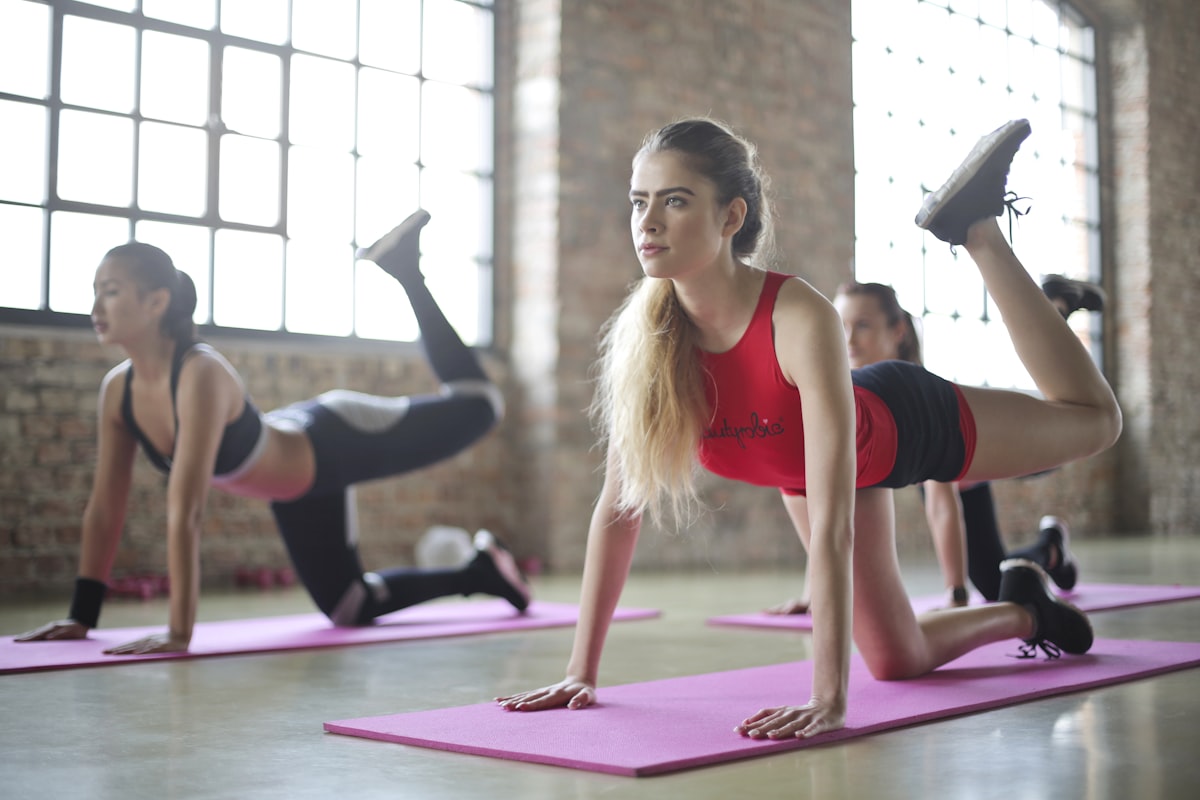
I want to be honest about this, because it matters more than any exercise list.
A group class moves at the pace of the group. If you are still learning where your neutral is, or if a particular joint subluxes without much warning, one-on-one work is the better starting point — because the cue can change mid-repetition and the spring can change with it. Once you know your own limits well enough to modify in real time, small-group reformer work becomes a genuinely good environment: consistent, repeatable, and social enough to keep you coming back, which is the thing that actually builds stability over a year.
Pilates is also not the only route. Physical therapy, hydrotherapy, graded strength training and some of the established hypermobility rehabilitation protocols all build the same active support through different doors. Plenty of people combine them. If your physio has given you a program, Pilates should complement it, not compete with it — and I would rather work inside your provider’s guidance than contradict it.
If you are in Salt Lake City, Sandy, Draper, Cottonwood Heights, Lehi or up in Park City and you are trying to work out where to begin, you can look through the class formats to see what the reformer work involves, then get in touch and tell me a little about your diagnosis and what your joints do. I will tell you honestly whether I think a private start makes more sense, or whether a group format is a reasonable fit.
What consistency actually buys you
I am not going to promise you fewer subluxations or a pain-free spine. EDS is a lifelong connective tissue condition and no exercise method changes your collagen.
What controlled strength work can offer is a bigger margin. Muscles that hold a joint a little longer before it gives. A rib cage that sets before you reach overhead. A hip that knows how to take your weight on a Wasatch trail. The range you can control, rather than the range you can reach.
That margin is built with unglamorous repetition — same positions, light springs, slow tempo, attention on the return. If you take one thing from this, take that: Pilates for joint stability with Ehlers-Danlos works because it makes the middle of your range strong, not because it makes your range bigger. Start small, stay inside your control, and let it be boring for a while. Boring is where the stability lives. If you want help finding that starting point, reach out and we will talk it through.
— Bianca
Frequently asked questions
Is Pilates safe if I have hypermobile Ehlers-Danlos syndrome?
It can be, when the work is modified for a lax joint system and cleared with your medical team first. The key changes are avoiding end range, avoiding locked or hyperextended joints under load, and keeping tempo slow enough that control is obvious. Talk to your physician or physical therapist before you start, and bring their guidance with you.
Should I avoid stretching altogether with EDS?
Not necessarily, but passive stretching to end range usually offers a hypermobile body very little and can push a joint further than its muscles can defend. Most people with hypermobility do better with active, loaded range — moving through a controlled range against light resistance. If something feels tight, it is often a muscle guarding an unstable joint rather than a genuinely short muscle.
How long does it take to build joint stability?
Motor control changes happen over weeks and months, not sessions. Breath and postural awareness generally shift first, then mid-range strength, then confidence in bigger movements. Expect to spend real time in small ranges before progressing, and measure success by how controlled a movement feels rather than how big it looks.
Is a private session better than a group class to begin with?
Often, yes. A one-on-one session lets spring load, range and cueing change in real time, which matters if a joint is unpredictable. Once you can modify confidently on your own, small-group reformer work is a good long-term home for consistency. Reach out and I will tell you what’s currently open and which starting point I would suggest for you.
Can reformer Pilates replace my physical therapy?
No. Physical therapy is medical care and Pilates is not. I am a certified reformer Pilates instructor, not a clinician, and I do not diagnose or treat Ehlers-Danlos syndrome. Pilates works best alongside a physical therapy program — ask your provider whether it fits your plan, and I am happy to work within the limits they set.

Bianca — Founder & Lead Instructor, Alchemize Pilates
I’m a certified reformer Pilates instructor and the founder of Alchemize Pilates in Utah. I teach small-group reformer classes, one-on-one private sessions and online programs, with a focus on controlled strength over impressive range. If you’re not sure where to start, get in touch — I’d rather point you somewhere honest than sell you the wrong thing.
Keep reading
- Reformer Pilates for Ankle Mobility and Stability: A Guide
- Pilates for SI Joint Dysfunction: Real Pain Relief
- Reformer Pilates for Arthritis: Joint-Friendly Strength Training
- Reformer Pilates for MS Fatigue and Better Stability
- Pilates for Joint Pain: Gentle Relief Without Impact
- Is Reformer Pilates Good for Building Bone Density?
Leave a Reply