
Pilates for SI Joint Dysfunction: Finding Real Sacroiliac Pain Relief on the Reformer
If you’ve ever felt that nagging, deep ache at the base of your spine — the kind that shoots into your hip or catches you when you roll over in bed — you might already know about your sacroiliac joint. Pilates for SI joint dysfunction sacroiliac pain relief is one of the most common reasons clients walk through my studio door along the Wasatch Front. And I get it. That pain changes how you move, how you sleep, how you show up for your life. I’ve worked with dozens of clients in Salt Lake City, Draper, Sandy, and Cottonwood who arrived frustrated after trying everything — chiropractic adjustments, injections, rest that never seemed like enough. What they hadn’t tried was targeted, intelligent movement. And that’s exactly what reformer Pilates offers.
What Is SI Joint Dysfunction — and Why Does It Hurt So Much?
SI joint dysfunction occurs when the sacroiliac joint — the connection between your sacrum and pelvis — becomes too mobile (hypermobile) or too stiff (hypomobile). This creates inflammation, pelvic instability, and pain that can radiate into the low back, hip, groin, or down the leg. Pilates addresses the root cause by retraining the deep stabilizers that support this joint.
Your sacroiliac joint doesn’t move much. It’s designed for stability, not mobility. It transfers force between your upper body and your legs every single time you walk, stand, or sit. When the ligaments surrounding this joint become lax — from pregnancy, repetitive loading, trauma, or even prolonged sitting — the joint starts to shift in ways it wasn’t built for. That’s dysfunction.
The flip side is equally problematic. A locked-up SI joint forces surrounding muscles to compensate, creating pain patterns that feel muscular but originate in the joint itself. Many of my clients along the Wasatch Front come to me after being told they have a “hip problem” or “sciatica.” Sometimes it is. But often, the sacroiliac joint is the hidden culprit.

The hallmark signs: pain on one side of the low back or buttock, difficulty standing on one leg, pain with walking or climbing stairs, and discomfort when transitioning from sitting to standing. If that list sounds familiar, keep reading.
Why Pilates Works for Sacroiliac Pain Relief When Other Approaches Fall Short
Here’s the truth I share with every new client: your SI joint doesn’t need more stretching. It doesn’t need more cracking. It needs stability.
Joseph Pilates developed his method in the 1920s with a core principle that still drives my teaching today — the “powerhouse.” This isn’t about six-pack abs. It’s about the deep, intrinsic muscles that wrap around your pelvis like a corset: transversus abdominis, pelvic floor, multifidus, and the deep hip rotators. These are the exact muscles that your sacroiliac joint depends on for support.
I see this with my clients constantly. Someone comes in after months of aggressive stretching — pigeon pose, figure-four stretches, foam rolling their glutes into oblivion. They feel temporary relief, then the pain returns, sometimes worse. Stretching a hypermobile SI joint is like loosening a bolt that’s already rattling. What that joint needs is the surrounding musculature to wake up and hold it steady.
Reformer Pilates is uniquely suited for this because the spring resistance creates feedback. The carriage moves, and your body has to stabilize against that movement. It’s closed-chain and open-chain work in one beautiful system. You can load the deep stabilizers without compressing the joint the way heavy barbell work might.
If you’re new to reformer work, I wrote a complete guide for beginners — your first reformer Pilates class in Utah — that walks you through exactly what to expect.
The Muscles That Matter Most for SI Joint Stability
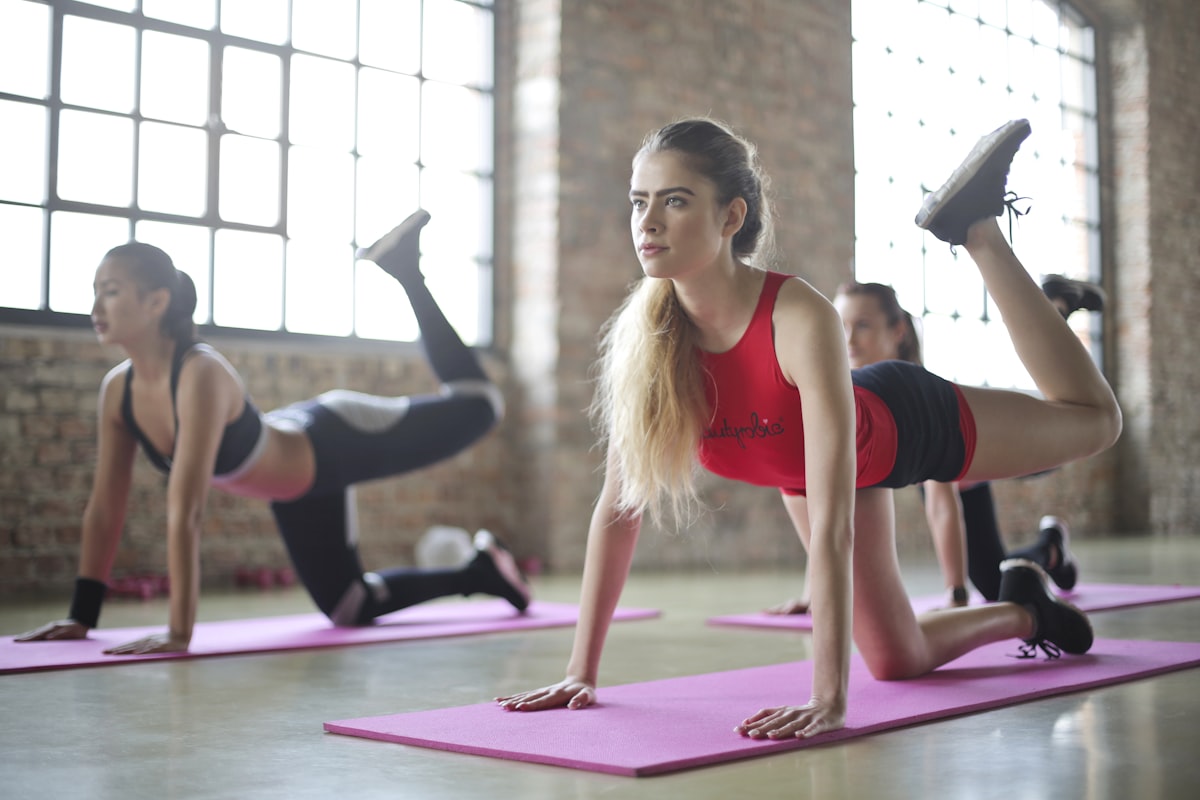
Understanding the anatomy helps everything click. Here are the key players I focus on with my SI joint clients:
- Transversus Abdominis (TvA): Your deepest abdominal layer. It wraps horizontally around your torso like a belt and directly compresses the SI joint when activated properly. This is the first muscle I retrain.
- Multifidus: Small, deep spinal muscles that run along the vertebrae and across the sacrum. Research shows these atrophy quickly with low back and SI joint pain. Pilates targets them beautifully.
- Gluteus Medius and Maximus: Your glutes are the powerhouse behind pelvic stability. Weak glutes allow the pelvis to shear and rotate under load — exactly what triggers SI joint flare-ups.
- Pelvic Floor: Often overlooked, the pelvic floor muscles form the base of the “stability cylinder.” They co-contract with the TvA to create intra-abdominal pressure that supports the pelvis from below.
- Deep Hip Rotators: Piriformis, obturator internus, and their companions. These muscles control femoral rotation and directly affect how force transfers through the SI joint during gait.
In my studio, I use specific spring loads and positions to isolate and then integrate these muscles. We don’t just strengthen them in isolation — we teach them to fire together, automatically, the way your body needs them to work when you’re hiking the Cottonwood Canyons or chasing your kids around Liberty Park.
Reformer Exercises I Use for Pilates for SI Joint Dysfunction Sacroiliac Pain Relief
Every client is different. But here’s a framework of movements I frequently build SI joint recovery programs around. These aren’t random exercises — they follow a progression from deep activation to functional integration.
Phase 1: Awareness and Activation
- Supine Pelvic Clocks: Lying on the carriage with feet on the foot bar, making micro-movements of the pelvis to find neutral alignment. This teaches proprioceptive awareness — knowing where your pelvis actually is in space.
- Bridging with Light Springs: Slow, controlled bridging with the carriage still. The focus is on sequential spinal articulation and glute engagement without allowing the pelvis to rotate or shift laterally.
- TvA Breathing Series: Lateral rib breathing with intentional engagement of the deep core. I place my hand on a client’s lower abdomen and ask them to draw the navel gently inward on the exhale. Simple, but most people have never actually done this correctly.
Phase 2: Stabilization Under Load
- Single-Leg Footwork: This is where things get real. Standing on one foot on the foot bar and pressing through single-leg footwork exposes any asymmetry in hip and pelvic control. I watch for pelvic drop, rotation, or shaking — all signs the stabilizers aren’t yet strong enough.
- Side-Lying Hip Series: Using the reformer in a side-lying position with spring resistance to train gluteus medius and hip external rotation. These exercises are gold for SI joint clients.
- Knee Stretches (Round Back): Hands on the foot bar, knees on the carriage, spine in a gentle C-curve. The client must stabilize the pelvis against the moving carriage. I use lighter springs here — heavier springs do the work for you, and we need your muscles to do it.
Phase 3: Functional Integration
- Scooter / Standing Lunge: One foot on the platform, one on the carriage. This mimics walking and stair climbing — the exact movements that often trigger SI pain. We rebuild confidence here.
- Full Footwork Progressions: Bilateral pressing with varied foot positions — parallel, turned out, wide V — at increasing spring loads. The pelvis must remain neutral and stable throughout.
- Elephant and Long Stretch: Weight-bearing through the arms with the carriage moving under the legs. This demands full-body integration and builds the kind of dynamic stability that translates to real life.
If you’re interested in experiencing this kind of targeted work, check out our class formats. I offer both group reformer sessions and private instruction where I can customize everything for your body.
What I Tell My Clients About Recovery Timelines
I’ll be honest with you: SI joint dysfunction doesn’t resolve in a single session. Not with Pilates, not with anything. The ligaments around that joint have been stressed or lax for weeks, months, sometimes years. Retraining the muscles to properly support the joint takes consistent, patient effort.
Here’s what I typically see in my studio:
- Weeks 1–3: Clients learn to find and activate the deep stabilizers. Many report that the pain changes — not gone, but different. Less sharp. More manageable. Awareness increases dramatically.
- Weeks 4–8: Strength starts to build. Clients notice they can transition from sitting to standing without that familiar catch. Walking feels more stable. Sleep improves because rolling over doesn’t wake them up.
- Weeks 8–16: Functional integration kicks in. Clients return to hiking, running, lifting their children, skiing the Wasatch — activities that had felt impossible. The exercises become second nature.
I always recommend two to three sessions per week for SI joint recovery, especially in the first phase. Consistency matters more than intensity. And I always encourage my clients to work with their physical therapist or physician alongside our work. Pilates is powerful, but it’s one tool in a comprehensive approach. I don’t pretend it replaces medical care.
Things to Avoid When You Have Sacroiliac Joint Pain
Just as important as what you do is what you don’t do. I’ve watched well-meaning clients set themselves back by weeks with a single overzealous stretch or workout. Here’s what I advise:
- Avoid aggressive hip stretching — especially pigeon pose and deep figure-four stretches. If your SI joint is hypermobile, these can make it worse.
- Skip asymmetric loading early on — heavy single-leg deadlifts, warrior poses held for long durations, anything that puts uneven shearing force through the pelvis before you’ve built adequate stability.
- Don’t push through sharp pain — dull muscular fatigue is expected. Sharp, stabbing, or burning pain at the SI joint is a signal to modify or stop. In my classes, I always provide modifications and encourage you to speak up.
- Limit prolonged sitting — especially on soft surfaces. If you work at a desk, stand every 30 minutes. Use a small towel roll behind the low back to maintain lumbar lordosis.
- Be cautious with high-impact exercise — running, jumping, and plyometrics load the SI joint significantly. These can be reintroduced later, but timing matters.
Why the Reformer Is Better Than Mat Work for SI Joint Recovery
I love mat Pilates. I teach it. But for sacroiliac joint dysfunction specifically, the reformer has clear advantages.
The spring system provides variable resistance that you can calibrate precisely. Lighter springs demand more stabilization from the client’s body — which is exactly what the SI joint needs. Heavier springs provide assistance and support during the early phases when a client’s stabilizers are still rebuilding.
The moving carriage also gives me biofeedback I can’t get on a mat. If a client’s pelvis shifts during footwork, I can see the carriage drift. If one hip is doing more work, the movement pattern becomes visible. This makes my cueing sharper and more effective.
The reformer also reduces gravitational load. Supine and semi-reclined positions take pressure off the joint while still allowing meaningful strengthening. For clients in acute flare-ups — and I see this often with postpartum women in Utah County and along the Wasatch Front — this is a game-changer.
Ready to feel the difference? You can book your session here and we’ll start with an assessment to understand exactly where your body is right now.
Pilates for SI Joint Dysfunction Sacroiliac Pain Relief: The Bigger Picture
Pain narrows your world. I’ve watched it happen. Clients stop hiking. They skip family outings. They quit the gym entirely because nothing feels safe. That’s the real cost of SI joint dysfunction — not just the physical pain, but the life you stop living because of it.
Pilates for SI joint dysfunction sacroiliac pain relief isn’t a magic cure. It’s a practice. It’s showing up twice a week and trusting the process. It’s learning that your body isn’t broken — it just needs better support. The sacroiliac joint is a remarkably resilient structure when the surrounding muscles do their job. My work is teaching those muscles to show up again.
If you’re along the Wasatch Front — Salt Lake City, Sandy, Draper, Lehi, Park City — and you’ve been dealing with sacroiliac pain that won’t quit, I’d love to work with you. This is some of the most rewarding work I do. Watching someone go from wincing when they stand up to confidently pressing through single-leg footwork on the reformer — that’s why I teach.
— Bianca
Frequently Asked Questions: Pilates and SI Joint Pain
Is Pilates safe for SI joint dysfunction?
Yes, when taught by a knowledgeable instructor who understands pelvic mechanics. Reformer Pilates is particularly effective because the spring resistance can be adjusted to match your current stability level. I always recommend starting with a private session or small class so your instructor can assess your movement patterns and provide appropriate modifications.
How often should I do Pilates for sacroiliac pain relief?
For active SI joint dysfunction, I recommend two to three sessions per week. Consistency is more important than duration — shorter, focused sessions produce better results than one long weekly class. Most of my clients begin to notice meaningful improvement within four to six weeks of regular practice.
Can Pilates replace physical therapy for SI joint problems?
Pilates and physical therapy complement each other beautifully, but they serve different roles. A physical therapist can diagnose, perform manual therapy, and address acute inflammation. Pilates builds the long-term strength and motor control needed to keep the SI joint stable after therapy ends. I always encourage my clients to work with both when possible.
Which Pilates exercises should I avoid with SI joint pain?
Avoid exercises that create asymmetric shearing forces through the pelvis, especially in the early stages. This includes wide-leg stretches, deep hip flexor stretches, and aggressive twisting movements. Exercises like the full splits series on the reformer should be postponed until adequate pelvic stability has been established. Your instructor should modify any movement that causes sharp pain at the SI joint.
Is reformer or mat Pilates better for SI joint dysfunction?
Reformer Pilates is generally more effective for SI joint dysfunction because the spring system allows precise resistance calibration, the moving carriage provides stability feedback, and supine positions reduce gravitational load on the joint. Mat Pilates can be incorporated later as stability improves, but the reformer offers more control during the recovery process.

Leave a Reply