
Reformer Pilates for Ankle Mobility and Stability: The Joint Everyone Forgets
Your ankles carry you up Grandeur Peak, down icy driveways in Sandy, and through ten thousand unremarkable steps a day. And yet almost nobody trains them on purpose. That’s why I keep coming back to reformer Pilates for ankle mobility and stability — because the machine gives the foot and ankle something the floor can’t: graded, spring-loaded resistance in every direction.
I’ve been teaching reformer in Utah long enough to notice a pattern. Clients come in for their low back, their hips, their “core.” Then we get to footwork, and a foot starts to tremble. One ankle rolls out. One heel won’t drop. And suddenly we’re not talking about the back anymore — we’re talking about the foundation.
Why Reformer Pilates for Ankle Mobility and Stability Actually Works
Short answer: Reformer Pilates improves ankle mobility and stability by using spring resistance and a moving carriage to train the foot and ankle through controlled dorsiflexion, plantarflexion, inversion and eversion — while your body stays supported. That combination builds range of motion, calf and intrinsic foot strength, and proprioception at the same time, with far less impact than standing exercise.
Here’s the mechanical reason. On the reformer, your ankle is loaded but your bodyweight isn’t crashing through it. Lying supine on the carriage with your feet on the footbar, you get an isolated, honest look at how each ankle moves. No compensating with your knee. No borrowing from your hip. Nowhere to hide.
Joseph Pilates, who developed the method in the 1920s, built footwork into the very first sequence of the reformer workout — heels, arches, toes, then heel lifts and lowers. That wasn’t decorative. He understood the feet as the base of the whole kinetic chain. Modern rehabilitation research has caught up: ankle dorsiflexion range and single-leg balance are among the most reliable predictors of lower-limb injury risk and fall risk as we age.
What I love about the reformer is the dosing. A spring is adjustable. I can take a client with a chronically stiff ankle and give them almost no load, just movement. I can take a hiker with a history of rolled ankles and give them heavy springs to force the calf and peroneals to work eccentrically. Same exercise. Two completely different prescriptions.
What Weak or Stiff Ankles Look Like in My Studio

I see this with my clients constantly, and it rarely shows up as “my ankle hurts.” It shows up sideways:
- The heel that won’t drop. In heel lifts and lowers, one heel descends below the footbar and the other stops level. Limited dorsiflexion — often the legacy of an old sprain nobody rehabbed.
- The wobbling arch. During toes position, the foot collapses inward and the big toe loses contact with the bar. Weak intrinsic foot muscles and lazy tibialis posterior.
- The gripping toes. Toes curl and claw for balance in standing work. That’s a nervous system saying, “I don’t trust my base.”
- The one-sided squat. Restricted ankle mobility on one side forces the knee to drift inward or the pelvis to shift. Clients feel this in the knee or hip and blame the wrong joint.
One client — a runner from the Cottonwood Heights area who came to me after two seasons of what she called “mystery knee pain” — had eleven degrees of dorsiflexion on her right ankle and about twenty-five on her left. Her knee wasn’t the problem. Her knee was the victim. We spent eight weeks on graded reformer footwork, calf eccentrics on the footbar, and single-leg standing work on the carriage. Her knee pain resolved. Not because we treated her knee, but because we gave her ankle back its job.
This is the argument for reformer Pilates for ankle mobility and stability in one sentence: the ankle is upstream of a lot of pain that gets diagnosed downstream.
Utah Ankles Have a Specific Problem
I train people along the Wasatch Front, and this population has a particular ankle profile. We’re outdoorsy and we’re seasonal — a brutal combination for joints.
Summer is trail season. Uneven rock and root on the Bonneville Shoreline, scree fields, steep descents. That’s high-demand ankle work with a high sprain rate. Then winter arrives, we lock our feet into rigid ski and snowboard boots for four months, and the ankle loses almost all of its natural inversion, eversion, and rotational range. Boots are stabilizers — which means they do the stabilizing for you.
Add the year-round Utah default: stiff hiking boots, ski boots, and a lot of sitting in a car driving between Draper, Lehi, and Salt Lake City. Feet that are supported all day get quiet. Quiet muscles get weak.
The most common thing I hear in March, from skiers, is “my ankles feel like blocks of wood.” They’re not wrong. Four months of immobilization does that.
So I front-load ankle work in the spring and again in early fall — pre-season for the hikers and the skiers respectively. If you’re curious what that looks like in practice, our reformer class formats includes small-group sessions where I can actually see your feet and cue them individually, which matters far more for ankles than it does for, say, an abdominal series.
The Reformer Exercises I Use for Ankle Mobility and Stability
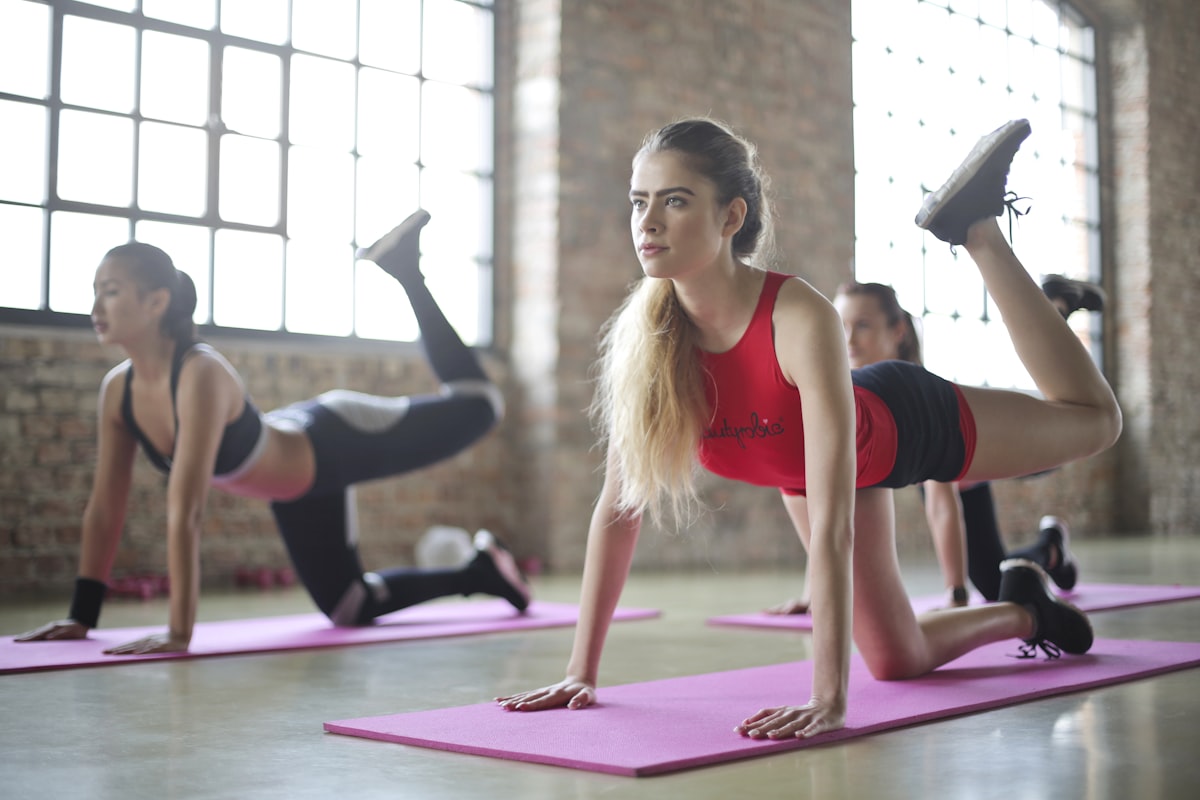
These are the movements I return to again and again. Every one of them can be scaled by spring tension, so nobody gets left out.
| Exercise | What it trains | My cue |
|---|---|---|
| Footwork: heels, arches, toes | Full plantarflexion/dorsiflexion range, alignment through foot–knee–hip | “Press evenly through all three points of the foot — big toe, little toe, heel.” |
| Heel lifts & lowers (prehensile) | Dorsiflexion range and eccentric calf strength | “Let the heel drop slowly below the bar. The lowering is the exercise.” |
| Single-leg footwork | Side-to-side asymmetry, unilateral ankle stability | “Don’t let the carriage rattle. Silence is control.” |
| Single-leg heel raises on the footbar | Calf strength through full range — the gold standard for ankle resilience | “All the way up to the top. Then even slower down.” |
| Footwork in V / parallel / small toes-apart | Inversion and eversion control, peroneal and tibialis posterior activation | “Keep the arch lifted like there’s a marble under it.” |
| Standing lunge / skater on the carriage | Proprioception and dynamic stability on an unstable surface | “Toes long, not gripping. Let the ankle make micro-corrections.” |
| Semicircle & bridging with heels on footbar | Loaded dorsiflexion with posterior chain integration | “Draw the heels down and back at the same time.” |
Notice how much of that list is slow. Ankle work rewards tempo. When a client rushes heel lowers, they bounce through the exact range we’re trying to earn. I’ll often count a four-second lower out loud, and I’ll hear a groan. Good. That’s the tissue getting the message.
Mobility vs. Stability: You Need Both, and They’re Not the Same
This distinction gets muddled all the time, so let me be plain.
Mobility is available range — can your shin travel forward over your foot without your heel lifting? That’s dorsiflexion, and it’s the range most restricted in most people. You need roughly 10–15 degrees just to walk normally, and considerably more to squat, descend a trail, or drive a ski turn.
Stability is control within that range — can you hold your arch and resist rolling when you land on an uneven rock? That’s largely peroneals, tibialis posterior, intrinsic foot muscles, and a well-calibrated nervous system.
Mobility without stability is a sprain waiting to happen. Stability without mobility is a stiff ankle that shunts stress up to the knee or down into the plantar fascia. Reformer work is unusually good at building the two simultaneously, because spring resistance demands control while you move through range. You don’t stretch, then strengthen. You do both in the same rep.
How to Program Reformer Pilates for Ankle Mobility and Stability

Here’s roughly how I sequence it over a couple of months. Adjust for your own body — this is a template, not a prescription.
- Weeks 1–2 — Range and awareness. Light springs. Full footwork series, both feet. Slow heel lifts and lowers, 10–12 reps. Goal: find out what you’ve got, and where the sides differ.
- Weeks 3–4 — Symmetry. Introduce single-leg footwork. Match reps to your weaker side, not your stronger one. Start standing work on the carriage with hands supported.
- Weeks 5–6 — Load. Heavier springs on heel raises. Single-leg heel raises with a slow eccentric. Add inversion/eversion challenges through varied foot positions.
- Weeks 7–8 — Dynamic. Standing lunges, skaters, and unsupported balance work on the moving carriage. This is where proprioception really sharpens.
Two to three sessions a week is plenty. Ankles respond faster than most people expect — my clients typically notice a difference in stair descent and single-leg balance within three to four weeks, though structural mobility gains take longer.
Where Reformer Pilates Falls Short — An Honest Note
I’m not going to sell you a cure-all. Some things reformer work does not do well:
- It’s not impact training. If you need your ankles ready for trail running, you eventually need to run. Hopping, jumping, and landing drills build tendon stiffness in ways spring resistance can’t fully replicate. A jumpboard helps, but it’s not the same.
- It won’t fix a structural block. Some limited dorsiflexion is bony — an anterior impingement, old fracture hardware, significant arthritic change. Movement helps you work around it. It doesn’t remove it.
- Acute injury needs a clinician first. A fresh grade II sprain belongs with a physical therapist. I’m a Pilates instructor, not a medical provider, and I’ll say so directly. I regularly work alongside PTs across Salt Lake County and I’m happy to coordinate.
- Other approaches work too. Barefoot strength work, banded ankle drills, weighted calf raises, balance boards, and plain old hiking on varied terrain are all legitimate. Reformer is my tool because the graded resistance and supported positions make it accessible to almost everyone — including clients who can’t yet tolerate standing load.
If you want to know more about my training background and how I approach this work, that’s all on my about page.
Start From the Ground Up
The ankle is a small joint doing enormous work. It absorbs, adapts, redirects, and stabilizes thousands of times a day, and most of us give it exactly zero deliberate attention until it fails. Reformer Pilates for ankle mobility and stability is the least glamorous work I teach and, honestly, some of the most consequential — for skiers, hikers, runners, and anyone who intends to stay confidently on their feet for another forty years. Come find out what your ankles have been trying to tell you. You can see class formats on the Alchemize class formats.
Frequently Asked Questions
How long does it take to improve ankle mobility with reformer Pilates?
Most of my clients notice improved balance and easier stair descent within three to four weeks of consistent practice — two to three sessions weekly. Measurable dorsiflexion gains usually take six to twelve weeks, and longstanding stiffness from an old injury can take longer. Strength adaptations tend to arrive before range-of-motion adaptations.
Can I do reformer Pilates after an ankle sprain?
Once you’re cleared by a physical therapist or physician, yes — and it’s one of the better options, because the reformer lets you load the ankle without full bodyweight. In the acute phase, though, see a clinician first. I won’t take a fresh sprain into a group class, but I will happily coordinate with your PT.
Is reformer better than mat Pilates for ankle stability?
For the ankle specifically, yes — the reformer’s spring resistance and moving carriage let you load dorsiflexion, train eccentric calf strength, and challenge proprioception in ways mat work can’t. Mat Pilates is excellent for core and intrinsic foot awareness, but it can’t provide adjustable external resistance to the ankle.
Will this help with plantar fasciitis or Achilles pain?
Often, indirectly. Limited ankle dorsiflexion and weak calves are common contributors to both. Slow, controlled heel lifts and lowers on the reformer are essentially loaded calf eccentrics, which appear in most evidence-based Achilles protocols. That said, get a diagnosis first — these conditions have several causes and management differs.
Should I wear grip socks or go barefoot for ankle work?
Barefoot, whenever the studio allows it. You want sensory feedback through the sole and free movement of the toes. Grip socks are a reasonable compromise for hygiene or standing work on the carriage — just choose a thin, flexible pair rather than anything cushioned or restrictive.
— Bianca
This article reflects my experience as a Pilates instructor and is intended as general education, not medical advice. If you have pain, a recent injury, or a diagnosed condition, please consult a qualified healthcare provider before beginning a new exercise program.

About Bianca
I’m the founder and lead instructor at Alchemize Pilates, a boutique reformer studio serving the Wasatch Front. I’m a comprehensively trained reformer instructor with a particular focus on foot, ankle, and lower-limb mechanics — the stuff most programs skip. I teach skiers, hikers, runners, post-rehab clients, and plenty of people who just want to move without thinking about it.
Leave a Reply