
Most people think of the ankle as a hinge. It isn’t. It’s a stack of small joints doing balance math hundreds of times a minute, and when that math fails on a trail in Millcreek or a curb on 900 South, you roll it. That’s why I keep coming back to pilates for ankle stability and sprain prevention exercises — because the reformer trains the foot and lower leg under load, in control, with a spring telling the truth about what your body is actually doing.
I’m a certified reformer Pilates instructor, and I teach along the Wasatch Front, where feet take a beating. Skiers in Park City. Hikers in Cottonwood. People who run the Jordan River Parkway in the dark in February. Ankles here don’t fail because they’re weak in a straight line. They fail sideways, in the half-second before you notice.
Why ankles roll — and what actually prevents it
An ankle sprain is usually an inversion sprain: the foot rolls inward and under, and the ligaments on the outside of the ankle take a load they can’t absorb. The fast, honest answer to prevention is this — you need three things working together: strength in the small stabilizers of the foot and lower leg, proprioception (your brain’s real-time map of where the joint is in space), and the ability to decelerate. Strength alone isn’t protection. Reaction time is.
That’s the piece most training misses. You can calf-raise your way to a strong gastrocnemius and still have an ankle that doesn’t know where it is at the end of a long hike. Pilates works the other lane — slow, loaded, controlled range with constant feedback.
If your problem is stiffness rather than rolling (ankles that won’t bend far enough in a squat, or that come out of a ski boot like concrete), that’s a mobility question first, and my guide to reformer Pilates for ankle mobility covers it. This post is about the ankle that gives way.
| What fails | What it looks like | What trains it |
|---|---|---|
| Peroneals (outer lower leg) | Foot collapses inward under load | Resisted eversion, single-leg footwork |
| Intrinsic foot muscles | Toes grip and claw; arch drops | Toe spread, footwork on the bar, domes |
| Proprioception | Late correction — you feel the roll after it starts | Single-leg work, eyes-closed balance |
| Eccentric calf control | You drop off a step instead of lowering | Slow heel lowers with spring resistance |
| Hip stability above | Knee drifts in, foot follows | Standing lunge, side-lying leg series |
How reformer Pilates trains the foot and lower leg

The reformer has one advantage over almost everything else for ankles: the carriage will not lie to you. If your right foot is pressing through the outside edge, the carriage tracks crooked. If you push with your toes instead of the whole foot, the springs jolt. Feedback is immediate and physical, not a cue you have to imagine.
Joseph Pilates built footwork into the very start of the reformer sequence in the 1920s, and there’s a reason it sits first. The feet are the base. On the footbar you can load the ankle through dorsiflexion and plantarflexion with resistance, at a speed slow enough for the nervous system to actually learn something. That’s the part that transfers to the trail.
Mat work matters too — the intrinsic foot muscles respond beautifully to unloaded, precise work. But for building resilience under load, the springs change the game. If you’ve never been on one, my beginner’s guide to your first reformer class in Utah walks through what actually happens in the room so you’re not guessing.
Seven ankle stability exercises I use and teach
These are Pilates-based movements you can practice at home. None of them are exciting. That’s the point — ankle work is repetitive, unglamorous, and it works.
- Toe spread and press. Barefoot, standing. Lift all ten toes, spread them, lower them one at a time without letting the arch collapse. Thirty seconds a side. Harder than it sounds.
- Short foot (arch doming). Draw the ball of the foot toward the heel without curling the toes. The arch lifts slightly. Hold five seconds, release. Eight to ten reps. This is the foundation of intrinsic foot strength.
- Slow heel raises, slower lowers. Two counts up, four counts down, full range. The lowering phase is where eccentric calf control lives — and eccentric control is what catches you when you step off a rock wrong.
- Single-leg balance with a reach. Stand on one foot. Reach the other leg forward, side, back — low and slow, like a clock face. Keep the standing knee tracking over the second toe. Ten reps, then switch.
- Resisted eversion. Loop a band around the forefoot, anchor it to the inside. Press the foot outward against the band, slowly return. The peroneals are the ankle’s actual anti-sprain muscles and almost nobody trains them directly.
- Ankle circles under tension. Seated, band around the forefoot. Trace slow circles. Both directions. You’re mapping the joint, not just moving it.
- Eyes-closed balance. Once single-leg balance is easy, close your eyes. Proprioception without visual input is the truest test of whether the joint knows where it is. Fifteen to thirty seconds, near a wall.
Frequency over intensity. Ankles respond to repetition. Five minutes most days does more than forty minutes once a week. Do them while your coffee brews. That’s not a joke — barefoot in the kitchen is a genuinely good training environment.
What sprain prevention work looks like on the reformer
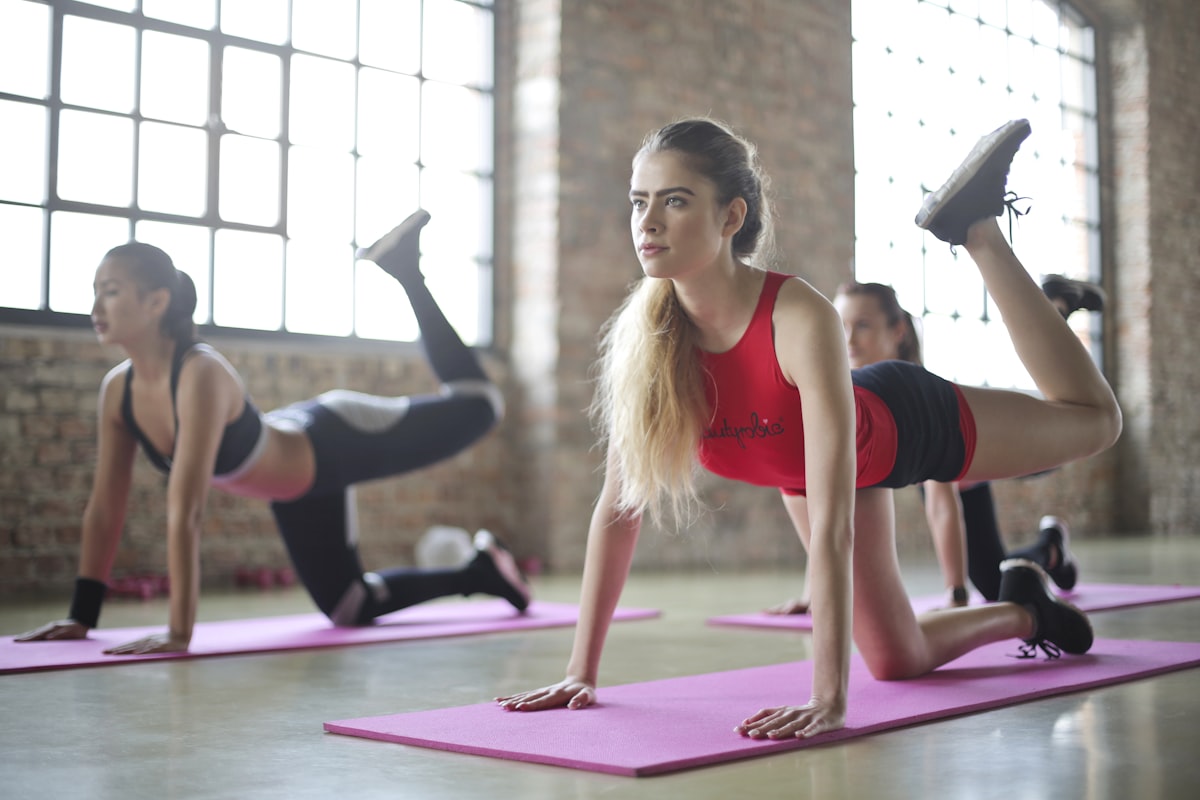
In class, the ankle work rarely gets announced as ankle work. It’s woven in. Footwork on the bar — parallel heels, toes, V-position, single leg. Running, where the heels alternate lowering below the bar. On a reformer fitted with a jumpboard, single-leg landings are loaded but horizontal, which trains deceleration without the ground-reaction forces of actual jumping.
Here’s what I watch for. Does the heel wobble as the carriage returns? Does the arch flatten the moment the spring tension increases? Does one foot consistently press through its outer edge? Those patterns show up long before an injury does, and they’re correctable.
The other half is hip. A knee that dives inward under load drags the foot into pronation with it, and a pronated foot is a foot with less margin before it rolls. So side-lying leg series, standing splits, hip hinge patterning — it’s all ankle work, one joint up. I treat this kind of lower-limb detail as foundational, not optional, and you can see where it fits in the class formats.
Returning after a sprain — the part people skip
Grade I and II ankle sprains heal. That’s the good news. The bad news is that the single biggest predictor of an ankle sprain is a previous ankle sprain, and the reason is almost never the ligament — it’s that proprioception doesn’t come back on its own. Pain resolves, swelling resolves, you go back to hiking, and the joint’s sensory map is still degraded.
Rehab has to be deliberate. Balance work, single-leg loading, slow controlled range through the full arc. This is where Pilates fits well after the acute phase has passed, because it lets you load the joint progressively with a spring instead of your bodyweight all at once.
To be honest about the limits here: I’m an instructor, not a physical therapist. If you have an acute sprain — swelling, bruising, you can’t bear weight — that’s a medical visit first. If there’s any question of fracture, that’s imaging, not a reformer. Pilates is excellent at the rebuilding stage and after clearance. It is not diagnosis. I’d rather say that plainly than pretend otherwise.
Building ankles that hold up to Utah

Terrain here is unforgiving in a specific way. Loose scree above Alta. Frozen ruts in a Sandy parking lot in January. Ski boots that lock the ankle rigid for four hours and then release it into a walk across a lot. Roots and cryptobiotic crust down south. Every one of those asks the ankle to correct off-axis, fast.
Training for that means training off-axis on purpose. Single-leg. Uneven surfaces. Eyes closed. Slow enough that you can feel the correction happen rather than just survive it. The nervous system learns at slow speeds and then borrows that learning when things get fast.
Give it four to six weeks of consistent, small-dose work before you judge results. Balance improves first — it’s the most trainable quality in the whole system. Strength takes longer. Confidence takes longer still, especially after a bad roll, and that’s normal.
Working with an ankle that doesn’t trust you yet?
Tell me about it before you come in. I’d rather adapt the work than have you white-knuckle through footwork. Have a look at the class formats, or get in touch and I’ll tell you what’s currently open.
The quiet work is the work
Nobody posts their toe-spread drills. But ankles are built in five-minute increments, barefoot, half-distracted, over months — and then one day you step off a curb wrong in downtown Salt Lake and your foot simply handles it. That’s the whole return on pilates for ankle stability and sprain prevention exercises: not a dramatic transformation, but a joint that quietly stops failing. Start small, stay consistent, and if you want eyes on your footwork, reach out — I’m happy to look.
— Bianca
Can Pilates really prevent ankle sprains?
No training method eliminates the risk of a sprain — terrain and bad luck are real. What Pilates can do is improve the strength, control and proprioception that give the joint more margin before it rolls. Single-leg work, resisted eversion and slow eccentric loading all target the qualities most associated with ankle resilience.
How soon after an ankle sprain can I start Pilates?
That’s a question for whoever is treating you, not for me. Once the acute phase has passed and you’ve been cleared to load the joint, Pilates is a good bridge back to activity because spring resistance lets you progress gradually. Bring any restrictions with you so the work can be modified.
Do I need a reformer, or can I do ankle work at home?
Plenty of ankle stability work needs nothing but a bare floor — toe spreads, short foot, single-leg balance, slow heel raises. A resistance band adds eversion and inversion work. The reformer’s advantage is loaded, controlled range with immediate feedback on how your foot is actually tracking.
How often should I do ankle stability exercises?
Short and frequent beats long and rare. Five to ten minutes most days of the week is a reasonable target for foot and ankle work, since these are small muscles that recover quickly. Balance drills in particular respond well to daily practice.
Should I do this work barefoot?
Barefoot is ideal for foot-specific drills, because shoes remove much of the sensory input your nervous system is trying to use. Reformer Pilates is typically done barefoot or in grip socks for the same reason. If you’re on a cold floor at home, grip socks are a fine compromise.

About Bianca
I’m the founder and lead instructor at Alchemize Pilates, a boutique reformer studio in Utah. I’m a certified reformer Pilates instructor, and most of my teaching attention goes to the unglamorous details — how a foot loads, where a rib sits, what a shoulder does when it thinks nobody’s looking.
I write here about movement for people who live active lives along the Wasatch Front and want their bodies to keep up. See the class formats or get in touch.
Leave a Reply