
Swimmers live in their shoulders. Thousands of overhead revolutions a week, all in one plane, all driving forward — and eventually something in the joint starts complaining. That’s the conversation I have most often with the athletes who find me along the Wasatch Front, and it’s why Pilates for swimmers shoulder mobility and recovery has become one of the most useful cross-training tools I teach. Not because Pilates replaces the pool. Because it rebuilds the parts the pool quietly wears down.
Why the Shoulder Is the First Joint to Break Down in the Water
The shoulder is the most mobile joint in the human body, and mobility is expensive. It buys range at the cost of stability. In swimming, that trade-off gets pushed hard: the humerus travels through a huge arc, repeatedly, under load, while the trunk rotates and the scapula tries to keep up.
Short answer for the athlete who wants it in forty seconds: Pilates helps swimmers’ shoulders by training scapular control, thoracic spine rotation and extension, deep core stability and eccentric strength — the four things that let the shoulder blade move properly over the ribcage so the joint stops absorbing the whole stroke. It restores the ranges chronic overhead work shortens, and it builds the posterior chain that sprint sets don’t.
What I look for first in a swimmer is not the shoulder. It’s the ribcage. If the thoracic spine won’t rotate and won’t extend, the shoulder has to invent that range from somewhere, and it borrows from the joint capsule and the front of the chest. You can stretch a pec all day; if the mid-back is locked, you’re renting the range, not owning it.
The Four Patterns I See Again and Again in Overhead Athletes

These aren’t diagnoses. They’re patterns — the recurring shapes that show up when someone spends years pulling water.
- Anterior dominance. Chest and lats are strong and short. Mid-traps, lower traps and external rotators are comparatively quiet. The shoulders sit forward at rest.
- Scapular winging or early elevation. Ask for an overhead reach and the shoulder blade shrugs before the arm has traveled thirty degrees. The trap takes a job that belongs to the serratus.
- Thoracic stiffness with lumbar compensation. The mid-back doesn’t extend, so the low back does it instead. This one is loud in butterfly and breaststroke swimmers.
- Breath held into the upper chest. Shoulder breathers over-recruit the neck and outer abs, which locks the ribcage exactly where it needs to move.
Pilates is a good answer to all four because it was built around exactly this problem. Joseph Pilates developed the method in the 1920s working with injured bodies, and the spring resistance of the reformer was designed to give feedback rather than just load. A spring tells you when you’ve lost control. A dumbbell just gets heavier.
How Reformer Work Rebuilds Shoulder Mobility and Recovery for Swimmers
Here’s the thing that surprises athletes: the most valuable reformer exercises for a swimmer’s shoulder are often not the ones that look like swimming.
Springs pull the arms back toward the shoulder rest, which means every arm exercise has a built-in eccentric phase. That eccentric — the controlled lengthening — is where rotator cuff resilience gets built. In the pool, the pull phase is concentric and relentless. Reformer arm work gives the posterior cuff something the pool never asks for.
The other piece is closed-chain and semi-closed-chain loading. When the hands are fixed on the footbar or the straps are anchored, the scapula has to stabilize against the ribcage rather than float free. That’s the skill swimmers lose.
| What the pool does | What Pilates gives back |
|---|---|
| Repetitive internal rotation and adduction | External rotation strength and end-range control |
| Thoracic flexion in streamline and breathing | Thoracic extension and rotation drills |
| Concentric pull under fatigue | Slow eccentric loading through the cuff and lats |
| Trunk stiffness held by breath-holding | Lateral rib expansion and diaphragmatic breathing |
| Bilateral, symmetrical patterning | Unilateral and rotational work that exposes side-to-side gaps |
If you’re weighing this against your existing strength program, I wrote a longer piece comparing the two approaches in reformer Pilates versus the gym for Utah athletes. The short version: they’re not rivals. But they answer different questions, and swimmers usually already have the strength question covered.
Mobility Is Not Flexibility — And Swimmers Usually Need the Other One
This is the distinction I spend the most time on with athletes.
Flexibility is passive range. Mobility is range you can control and produce force inside of. Most competitive swimmers I meet are not stiff in the way a desk worker is stiff. Many are loose — sometimes hypermobile at the shoulder, with a joint that travels further than it can actively manage. Handing that athlete more stretching is like giving someone with a loose bolt a bigger wrench.
A shoulder that hurts isn’t always a shoulder that’s tight. Sometimes it’s a shoulder nobody taught to stop.
So what I program for a swimmer leans toward active range: reaching into end range and then holding it under spring tension, rotating the thoracic spine and pausing there, loading overhead positions slowly rather than swinging into them. Passive stretching has its place — usually after, usually brief. The work that changes things is the work where the athlete has to own the position.
Recovery Between Sessions: The Quiet Half of the Program

Recovery in a high-yardage sport isn’t only about sleep and protein. It’s about giving the nervous system a different input than the one it’s been drowning in.
A well-paced reformer session does three recovery-relevant things. It moves the joints through ranges the sport never visits, which nourishes the tissue and reduces the sense of stiffness. It downshifts breathing, because the method is built on a breath rhythm and you can’t rush it without losing the exercise. And it’s low-impact, so it doesn’t add to the fatigue debt the way another land strength day would.
Practically, I’d think about placement like this:
- Not right before a hard set. Deep stability work can leave the shoulder girdle feeling loose-limbed for an hour or two. That’s the wrong feeling to take into a race pace set.
- Well-suited to an easy day or an off day. This is where the mobility gains land best and where the parasympathetic side of the work actually gets to happen.
- Post-swim on a moderate day, if that’s what fits your life. Keep the intensity conversational and let it be a decompression session rather than a second workout.
Consistency matters more than perfect scheduling. A twice-weekly habit you actually keep beats an ideal plan you abandon in February. In my studio, the athletes who progress fastest are the ones who let the work be boring for a while — same movements, slightly better control, week over week.
Cross-Training Along the Wasatch Front
Utah is a strange and wonderful place to be a swimmer. We’re at altitude, we’re dry, and we have a lot of people doing two or three sports at once. I see swimmers in Draper who also ski all winter, masters athletes in Sandy fitting training around 6 a.m. lanes, high school swimmers in Lehi and Utah County stacking club practices on top of team practices, and triathletes from Salt Lake City who arrive with a shoulder that’s been quietly unhappy since last open-water season.
The altitude piece is worth naming. Recovery demands are real here, and dry air plus hard training plus a long season adds up. A movement practice that lowers your heart rate instead of raising it is not a luxury in that context.
What I’d recommend if you’re local and curious: come see what the work actually feels like before deciding whether it belongs in your season. You can look at the class formats to get a sense of the different styles, and if you want a shoulder-specific starting point, reach out and ask about openings — I’d rather point you toward the right entry than have you guess.
Where the Shoulder Work Actually Starts
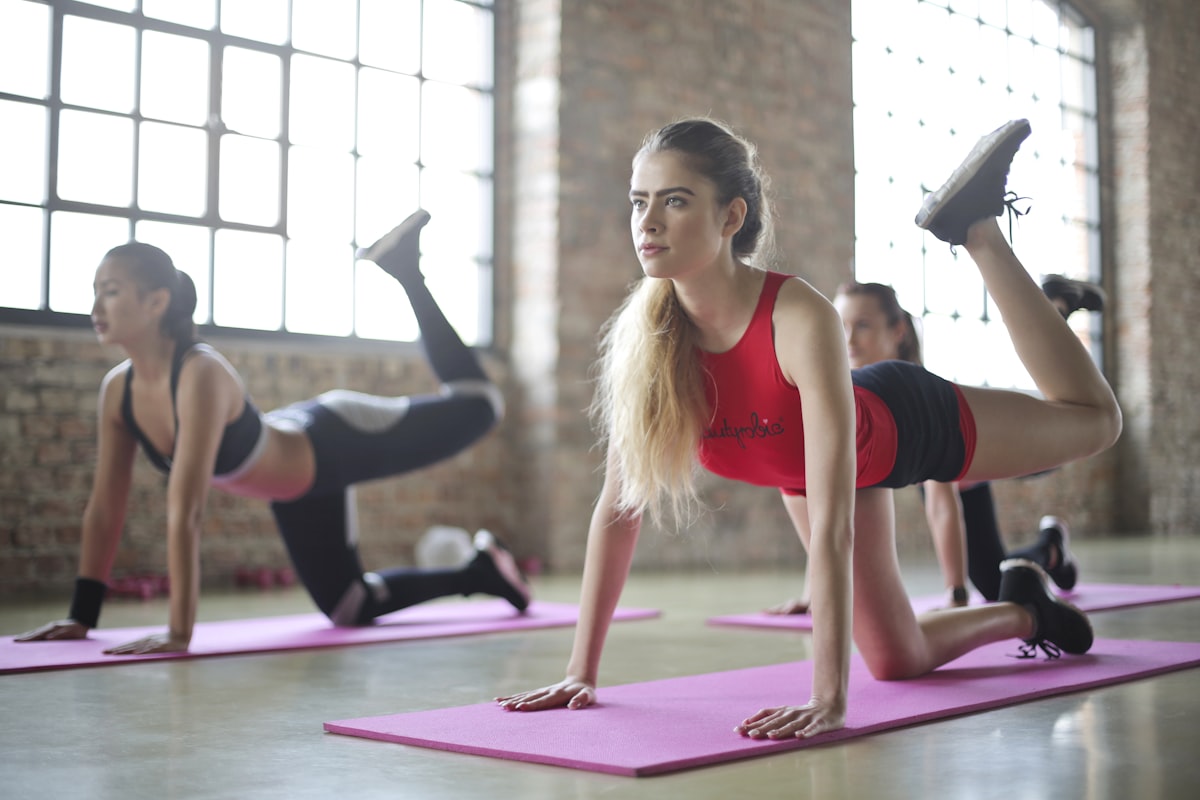
If I could give a swimmer one place to begin, it wouldn’t be an arm exercise. It would be breathing into the back and sides of the ribcage.
Here’s why. The serratus anterior — the muscle that holds the shoulder blade flat against the ribs and lets it rotate upward as you reach overhead — attaches directly onto the ribs. When the ribcage is held rigid by a braced, chest-dominant breath, the serratus has no mobile surface to work against. Restore rib movement and scapular mechanics often improve without ever directly targeting the shoulder.
A simple sequence to feel the difference
- Lateral rib breathing, seated or supine. Hands on the lower ribs. Inhale wide, not up. Five slow breaths.
- Thoracic rotation, side-lying with knees stacked. Reach the top arm across and open. Let the eyes follow. Chase rotation through the mid-back, not the low back.
- Scapular setting on hands and knees. Push the floor away without rounding, then let the shoulder blades draw together. Learn where the middle is.
- Slow external rotation with light resistance. Elbow pinned to the side. Three seconds out, three seconds back. Quality over reps.
This is a general movement sequence, not medical advice. If your shoulder has a diagnosed injury or pain that wakes you at night, see a physical therapist or physician first — and then bring me their notes.
Being Honest About What Pilates Doesn’t Do
I’d rather tell you the limits than oversell this.
Pilates will not fix a labral tear. It will not resolve a structural impingement on its own. It will not make you faster in the water by itself — stroke mechanics and time in the pool do that. And if your coach has already built a strong dryland program with good posterior chain work and honest mobility, you may not need much from me at all.
What it does well is specific: it improves how you organize your torso under your arms, it restores ranges the sport takes away, it teaches load control that the pool’s buoyancy hides, and it gives a hard-training athlete a way to move that isn’t another beating. For a lot of swimmers that’s exactly the missing piece. For some, it isn’t. I’d rather you know which one you are.
Frequently Asked Questions
How often should a swimmer do Pilates for shoulder health?
Two sessions a week is a reasonable target for someone in a training block, with one session often being enough during heavy competition phases. The goal is consistency over volume — a shorter, regular practice does more for tissue tolerance than an occasional long one. Place it on easier training days where possible so the stability work doesn’t compete with your hardest sets.
Will Pilates make my shoulders too flexible?
Well-programmed Pilates does the opposite. The method emphasizes controlled, active range rather than passive stretching, which means you build strength at end range instead of simply lengthening tissue. For hypermobile swimmers — and there are many — a good instructor will actually reduce stretching and increase stability work.
Can I do Pilates while recovering from swimmer’s shoulder?
That depends on the diagnosis and where you are in the healing process, so clear it with your physical therapist or physician first. Once you’re cleared, Pilates is often a good bridge back, because spring resistance can be dialed very light and most exercises have a supported variation. Tell your instructor exactly what you’re working around before the session starts.
Is mat Pilates or reformer Pilates better for swimmers?
Reformer work generally has the edge for overhead athletes because the straps allow loaded arm work in multiple planes with a built-in eccentric phase. Mat Pilates is still valuable for core control, breathing and thoracic mobility, and it travels well for meets and training camps. Most swimmers benefit from some of each.
How long before I notice a difference in my stroke?
Breathing and posture changes tend to show up before strength changes — often within the first few weeks. Meaningful gains in scapular control and end-range strength typically take longer, in the range of two to three months of consistent practice. Stroke-specific improvement also depends on your coach translating that new range into the water.
If you’re a swimmer who’s tired of managing a shoulder instead of training it, Pilates for swimmers shoulder mobility and recovery is worth a real trial — not as a replacement for your program, but as the layer underneath it. Come move with me somewhere along the Wasatch Front and let’s find out what your ribcage has been hiding.
— Bianca

About Bianca
I’m the founder and lead instructor at Alchemize Pilates, a boutique reformer studio in Utah. As a certified reformer Pilates instructor, I work with athletes, desk-bound professionals and people coming back from long breaks — helping them build strength that holds up outside the studio.
Curious what a session feels like? See the class formats or get in touch.
Leave a Reply