If you’re looking into reformer Pilates for a teenager in Utah, there’s usually a specific reason — a kid sore from club soccer, hunched over a laptop, or coming back from an injury with no idea how to move without pain. Reformer Pilates is one of the few strength methods that meets a growing body exactly where it is.
Why a Growing Body Responds So Well to the Reformer
Here’s the short answer: the reformer uses springs instead of gravity-loaded free weights, so a teenager can build real strength with the joints supported and the load adjustable in tiny increments. That means a 14-year-old and a 17-year-old can do the same exercise at completely different intensities, safely, in the same hour.
Adolescent bodies are a moving target. Bones lengthen before muscles catch up. Coordination that was solid in the fall can feel clumsy by spring. It’s a common pattern in young athletes — they’re strong, but strong in one direction, and everything else is quietly under-recruited.
Pilates was developed by Joseph Pilates in the 1920s as a system of controlled, breath-linked movement. It was never built around max lifts. It was built around control. That’s exactly what a teenager who has grown four inches in eighteen months actually needs.
Who These Sessions Are Really For

Not every teen needs this. Some are already moving well, cross-training, sleeping enough. But the reformer tends to be a strong fit for:
- Single-sport athletes. Volleyball, soccer, dance, ski racing, gymnastics — repetitive load in one plane. The reformer works rotation, lateral strength and eccentric control that sport-specific training skips.
- Teens returning from injury. Once cleared by their provider, spring resistance lets them load a joint gradually instead of jumping straight back to bodyweight impact.
- Desk-and-screen kids. Six hours of school, three of homework, and the rest on a phone. Thoracic extension and hip flexor length are usually the first casualties.
- Teens who hate the gym. No mirrors-and-max-out culture. Just a machine, a spring setting, and a task to focus on.
| Typical need | What the reformer addresses |
|---|---|
| Growth-spurt awkwardness | Proprioception, midline control, joint awareness |
| Sport overuse | Balanced loading, rotation, eccentric strength |
| Posture and screen time | Thoracic mobility, scapular stability, hip openers |
| Low confidence in the gym | Low-intimidation, cue-driven, measurable progress |
How I Teach Younger Clients Differently
I’m a certified reformer Pilates instructor, and I coach teens with a different emphasis than adults. Adults usually need permission to slow down. Teens usually need reasons.
So I explain the mechanism. Why the footbar is at that height. Why we’re loading three springs instead of one. Why the exercise that looks easiest is the one that will wreck them. When a young person understands the why, they stop performing the movement and start owning it.
A few patterns worth watching for on the reformer: shoulder breathing under load, knees tracking inward on footwork, and gripping through the neck the moment the carriage moves. None of those are flaws. They’re just habits that haven’t been interrupted yet.
I’m also honest about limitations. Pilates is not a substitute for physical therapy, and it isn’t a replacement for a sport’s own conditioning program. It’s a complement. If a teen is in active rehab, I want them cleared by their provider first, and I’m happy to work alongside that plan.
Reformer Pilates for Teens Across the Wasatch Front
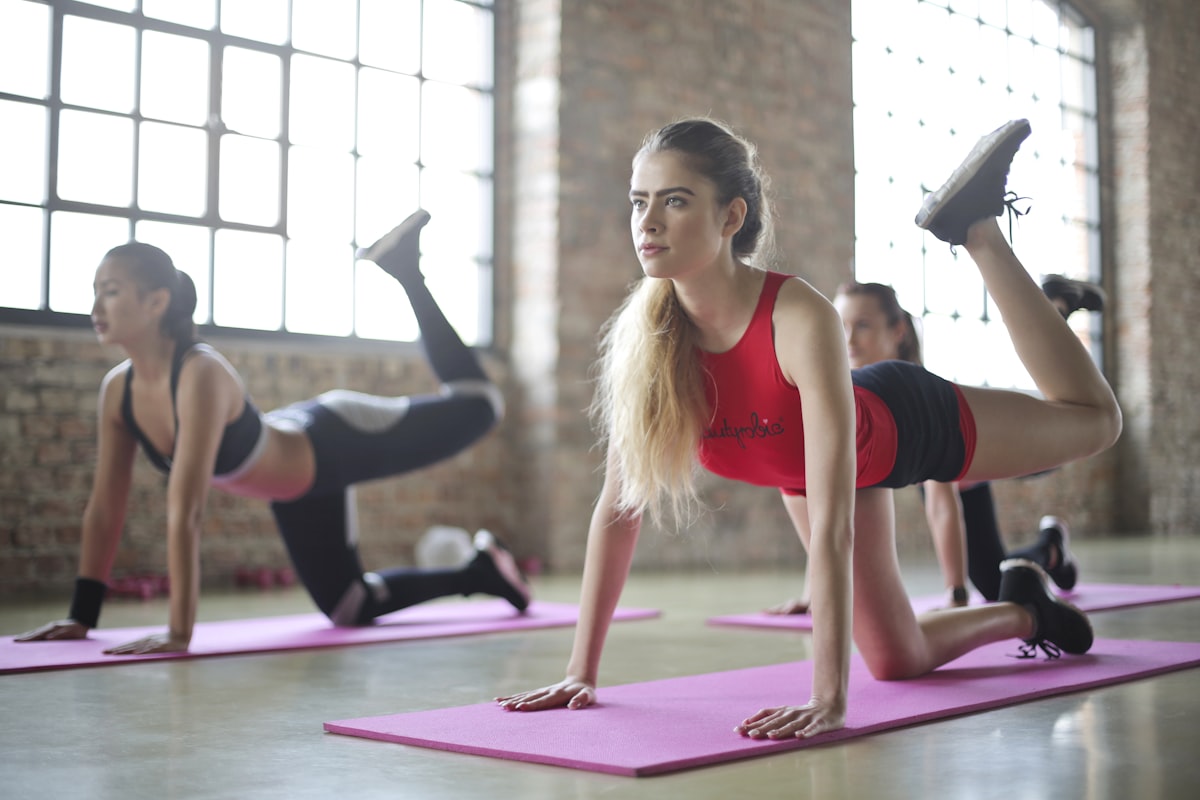
I work with families across the Wasatch Front. Utah is a high-output place. Kids here ski, climb, run trails and play competitive club sport year-round, often with very little dedicated recovery or off-season work built in.
That’s the gap reformer Pilates fills well. It’s demanding without being punishing, and it can sit inside a heavy training week without adding another impact day.
Two formats tend to make sense for younger clients: small-group reformer classes, where a teen works alongside others and learns the vocabulary of the method, and one-on-one private sessions, where everything is built around their specific sport, history or injury. You can read through the class formats to see what each one involves, and my background and teaching approach is there if you want to know who you’d be handing your kid off to.
A note for parents: if your teen is under 18, reach out before showing up so we can talk through their age, sport, any injury history and what they actually want out of it. I’d rather have that conversation first than guess.
Starting Teen Reformer Pilates in Utah
The best time to teach a body how to move well is while it’s still building itself. Strength built on good mechanics at sixteen tends to stay. Compensations built at sixteen tend to stay too.
If you’re looking into reformer Pilates classes for teens in Utah, the simplest next step is just to ask. Tell me your teen’s age, their sport, and what’s bothering them — I’ll be straight with you about whether this is the right fit, and I’ll tell you what’s currently open.
Questions about getting your teen started on the reformer?
— Bianca
Common Questions from Utah Parents
What age can a teen start reformer Pilates?
Readiness matters more than a birthday. A teen needs to be able to follow multi-step cues, stay focused for the length of a session, and communicate clearly when something hurts. Reach out with your teen’s age and background and I’ll tell you honestly whether I think it’s a good match right now.
Is reformer Pilates safe during a growth spurt?
Generally yes, and it’s often especially useful then. Spring resistance can be dialed down to a very light load, and the carriage gives constant feedback about alignment. The key is conservative progression — during rapid growth, tendons and coordination lag behind bone length, so this is not the moment to chase intensity.
Can Pilates help my teen athlete avoid injury?
No training method can guarantee injury prevention. What Pilates does well is address the things that commonly precede overuse injuries: single-plane loading, weak rotational control, poor eccentric strength and limited hip or thoracic mobility. Think of it as reducing risk, not eliminating it.
Does my teen need to be flexible or athletic already?
Not at all. Flexibility is an outcome of the work, not a prerequisite. The reformer is often a good fit for teens who don’t consider themselves athletic — it gives measurable progress without competing against anyone in the room.
Should a parent stay for the session?
That depends on the teen and on the format. Some younger clients settle faster with a parent nearby; others focus better without one. Message me ahead of time and we’ll sort out what makes sense for your family.

Bianca is the founder and lead instructor at Alchemize Pilates, a boutique reformer studio serving the Wasatch Front. She’s a certified reformer Pilates instructor who teaches small-group classes, private sessions and online programs, with a focus on control, breath and building strength that holds up outside the studio. More about Bianca.