
How Pilates Improves Proprioception and Body Awareness — And Why It Matters More Than You Think
There’s a moment in almost every session when a client pauses, tilts their head slightly, and says something like, “Oh. I had no idea my hips were doing that.” That’s the moment everything shifts. If you’ve ever wondered how Pilates improves proprioception and body awareness, the answer starts right there — in that flicker of recognition. It’s quiet. It’s internal. And it changes the way you move through the rest of your life. I’ve watched it happen hundreds of times at my studio here along the Wasatch Front, and I never get tired of it.
Most people come to Pilates wanting a stronger core or less back pain. They don’t expect to walk out with a fundamentally different relationship to their own body. But that’s exactly what happens when you train your nervous system alongside your muscles.
What Is Proprioception — And Why Should You Care?
Proprioception is your body’s ability to sense its own position, movement, and force without relying on vision. It’s sometimes called your “sixth sense.” Pilates improves proprioception by training the neuromuscular system through slow, controlled, intentionally cued movement — retraining the brain-body connection one repetition at a time.

Think about it this way. You close your eyes and touch your nose. Easy. You walk down a dark hallway without tripping. Unremarkable. But these simple acts rely on an astonishingly complex web of sensory receptors embedded in your muscles, tendons, fascia, and joints. These mechanoreceptors — muscle spindles, Golgi tendon organs, Ruffini endings — are constantly sending feedback to your brain about where your body is in space.
When proprioception is sharp, you feel stable. You react quickly. You move with grace and intention instead of stumbling, bracing, or gripping. When proprioception is dull — from injury, sedentary habits, chronic stress, or simply never being asked to tune in — the body compensates. Shoulders creep toward your ears. One hip hikes without you noticing. Your lower back does the work your glutes should be doing.
This isn’t just a performance issue. It’s a quality-of-life issue. Proprioception affects your balance, your posture, your confidence walking on icy sidewalks in Cottonwood in January, and your ability to catch yourself when you trip over your kid’s backpack in the mudroom.
How Pilates Improves Proprioception Through the Reformer
Joseph Pilates developed his method — originally called “Contrology” — in the 1920s, and its core philosophy was never really about flat abs. It was about conscious control of movement. Every exercise in the classical repertoire asks you to know where your body is and to direct it with precision.
The reformer takes this further. The moving carriage, the spring resistance, the unstable surface — they all demand that your nervous system stay switched on. You can’t zone out on a reformer the way you might on a leg press machine. If your mind wanders, you’ll feel it immediately. The carriage drifts. The springs go slack. Your alignment collapses.
Here’s what I see with my clients at Alchemize Pilates: the reformer essentially creates a proprioceptive training environment by adding these layers:
- Variable resistance: Springs change tension throughout the range of motion, requiring constant neuromuscular adjustment.
- Unstable surface: The gliding carriage means your stabilizers are working even during “simple” movements.
- Closed-chain and open-chain exercises: Alternating between feet on the footbar (closed chain) and feet in straps (open chain) challenges different proprioceptive pathways.
- Slow, deliberate tempo: You can’t rely on momentum. You must feel every inch of the movement.
- Verbal and tactile cueing: A good instructor gives your brain new information about your body in real-time.
If you’ve been curious about trying reformer work, I put together a beginner’s guide to your first reformer class that walks you through exactly what to expect — no prior experience needed.
Body Awareness Is a Skill — Not a Talent
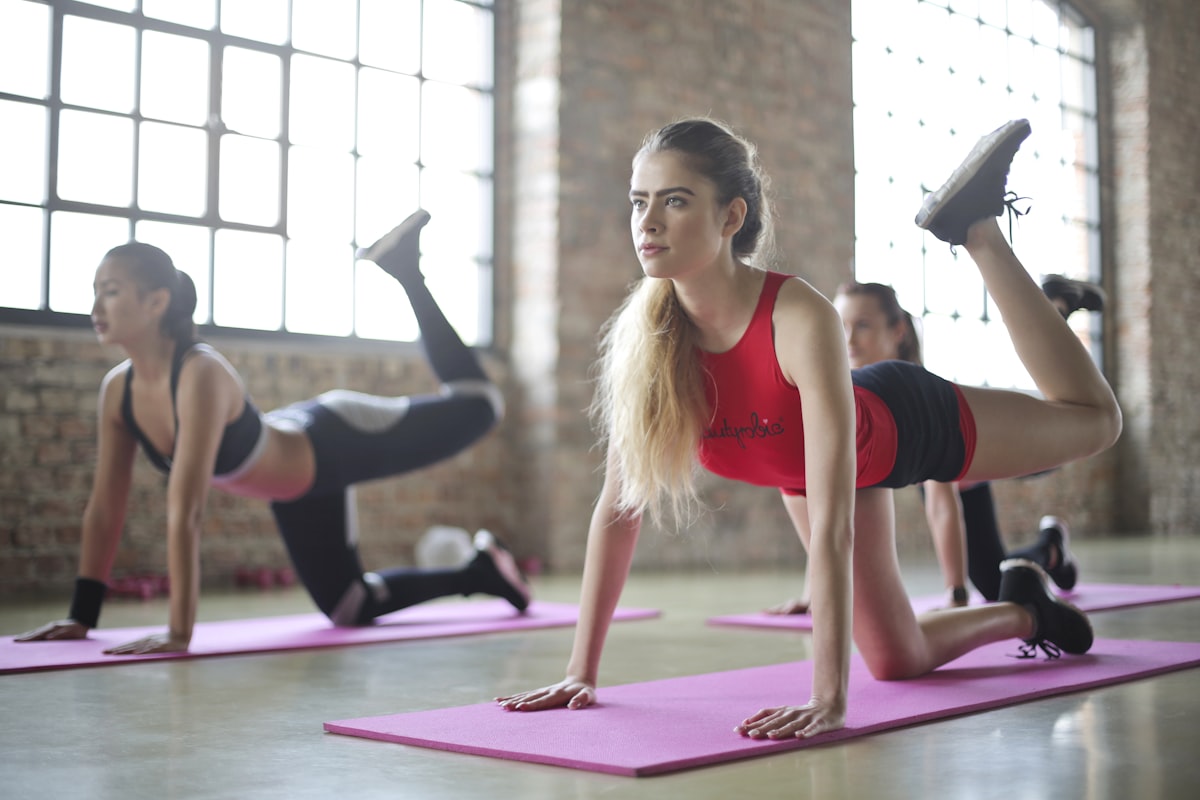
Let me be direct about something. Body awareness — sometimes called interoception or kinesthetic awareness — is not something you’re born with in fixed amounts. It’s a trainable skill. This is one of the most empowering things I tell new clients, especially the ones who walk in saying, “I’m just not coordinated.”
You’re not uncoordinated. You’re untrained.
There’s a big difference. And I mean that with all the compassion in the world. Most of us spend our days sitting at desks, driving along the I-15 corridor between Draper and Lehi, and moving in repetitive, limited patterns. Our proprioceptive system gets lazy — not broken, just under-stimulated.
Pilates reverses that. Research published in the Journal of Bodywork and Movement Therapies has shown that Pilates-based training can significantly improve postural stability, balance, and body awareness in both healthy adults and those recovering from injury. A 2019 systematic review in Gait & Posture found meaningful improvements in proprioceptive acuity among Pilates practitioners compared to control groups.
But honestly, I don’t need the studies to believe it. I watch it happen every single day in my studio.
What Improved Proprioception Actually Feels Like
I had a client — let’s call her Sarah — who came to me after years of running along the trails in Sandy. She had recurring knee pain and had been told by her physical therapist that her glutes “weren’t firing.” She’d done all the banded exercises. Nothing stuck.
Within a few weeks on the reformer, something clicked. Not because I gave her harder exercises, but because I gave her slower ones. I asked her to notice when her right hip was doing more work than her left. I asked her to feel the difference between pushing through her heels versus her toes. I asked her to close her eyes during footwork and tell me which spring she was on.
By week six, she said: “I can feel my glutes when I’m just walking up the stairs at home.”
That’s proprioception. That’s body awareness. It’s not abstract. It shows up in the real, mundane, beautiful moments of your daily life.
Improved proprioception feels like:
- Knowing when you’re clenching your jaw — and being able to release it
- Feeling the difference between “core engaged” and “holding your breath”
- Noticing a shift in your gait before it becomes pain
- Standing on one foot while pulling on your snow boot and not wobbling
- Feeling grounded and present inside your own skin
How Pilates Improves Proprioception and Body Awareness Differently Than Other Workouts

I want to be honest here — Pilates isn’t the only modality that improves proprioception. Yoga does it. Tai chi does it beautifully. Martial arts, dance, even rock climbing up at the gym in Park City. Anything that asks you to slow down, feel, and control movement through space will build this skill.
But I believe Pilates does it with a specific elegance that’s hard to replicate, for a few reasons:
- The spring system provides feedback. Unlike bodyweight work, the reformer gives your nervous system external input. The springs push back. They tell you when you’ve lost control. This biofeedback loop accelerates proprioceptive learning.
- Pilates operates in all three planes of motion. We flex and extend, yes. But we also rotate and move laterally. Life doesn’t happen in a straight line, and your proprioceptive system needs to be trained accordingly.
- The instructor-client relationship matters. In a small-class setting — which is how I run my classes at Alchemize — you get real-time cueing tailored to your body. I can see compensations you can’t feel yet, and guide you toward feeling them yourself.
- Breath is integrated into every movement. Breath patterns influence your autonomic nervous system, which in turn affects proprioceptive clarity. When you breathe intentionally, you sense more.
The Nervous System Connection: Why Slow Matters
We live in a culture that glorifies speed. Faster reps, heavier lifts, more explosive power. And there’s a place for that — I’m not here to bash high-intensity training.
But proprioceptive refinement happens in the slow lane.
When you move slowly, your brain has time to process sensory input from your joints and muscles. Fast movement relies on reflexive patterns — some of which are compensatory. Slow movement allows you to override those patterns and build new, more efficient ones. It’s essentially neuroplasticity in action.
This is why I cue “slower” far more often than “harder” in my studio. The magic isn’t in the load. It’s in the attention.
“The mind, when housed within a healthful body, possesses a glorious sense of power.” — Joseph Pilates
He said that nearly a hundred years ago, and modern neuroscience is catching up. The sensorimotor cortex — the part of your brain that maps your body — literally reorganizes in response to mindful movement practice. Pilates gives your brain a more detailed, more accurate map of your body. And when the map is better, everything downstream improves: balance, coordination, injury prevention, movement confidence.
Who Benefits Most from Proprioceptive Training Through Pilates
Everyone. Truly. But I’ve noticed the benefits are especially profound for:
- Post-injury or post-surgical clients who’ve lost trust in their body’s ability to move safely
- Desk workers along the Salt Lake City corridor whose bodies have adapted to sitting eight-plus hours a day
- Runners, cyclists, and skiers who are strong in one plane but lack multi-directional awareness
- New mothers reconnecting with a body that has changed dramatically
- Older adults concerned about fall prevention and balance — proprioception naturally declines with age, but it responds powerfully to training
- Anyone who feels disconnected from their body due to stress, trauma, or simply never being taught to listen
If any of these resonate with you, I’d love for you to learn more about my teaching philosophy and background. This work is deeply personal to me.
Building Your Proprioceptive Practice
You don’t need to wait for a Pilates session to start training body awareness. Here are a few things I recommend to my clients between sessions:
- Stand on one foot while brushing your teeth. Simple. Humbling. Effective.
- Walk barefoot on varied surfaces — grass, gravel, carpet. Your feet have more proprioceptors per square inch than almost anywhere else on your body.
- Close your eyes during simple balance exercises. Removing visual input forces your proprioceptive system to work harder.
- Do a daily body scan. Lie down, close your eyes, and slowly notice each part of your body from toes to crown. No judgment. Just noticing.
- Move in new ways. Take a different trail. Try a new class format. Cross-train. Novelty is fuel for your nervous system.
And when you’re ready to take it deeper, the reformer is waiting.
The Quiet Transformation
I want to leave you with this. Understanding how Pilates improves proprioception and body awareness isn’t just an intellectual exercise. It’s an invitation to come home to your body. To stop treating it like a machine that should just work and start treating it like the intelligent, communicating, adaptive organism it is.
In my years of teaching along Utah’s Wasatch Front — from Salt Lake City to Utah County — the clients who experience the most lasting transformation aren’t always the ones who get the strongest or the most flexible. They’re the ones who learn to feel. That’s the alchemy. That’s the work.
If you’ve been moving through life a little numb, a little disconnected, a little uncertain in your own skin — this practice is for you. And I’d be honored to guide you through it.
— Bianca
Frequently Asked Questions
What is proprioception and how does Pilates improve it?
Proprioception is your body’s ability to sense its own position and movement in space without looking. Pilates improves it by using slow, controlled movements on unstable surfaces like the reformer carriage, combined with spring resistance and intentional cueing. This trains your neuromuscular system to process sensory feedback more accurately and efficiently.
How long does it take to notice improved body awareness from Pilates?
Many clients notice subtle shifts in body awareness within the first 3-4 sessions — things like recognizing tension patterns or feeling muscles they didn’t know existed. More significant proprioceptive improvements, such as better balance and movement confidence, typically develop over 6-12 weeks of consistent practice (2-3 sessions per week).
Is reformer Pilates better than mat Pilates for proprioception?
Both formats improve proprioception, but the reformer offers unique advantages. The spring resistance provides external biofeedback, the moving carriage creates an unstable surface, and the varied exercise positions challenge your sensory system in ways that mat work alone may not. That said, mat Pilates is still a powerful proprioceptive tool, especially when combined with props like stability balls or foam rollers.
Can Pilates help with balance issues and fall prevention?
Yes. Multiple studies have shown that Pilates-based training improves postural stability and dynamic balance, making it an effective approach for fall prevention — especially in older adults. By sharpening proprioception and strengthening the stabilizing muscles around the ankles, knees, and hips, Pilates helps your body react more quickly and accurately to shifts in balance.
Do I need experience to start Pilates for body awareness training?
Not at all. In fact, beginners often experience the most dramatic improvements in body awareness because they’re starting from a baseline of low proprioceptive engagement. A good instructor will meet you exactly where you are and help you build that mind-body connection from the ground up. No prior movement experience is required.

Leave a Reply