
Almost every week, someone walks into my studio along the Wasatch Front and asks some version of the same thing: does Pilates help with inflammation and chronic pain, or is that just wellness marketing? It’s a fair question. And the honest answer is more interesting than a yes.
What the movement actually changes — and what it doesn’t
Here’s the short version, because you deserve one before the nuance.
Pilates does not “cure” inflammation. But consistent, low-impact resistance movement is well documented to reduce systemic inflammatory markers, improve circulation, restore joint range of motion, and calm an over-sensitized nervous system. For many people living with persistent pain, that combination meaningfully lowers day-to-day symptom load — even when the underlying condition remains.
That distinction matters. Chronic pain is rarely a simple hardware problem. It’s a conversation between tissue, nerve, and brain — and that conversation can get stuck in a loop where the body keeps shouting long after the original injury has healed. Movement is one of the few inputs that speaks to all three layers at once.
What I see in the studio, over and over: people arrive braced. Shoulders up near their ears. Breath living in the top third of the lungs. Ribs locked. That bracing is protective and intelligent — the body doing its job. But held for months or years, it becomes its own pain generator. Guarding costs energy. Guarding restricts blood flow. Guarding teaches the nervous system that this body is unsafe to move.
Pilates is unusually good at unwinding that, not because it’s magic, but because it’s slow, load-controlled, and breath-anchored. You are never asked to be brave. You’re asked to be precise.
How low-impact resistance work influences inflammation

Let me stay in the lane of what’s actually established. Exercise science has a solid body of research on the anti-inflammatory effect of regular moderate activity. Contracting muscle releases signaling molecules — myokines — that have a regulating effect on inflammatory pathways. Regular movement also tends to improve sleep quality, insulin sensitivity, and body composition, all of which feed back into inflammatory load.
None of that is specific to Pilates. Walking does it. Swimming does it. Strength training does it.
What is somewhat specific to reformer Pilates is the accessibility. If you have fibromyalgia, rheumatoid arthritis, long-standing low back pain, an autoimmune condition with flare cycles, or post-surgical restriction, the barrier isn’t motivation. It’s that most exercise hurts, and hurting sets off a flare, and a flare means three days on the couch. So you stop. And stopping is the thing that actually worsens the long arc.
The reformer solves a real problem there. The springs can assist you as easily as they can resist you. Lying supine with your feet in straps, you can move a hip through full range with almost no load on the joint. You can strengthen without compressing. You can work hard in a horizontal plane when vertical feels like too much. That’s the actual mechanism I care about — it makes consistency possible, and consistency is what changes inflammatory markers. Not intensity.
Why the nervous system piece might matter more than the muscles
This is the part that gets skipped in most articles about whether Pilates eases inflammation and persistent pain.
Persistent pain involves central sensitization — the nervous system turning up its own gain. The volume knob gets stuck high. Inputs that shouldn’t hurt start to hurt. And you cannot stretch your way out of a turned-up volume knob.
What does turn it down, reliably, across the research and across my teaching: predictability, breath, graded exposure, and success. Pilates is built out of those four things.
- Predictability. The exercises repeat. The reformer gives the same feedback every time. A sensitized nervous system relaxes around things it can anticipate.
- Breath. Joseph Pilates, who developed the method in the 1920s, put breath at the center of it — and lateral, ribcage-driven breathing is a direct line to the parasympathetic nervous system.
- Graded exposure. Two springs instead of four. Half the range instead of the full range. You can dose movement the way you’d dose a medication.
- Success. This one’s underrated. Chronic pain erodes trust in your own body. Finishing a session having done something well rebuilds it.
The pattern I notice most: the people who improve fastest with persistent pain are the ones willing to let the work be boring for a while. Small range. Modest springs. Same four exercises for six weeks. The ones who chase sensation — who want to feel wrecked afterward to believe it counted — tend to cycle in and out of flares for months.
Chronic conditions I see most often in my studio
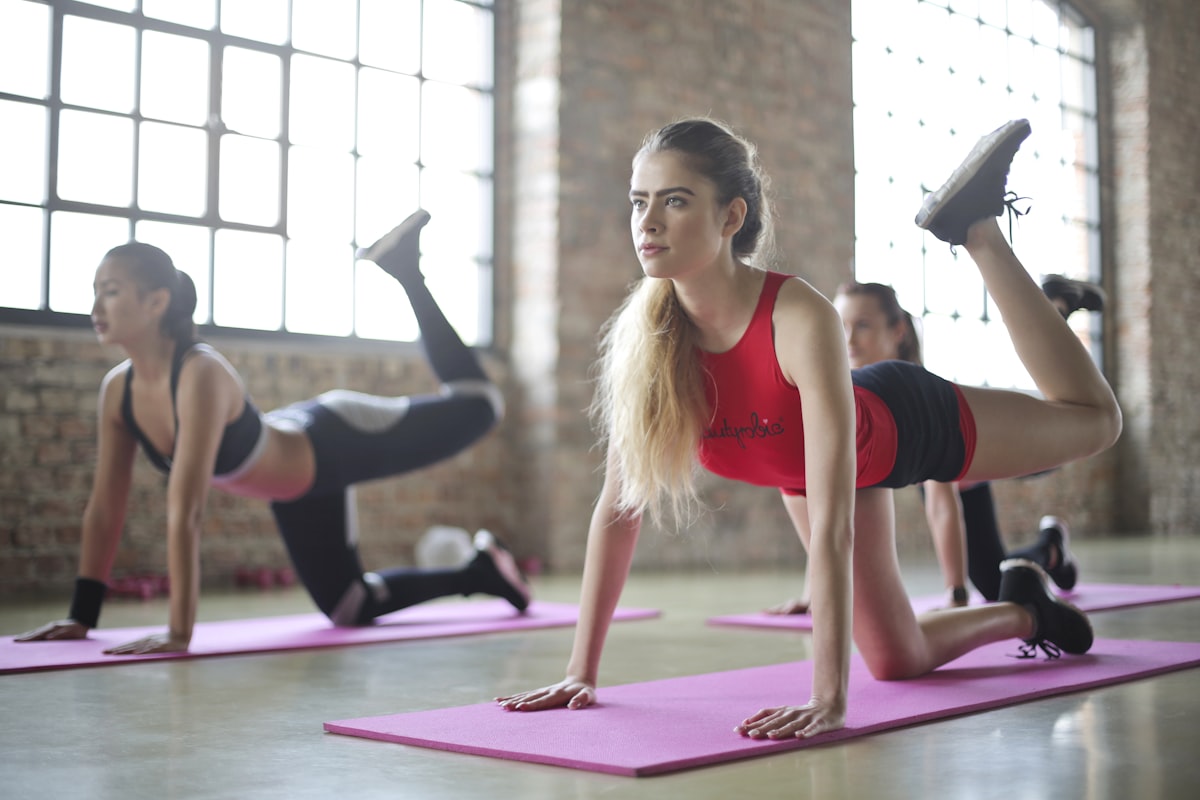
I’m a certified reformer Pilates instructor, not a physician, and I’ll say that plainly. I don’t diagnose and I don’t treat. But I do adapt, and I’ve adapted for a lot of bodies across Salt Lake City, Draper, Sandy, and the Cottonwood corridor. Here’s the general shape of what I watch for.
| Presentation | What I tend to modify |
|---|---|
| Persistent low back pain | Less flexion loading early on. More footwork, bridging, and standing hip work. Teach the ribs to move before the lumbar spine does. |
| Fibromyalgia / widespread pain | Shorter working sets, longer transitions, lighter springs. We stop before the body asks us to, not after. |
| Inflammatory arthritis | Avoid end-range gripping. Prioritize circulation and range on good days; pure breath and mobility on flare days. |
| Neck and shoulder pain, desk-driven | Almost always a breathing pattern problem first. Shoulder breathers over-recruit the outer abs and the upper traps together — you have to unhook that before loading the arms. |
| Post-surgical or post-injury restriction | Work within whatever clearance the surgeon or PT gave, in writing, and stay conservative under it. |
If you’re working with a physical therapist, orthopedist, or rheumatologist, I want to know what they’ve told you. Good movement teaching runs alongside medical care — never instead of it. And if your provider says wait, we wait.
Where reformer work fits compared to the gym
This comes up constantly, especially from people who’ve been told to “just start strength training” and found it made everything worse. Strength training isn’t the problem. Under-dosed, unsupervised strength training on a sensitized system is.
Free weights ask your body to solve stability and load at the same time. If you’re guarding, your body will solve that by gripping harder somewhere it shouldn’t. The reformer takes stability off the table — the carriage and springs hold you in a plane — so you can concentrate on one variable. Once you’ve got range, breath, and control back, barbells become a great idea. Order matters more than choice.
I wrote more about that trade-off in my comparison of reformer Pilates versus a traditional Utah gym, including who I think each format genuinely serves better.
An honest limitation: Pilates is not the only thing that works, and for some people it isn’t the best first step. Aquatic therapy, walking programs, tai chi, and skilled physical therapy all have real evidence behind them for persistent pain. What matters is finding the modality you’ll actually do three times a week for a year. If that’s not Pilates, do the other thing. I’d rather you move than flatter me.
Building a practice that survives a flare
The failure mode for people with chronic pain isn’t giving up. It’s the boom-and-bust cycle. Good week, so you do too much. Bad week follows, so you do nothing. Repeat until you conclude your body is broken.
What breaks that cycle:
- Set a floor, not a ceiling. Decide the minimum you’ll do on a bad day — ten minutes of breathing and hip circles counts. The floor keeps the habit alive through the flare.
- Stop at 70%. Leave capacity on the table every session. Every time. This is the single hardest instruction I give, and the most effective.
- Judge by tomorrow, not today. The useful question isn’t “did that feel good?” It’s “how do I feel 24 hours later?” That’s your real dosing feedback.
- Change one variable at a time. More reps or more spring or more range. Not all three.
- Expect non-linear progress. Persistent pain improves in a jagged upward line, not a smooth one. A bad week isn’t a reversal.
In practice, most people with a chronic condition do best starting one-on-one so we can map what your body tolerates, then moving into small-group reformer classes once you know your own modifications cold. Some stay private long-term. Both are legitimate. If you’re not sure which makes sense for where you are, reach out and I’ll tell you what’s currently open and we can talk it through before you commit to anything.
A realistic expectation, honestly stated
So — does Pilates help with inflammation and chronic pain? Here’s where I land after years of teaching it along the Wasatch Front: it helps, meaningfully, for a lot of people, mostly by making regular movement survivable and by teaching a defensive nervous system that motion is safe again. It will not switch off an autoimmune condition, and anyone promising that is selling something. But reduced stiffness, better sleep, more confident movement, fewer and shorter flares, and the return of things you’d quietly stopped doing — skiing at Park City, lifting a toddler, sitting through a Utah County commute without bracing — those are realistic. And they’re worth the slow work it takes to get there.
Start smaller than you think you need to. That’s the whole secret.
How long before Pilates affects my pain levels?
Most people notice changes in stiffness and breathing within two or three weeks — those are quick wins. Meaningful shifts in persistent pain patterns usually take eight to twelve weeks of consistent practice, because you’re retraining a nervous system, not stretching a muscle. If nothing has changed after three months of genuinely consistent, well-dosed work, that’s useful information too, and worth bringing back to your medical provider.
Should I do Pilates during a flare-up?
Usually yes, but much less of it. Complete rest during flares tends to prolong the boom-and-bust cycle. I’d reduce to breath work, gentle joint circles, and supported mobility — no added spring, no end-range anything. If pain is sharp, new, radiating, or accompanied by numbness or weakness, stop and get medical eyes on it first.
Is the reformer safe if I have arthritis or an autoimmune condition?
For most people, yes, because the springs let us control load precisely and work without joint compression. But it depends entirely on your condition, your stage, and your provider’s guidance. Bring me whatever your rheumatologist or physical therapist has told you, and tell me before we start — not halfway through the session.
Is mat Pilates or reformer Pilates better for chronic pain?
Reformer, generally, for people in persistent pain. Mat work relies on your own body weight, which means you can’t reduce the load much below “yourself.” The reformer’s springs can assist a movement, not just resist it, so we can find a version of almost any exercise that your body tolerates today.
Do I need a doctor’s clearance before starting?
If you have a diagnosed chronic pain condition, are post-surgical, or are under active treatment for anything inflammatory, please talk to your provider first. Pilates works best as a complement to medical care, not a replacement for it, and knowing your restrictions makes my teaching much better.
— Bianca

About Bianca
I’m the founder and lead instructor at Alchemize Pilates, a boutique reformer studio in Utah. I’m a certified reformer Pilates instructor, and most of my teaching happens with people who arrived carrying something — an old injury, a stubborn back, a diagnosis they’re still learning to work with. I teach small-group reformer classes, one-on-one private sessions, and online programs for clients across Salt Lake City, Sandy, Draper, Lehi, and the Cottonwood corridor.
Leave a Reply