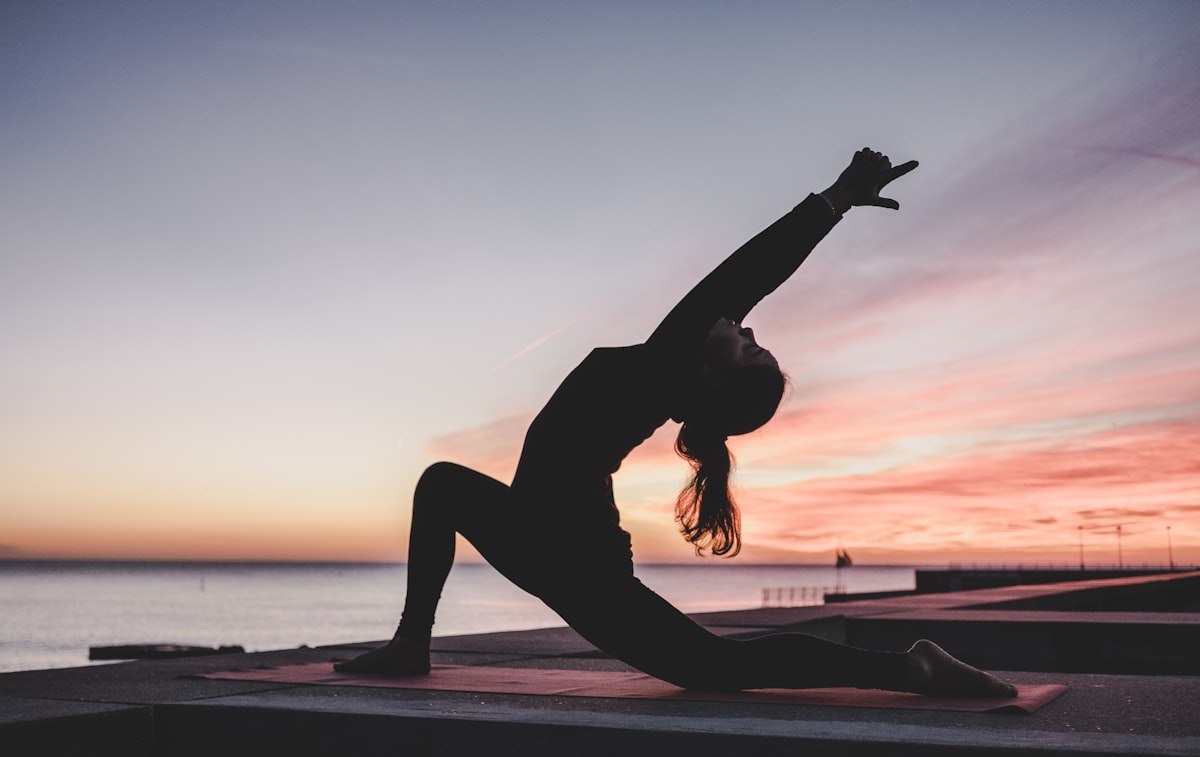
You step off the reformer, legs shaking a little, spine feeling two inches longer than when you walked in. Then you grab your water bottle and go. That’s the moment most people skip — and it’s exactly why I get asked about the best stretches after reformer Pilates class recovery more than almost anything else in my studio. What you do in the ten minutes after class shapes how you feel the next morning. I’ve watched it change everything for clients along the Wasatch Front.
The Best Stretches After Reformer Pilates Class Recovery: The Short Answer
Reformer Pilates is deceptive. It doesn’t feel like a beatdown while you’re doing it — the spring resistance is smooth, the tempo is controlled — and then you wake up the next day and your inner thighs have opinions. That’s normal. Eccentric loading (lengthening a muscle under tension) is the heart of reformer work, and it’s also the type of contraction most associated with delayed onset muscle soreness.
Stretching afterward won’t erase soreness entirely. I want to be honest about that, because the research on stretching and DOMS is genuinely mixed. What it does do — reliably, in my experience teaching in Salt Lake City and Draper — is help you transition out of a working state, restore range of motion you just earned, and make the next 24 hours feel a lot less stiff.
Why Recovery Matters More at Utah Altitude

We live at roughly 4,300 feet in the valley — higher if you’re in Park City. The air is dry. Really dry. I see this with my clients constantly: someone comes in after a weekend of skiing at Alta or hiking Millcreek, dehydrated without realizing it, and their tissue quality feels like beef jerky on the reformer.
Dehydration doesn’t just make you thirsty. It affects how fascia glides, how muscles recover, and how you perceive effort. So before we even talk about stretches, water is part of your recovery protocol. Drink it after class. Drink more than you think you need, especially in January when the inversion settles in and the humidity drops.
The other Utah factor is what people do around Pilates. My Cottonwood and Sandy clients are skiers, trail runners, cyclists up Little Cottonwood Canyon. My Lehi and Utah County clients are often at desks all day and then chasing kids. Recovery has to account for the whole load, not just the hour on the reformer. That’s part of what we talk about in my reformer classes — how the work fits into a real week, not an idealized one.
My Seven Best Stretches After Reformer Pilates Class Recovery
Here’s what I actually cue at the end of a session. You don’t need equipment. You don’t need a mat, though it’s nicer. You need about ten minutes.
1. Half-Kneeling Hip Flexor Stretch
Front foot planted, back knee down, tailwheel gently tucked under. Squeeze the glute of the back leg. Don’t lunge forward — that’s the mistake everyone makes. The stretch comes from the posterior tilt, not the depth. Hold 45 seconds each side. Reformer footwork and jumpboard work loads the front of the hip hard, and if you sit at a desk in between, this one is non-negotiable.
2. Supine Hamstring with a Strap or Towel
Flat on your back, one leg up, loop a towel around the arch. Keep the down leg’s knee bent if your low back wants to round. Slight bend in the stretching knee is fine — I’d rather you feel it in the belly of the muscle than yank on the tendon behind your knee. 45 to 60 seconds each side.
3. Supine Spinal Twist
Knees stacked, arms wide, let the legs fall to one side while you turn your head the other way. Breathe into the side of your ribcage. This is the one clients tell me they feel the most. It decompresses after all that spinal flexion and helps the diaphragm reset.
4. Thread the Needle (Thoracic Rotation)
From hands and knees, slide one arm under the body, shoulder and temple to the floor. Reformer work builds a lot of shoulder stability — this restores rotation.
5. Doorway or Floor Chest Opener
Forearm on a doorframe at 90 degrees, step through gently. Or lie face-down and thread one arm across. Long arms series, arm springs, planks — they all shorten the front of the shoulder. Open it back up.
6. Figure-Four Glute Stretch
On your back, ankle across the opposite thigh, pull the bottom leg toward you. Deep hip work, especially side-lying series and bridging, leaves the glutes and deep rotators tight. This is your relief valve.
7. Standing Calf and Ankle Release
Toes on a step or curb, heel dropping. Then the other version — kneeling, sitting back on your heels with toes tucked under to open the plantar fascia. Footwork on the reformer is a lot of ankle. Skiers especially need this one.
How Long, How Hard, How Often

| Stretch | Hold Time | Best For |
|---|---|---|
| Half-kneeling hip flexor | 45 sec / side | Desk workers, cyclists, footwork soreness |
| Supine hamstring | 45–60 sec / side | Low back tension, runners |
| Supine spinal twist | 60 sec / side | Nervous system downshift, ribcage |
| Thread the needle | 30–45 sec / side | Upper back, shoulder mobility |
| Chest opener | 30–45 sec / side | Posture, arm spring work |
| Figure-four glute | 45 sec / side | Hip tightness, sciatic-type ache |
| Calf and ankle release | 30–45 sec / side | Skiers, hikers, foot cramping |
Intensity should sit around a 4 or 5 out of 10. If you’re gripping your jaw or holding your breath, you’ve gone too far — and the nervous system responds by tightening, which is the opposite of what you want. Static stretching immediately post-workout is where it belongs, when tissue is warm and pliable.
Recovery isn’t a reward for the workout. It’s part of the workout.
Common Mistakes I See With Post-Reformer Recovery
The biggest one: leaving immediately. I get it. You’ve got a meeting, school pickup, the drive back down to Lehi. But I’d rather you shave three minutes off the class and stretch than skip it entirely.
- Bouncing. Ballistic stretching after a controlled workout is a mismatch. Slow and held.
- Chasing a “good pain.” Sharp, pinching, or nervy sensation is a stop signal, not a milestone.
- Only stretching what’s sore. Soreness and tightness aren’t the same thing. Your sore quads may not be the tissue that needs length.
- Skipping the breath. Long exhales are what shift you from sympathetic to parasympathetic. Without them you’re just holding a shape.
- Stretching a joint instead of a muscle. Hypermobile clients — and I work with a lot of them — often feel stretch at the joint capsule rather than the muscle belly. Bend the knee, shorten the lever, back off.
That last point matters. Some people don’t need more flexibility. They need more stability and control. If you can already put your palms flat on the floor without warming up, aggressive stretching may be working against you. Strength through range is the goal — which is exactly what the reformer is built to give you. I go deeper into my philosophy on this on my about page.
Building the Best Stretches After Reformer Pilates Class Recovery Into Real Life

I had a client — a nurse working long shifts, driving in from Sandy — who was convinced she was “too tight for Pilates.” She wasn’t. She was under-recovered. We didn’t change her workload at all. We added ten minutes of stretching after class, a short mobility sequence before bed, and actual attention to hydration. Six weeks later her hip flexor range had visibly changed and she stopped calling herself tight.
Here’s what a realistic recovery week looks like:
- Immediately post-class: 8–10 minutes of the stretches above. Warm tissue, easy wins.
- Same evening: Water, protein, and a short walk if you have the daylight. Movement beats stillness for soreness.
- Next morning: Two or three minutes of gentle spinal rotation and hip opening before you get in the car.
- Between sessions: Sleep. It’s the most underrated recovery tool and no stretch replaces it.
Foam rolling and massage guns can help too — the evidence suggests they mostly work by modulating your perception of soreness rather than physically changing tissue, but honestly, feeling better is a legitimate outcome. Use them if you like them. Contrast showers, Epsom baths, a walk around the Draper trails — all fine. None of them are magic. Consistency is.
A Note on What Pilates Recovery Actually Is
Joseph Pilates developed this method in the 1920s, and he called it Contrology — the study of control. He was working with breath, alignment, and precision long before “recovery” was a wellness category. The stretching I teach at the end of class isn’t separate from the method. It’s the same principles at a lower intensity: breath, control, intention.
So don’t think of it as an add-on. Think of it as the last five exercises of your session. If you’re curious about how this fits into a full reformer practice, come see what a session actually feels like — details on current class offerings and availability are on the classes page, and you can always reach out and we’ll figure out the right starting point for your body.
Frequently Asked Questions
How long should I stretch after a reformer Pilates class?
Eight to twelve minutes is plenty. Hold each stretch 30 to 60 seconds and prioritize hips, hamstrings, spine, and shoulders. Longer isn’t automatically better — consistency across the week matters far more than one long session.
Should I stretch immediately after class or wait until later?
Immediately is ideal, because your tissue is warm and your range of motion is at its best. If you genuinely can’t, a shorter session that evening or the next morning still helps. Something beats nothing every single time.
Will stretching prevent soreness after reformer Pilates?
Not entirely, and I won’t pretend otherwise. Research on stretching and delayed onset muscle soreness is mixed. What stretching reliably does is restore range of motion, improve circulation, and calm your nervous system — which makes the following day feel noticeably better even if the soreness is still there.
I’m already very flexible. Do I still need post-class stretches?
Yes, but differently. Hypermobile bodies often need less aggressive stretching and more focus on breath work, gentle spinal rotation, and stability. Shorten your levers, bend your knees, and stop well before end range. Tell your instructor — it changes how I cue you.
What are the best stretches after reformer Pilates class recovery for low back tightness?
Supine spinal twist, figure-four glute stretch, and half-kneeling hip flexor stretch. Low back tightness is very often hip-driven, not back-driven. If pain is sharp, radiating, or persistent, see a physical therapist or physician — stretching isn’t a diagnosis.
Ten minutes. That’s the whole ask. The best stretches after reformer Pilates class recovery aren’t complicated, expensive, or long — they’re just the ones you actually do, consistently, with your breath leading the way. Whether you’re driving home to Salt Lake City, Park City, or down to Utah County, give your body the closing chapter it earned on the reformer. Your next class will thank you.
— Bianca

ABOUT BIANCA
I’m a certified reformer Pilates instructor and the founder of Alchemize Pilates, a boutique reformer studio serving clients across the Wasatch Front — from Salt Lake City and Cottonwood to Draper, Sandy, and Lehi. I teach strength through range, breath before force, and recovery as part of the work rather than an afterthought.
Leave a Reply