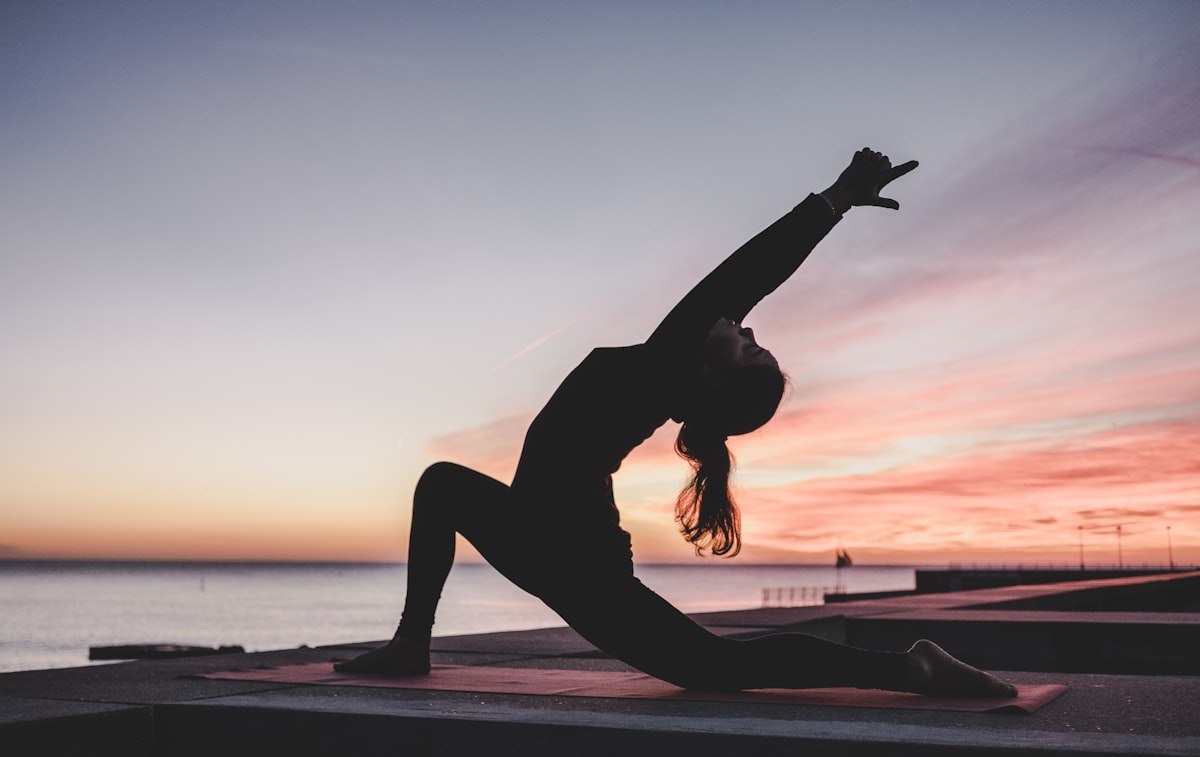
Every January the valley lid closes. The air goes grey and flat, the mountains vanish behind the haze, and the run you had planned along the Jordan River suddenly feels like a bad idea. That’s the moment most people start hunting for indoor workouts to get them through a Salt Lake City winter inversion — and it’s the moment reformer Pilates tends to make a lot of sense. Not because it’s a consolation prize for bad air, but because it asks for control rather than volume, and it happens entirely inside.
Why the inversion changes what your training should look like
An inversion is simple physics. Cold, dense air settles into the bowl between the Wasatch and the Oquirrhs, a warmer layer caps it, and everything we emit stays put until a storm scours it out. Fine particulate matter — PM2.5 — is small enough to cross from your lungs into your bloodstream. That’s why the air quality index matters to anyone breathing hard outside, and why air quality guidance advises everyone to limit sustained outdoor exertion on red days, and sensitive groups to do the same on orange days.
Here’s the part people miss: hard aerobic effort multiplies your exposure. You move more air per minute, and you shift from nose breathing to mouth breathing, which skips the filtering your nose would otherwise do. A ninety-minute tempo run on a bad-air day is not the same dose as a walk to the car.
So the smart winter move isn’t to stop training. It’s to move the work indoors and change what the work is asking of you.
What reformer Pilates gives you on a bad-air day

Reformer Pilates is an indoor, low-impact, strength-and-control practice done on a sliding carriage against spring resistance. During an inversion it works well because the intensity lives in load and tempo rather than in how hard you’re breathing. You can train legs, back, hips and deep abdominals thoroughly while keeping your breath measured instead of gasping — which is exactly what you want when the outside air isn’t worth gulping.
That last point deserves more than a sentence. In Pilates, breath is a cue, not a byproduct. I’m asking you to exhale on the effort, to keep the ribs from flaring, to keep the breath steady through a slow eccentric. Steady, nasal, controlled breathing is the default — not a compromise.
Spring resistance versus the things you’d normally do
I’m not going to pretend the reformer is the only answer. Plenty of indoor training works well through inversion season. Here’s how I’d actually compare the options if you live along the Wasatch Front and you’re reshuffling your winter weeks.
| Indoor option | What it’s good for | Honest limitation |
|---|---|---|
| Reformer Pilates | Strength, mobility, control, spinal and hip mechanics at a moderate breathing rate | Not a cardio substitute on its own |
| Treadmill / indoor cycling | Keeps aerobic fitness intact | Indoor air still carries some infiltrated PM2.5; high ventilation rate |
| Free weights / barbell | Max strength, bone loading | Does little for mobility or movement quality |
| Mat Pilates / yoga at home | Free, zero commute, easy to repeat | No external load to progress against |
| Swimming | Zero impact, good aerobic work | Chlorine irritation for some airways |
The honest version: a good winter looks like a mix. Reformer work for strength and control, something aerobic indoors a couple of times a week, and a willingness to get outside the second a storm clears the valley. If you’re curious how the reformer fits that mix, the class formats page lays out what the sessions actually involve.
Training indoors through inversion season without losing ground

Winter in Utah does a particular thing to bodies. Hours of sitting through dark afternoons. Heavy coats and hunched shoulders at the bus stop. Then weekends that swing violently the other way — a ski day that loads the quads and the knees for five straight hours after six days of almost nothing.
That swing is the real risk, more than the air. It’s the reason I think of winter indoor training as the thing that keeps you available for the good days rather than as a holding pattern.
What I actually look for on the carriage in these months:
- Hip extension that comes from the glutes, not the low back. Sitting all week shortens the front of the hip. If the pelvis tips forward during footwork or bridging, the spring is being paid for by the lumbar spine.
- Eccentric control on the return. The carriage coming back in is where the training is. If it slams home, the resistance is pushing you around instead of the other way.
- Ribs that stay down on the exhale. Flared ribs mean the deep abdominal wall has opted out and the accessory breathing muscles have taken over.
- Ankle and foot behaviour in footwork. Ski boots and winter boots immobilise the foot for months. I watch whether the arch holds or collapses inward as the spring loads.
- Symmetry between sides. Spring resistance is beautifully honest here — the carriage tracks straight or it doesn’t, and you feel it before I say anything.
None of that requires you to breathe hard. All of it requires you to pay attention. That difference is the whole argument for this kind of work in January.
Small things that make a bad-air week easier
Beyond the training itself, a few practical habits help through a sustained inversion:
- Check the AQI before you plan, not after. Utah’s Division of Air Quality posts forecasts. Plan your outdoor days around them rather than hoping.
- Go up when you can. Inversions are a valley phenomenon. Higher up Big and Little Cottonwood Canyons you can often climb above the layer into clear air and sunshine — one of the few genuine perks of living here.
- Filter your indoor air. Particulate matter infiltrates buildings. A decent HEPA filter in the room where you sleep makes a measurable difference to what you’re breathing for eight hours a night.
- Keep moving daily, even gently. Movement at a conversational breathing rate is almost always worth doing. The threshold worth respecting is hard, sustained effort outdoors.
- Don’t let the mid-week gap grow. Two or three sessions spread across the week beats one heroic Saturday.
Why control beats exhaustion when the air is heavy

It’s easy to believe a workout only counts if you finish it wrecked. The reformer is a good place to unlearn that, because a spring will tell you immediately whether you’re controlling the movement or just surviving it. It’s the same idea behind why I started Alchemize.
Inversion season rewards that reframe. When the air outside means you can’t just go run it off, you’re forced to ask what the session is actually for. Usually the answer is: tissue quality, joint range, strength you can access under control, and a nervous system that isn’t permanently braced. Those adapt beautifully to moderate, precise, repeated work. They don’t require you to be out of breath.
There’s also the mood piece, which I’ll state carefully because it’s easy to oversell. Grey skies, short days, and weeks of staying inside do something to most people. Regular movement is one of the better-supported levers we have for mood and sleep. I won’t promise you a session fixes February. I will say that showing up to something structured, three times a week, when the valley is socked in, tends to be worth more than it looks on paper.
Who this suits — and who it doesn’t
Reformer work in winter tends to suit you if you’re a runner or cyclist whose outdoor volume has collapsed, a skier who wants their legs and hips ready for the weekend, someone with a desk job in Lehi or downtown who feels the sitting accumulate, or anyone whose joints prefer load without impact.
It’s a weaker fit if your single goal this winter is aerobic capacity for a spring race. Pilates will support that — it will not replace it. Pair it with indoor intervals and be honest about which one is doing which job.
And if you have asthma, COPD, or another respiratory condition, the inversion isn’t a scheduling inconvenience; it’s a medical consideration. Talk to your clinician about how they want you to train during poor air quality, and bring what they tell you with you so it can shape the session.
Starting an indoor reformer practice this winter
If you’ve decided that staying inside while the valley sits under its lid is the right call, the next step is small. Look at what the sessions actually involve on the class formats page, then ask about openings and I’ll tell you what’s currently available. If you’d rather just ask a question first — about your knee, your ski season, your schedule — send me a message.
The inversion will lift. It always does, usually behind a storm, and the mountains come back like someone pulled a sheet off them. Until then, training indoors through the Salt Lake City winter haze on a reformer is a genuinely good use of a grey month: low impact, controlled breathing, real strength, and a body that’s ready the moment the air clears.
— Bianca
Is it actually unsafe to exercise outside during a Salt Lake inversion?
It depends on the air quality index and the intensity. Hard aerobic effort dramatically increases how much fine particulate matter you inhale, because you move more air and shift to mouth breathing. Standard AQI guidance is to limit sustained outdoor exertion on red days, and on orange days if you’re in a sensitive group, including anyone with a respiratory condition. A short walk is a very different dose than a tempo run.
Does reformer Pilates count as cardio?
Not really, and I’d rather be straight about that. A well-paced reformer session will raise your heart rate and leave you working, but it’s built around strength, control and mobility rather than sustained aerobic output. If aerobic fitness is a winter priority, pair reformer work with indoor cycling, a treadmill, or swimming.
Will indoor training keep my legs ready for ski days?
It can help significantly. Skiing demands eccentric quad strength, hip and glute control, and the ability to absorb load through a bent knee — all of which translate well from spring-loaded work on a reformer. It isn’t a substitute for ski-specific conditioning or for actual mileage on snow, but it closes the gap created by a sedentary mid-week.
How often should I train indoors during inversion season?
For most people, two to three structured sessions a week is a sustainable target through winter, with gentle daily movement around it. Consistency matters far more than intensity here. One very hard session on a Saturday after six quiet days is the pattern most likely to cause problems.
I have asthma — can I still do reformer Pilates in winter?
Many people with well-managed asthma do low-to-moderate intensity indoor movement comfortably, but this is a question for your doctor rather than for me. Ask them specifically about exertion during poor air quality days, and bring their guidance with you so the session can be adjusted around it.

Bianca is a certified reformer Pilates instructor and the founder and lead instructor at Alchemize Pilates. She teaches small-group reformer classes, one-on-one private sessions and online programs, with a focus on control, breath and movement quality over exhaustion.
Leave a Reply