When you start reformer work, it’s fair to ask whether anything actually changes from week to week, or whether you just keep doing footwork forever. It changes. But not in the way most workout programs change — the load isn’t the first thing I move.
What Actually Changes First Isn’t The Weight
Progression on a reformer happens along several axes at once: range of motion, spring load, lever length, stability demand, tempo, and how much of the movement you control versus how much the carriage controls you. In early weeks, most of the change is in range and control. Load comes later, and sometimes load goes down to make an exercise harder.
That last point can be surprising. On a reformer, lighter springs often mean more work for you, because the springs are no longer holding the carriage steady. Fewer springs in footwork is easier. Fewer springs in a feet-in-straps series is brutal. Spring math isn’t a simple dial from easy to hard — it depends entirely on whether the spring is assisting you or resisting you.
A Realistic Arc Of Reformer Progression Week By Week

Bodies move at different speeds, and nothing below is a promise about yours. But this is the shape the method generally takes, and it’s what I’m watching for as a certified reformer Pilates instructor.
| Phase | What the work focuses on | What I’m looking for before moving on |
|---|---|---|
| Early weeks | Orientation to the carriage, footwork, bridging, basic arm and leg springs. Short levers, generous support. | Can you start and stop the carriage quietly? Does your ribcage stay down as your arms move? |
| Middle stretch | Longer levers, kneeling and side-lying positions, more rotation, less spring assistance. | Does the carriage still travel at the same speed in both directions, or does it get yanked home? |
| Later work | Standing and plank-based work, single-leg loading, flow between exercises with fewer resets. | Can you hold the position while something else moves — and keep breathing? |
Notice none of those gates are “add a spring.” They’re quality gates. The carriage is an honest reporter: it clunks when you lose control and it glides when you don’t. That sound is a progression test I don’t have to explain.
How I Decide When To Advance Someone
I watch the return journey. Pressing out on a reformer is the easy half — almost everyone can push a carriage away. Controlling it back in, slowly, against the pull of the springs, is where eccentric strength lives, and it’s the half that fails first. If the carriage accelerates home at the end of a set, the body is telling me it’s done, regardless of what the plan said.
I also watch the shoulders in kneeling work and the pelvis in anything single-legged. Those two places leak control before anything else does. When they stop leaking, the next tier of exercises becomes worth teaching. When they’re still leaking, adding difficulty just builds a louder version of the same compensation.
New to all of this? Start with the first reformer Pilates class beginner’s guide before you think about progressions at all. You can also look through the class formats to see how the work is grouped.
Progressing Over Weeks Of Training Without Chasing Intensity
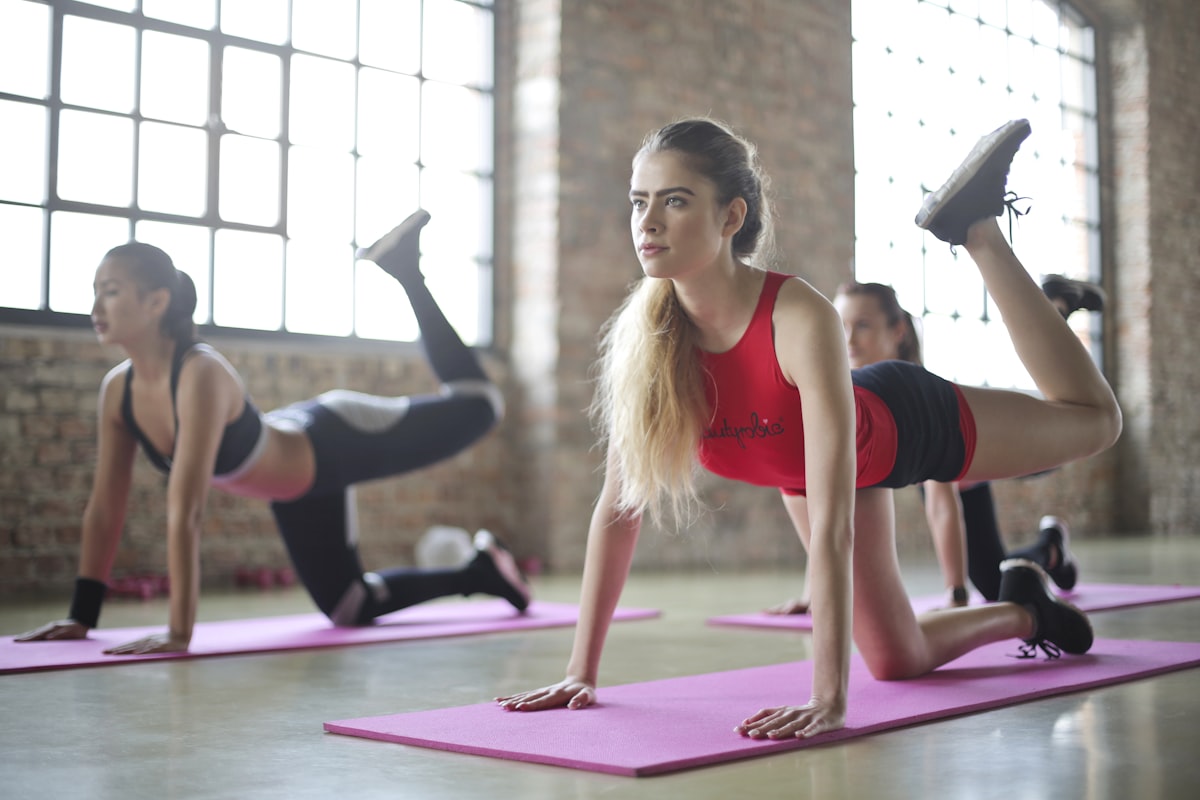
If you train in the Wasatch Front and your week already includes skiing, trail running up Millcreek, or long hours at a Lehi desk, your reformer programming shouldn’t be a competition with those. It should be the thing that makes them sustainable. Progression in Pilates is measured in control, symmetry and range — not in soreness.
There’s an honest limitation here too. Reformer work is excellent at building control, spinal mobility, hip and shoulder stability, and deep core recruitment. It is not a substitute for heavy strength training if your goal is maximal load, and it isn’t cardiovascular conditioning. Plenty of people need both. I’d rather tell you that than pretend one modality covers everything.
Repeating Exercises Is The Progression
The same exercise at week nine is not the same exercise at week one. Same name, same springs, different body underneath it. Footwork with ribs anchored and even pressure through both feet is a genuinely different stimulus than footwork with the pelvis tipping. That’s why a well-built reformer repertoire reuses its vocabulary instead of constantly replacing it — depth is the progression, novelty is just entertainment.
Consistency matters more than variety. Two sessions a week, held steady, tend to reshape coordination faster than an occasional heroic one.
Curious where you’d start and how the work would build from there? Tell me what you’re training for and what your body has been through.
Get in touchWhere To Begin
Knowing how the work progresses takes the pressure off the first few sessions. You’re not meant to be good at it yet — you’re meant to be legible, so the work can be built on something real. If you’d like to talk through a starting point, reach out and ask about openings and we’ll find the right place to begin.
— Bianca
How many weeks before reformer Pilates feels different?
Coordination and body awareness typically shift before visible strength does, often within the first handful of sessions. Measurable changes in stability and range tend to take longer and depend on frequency, sleep and what else you’re doing. Bodies vary widely, so treat any timeline as a rough shape rather than a guarantee.
Do heavier springs mean a harder reformer workout?
Not reliably. Whether a spring makes an exercise harder depends on whether it’s resisting your movement or supporting it. In footwork, more springs means more resistance. In feet-in-straps or kneeling arm work, fewer springs removes support and increases the stability demand considerably.
Should I take the same class format every week or rotate?
Repetition builds the pattern; rotation builds adaptability. Both work. If you’re brand new, staying with one format longer helps the movements become familiar enough that you can refine them. You can review the class formats and ask me what makes sense for where you are.
Can reformer Pilates replace strength training?
It builds real strength, particularly eccentric control, deep core recruitment and shoulder and hip stability. But it does not load the body the way barbell work does. If maximal strength is your goal, treat reformer work as a complement rather than a replacement.
What if I’m coming back from an injury?
Bring whatever your physical therapist or doctor told you — restrictions, ranges to avoid, timelines — and share it before we begin. That information directly shapes spring choice, positioning and which exercises stay off the list for now. The more specific you can be, the better the programming.

Bianca is a certified reformer Pilates instructor and the founder and lead instructor at Alchemize Pilates. She teaches small-group reformer classes, one-on-one private sessions and online programs, with a focus on control over intensity. Read more about why she started Alchemize.