If you’ve been circling the question of private vs group reformer Pilates and which is right for you in Utah, the honest answer is that it depends less on your fitness level than on how much feedback your body needs to move well. Both formats use the same springs, the same carriage, the same method. What changes is how much of my attention lands on you.
The real difference isn’t difficulty — it’s feedback
A private reformer session is one-on-one. The workout is built around your body in the moment, I can change a spring mid-exercise, and every cue is yours. A small-group reformer class runs a shared sequence with individual adjustments layered in. Privates give you the most correction per minute. Group classes give you consistency, rhythm and a room full of people doing hard work next to you.
That’s the whole decision, really. Everything below is just helping you figure out which one your body is asking for right now.
Choosing between one-on-one and small-group reformer work

| Consider | Private sessions | Small-group classes |
|---|---|---|
| Best when | You’re returning from injury, post-partum, hypermobile, or you want to learn the machine properly | You want regular, repeatable training and you can follow cues in a group |
| Pacing | Set entirely by your body that day | Set by the sequence, with modifications offered |
| Feedback | Continuous, exercise by exercise | Targeted — I come to you where it matters |
| Energy | Quiet, focused, analytical | Momentum from the room |
| Progression | Custom, often faster on technical work | Built through repetition over weeks |
Plenty of people do both. A handful of privates to learn footwork, strap work and how the footbar and headrest should be set, then group classes to build the habit. That combination is common for a reason — the privates buy you literacy, the classes buy you mileage.
What I look for before I recommend one over the other
When someone tells me what they want from reformer Pilates, I’m listening for three things.
- Can you find the position I’m describing from words alone? Some bodies translate “ribs down, shoulder blades wide” instantly. Others need an image, a prop or a slower rep before it lands. If verbal cueing doesn’t land yet, privates are the shortcut.
- Is there a region that needs watching? Shoulders that shrug under the straps, a knee that tracks inward in footwork, a low back that takes over in leg circles. On the reformer, loaded repetition makes a compensation stronger, not just visible. I’d rather catch that one-on-one first.
- Does your schedule reward rhythm or flexibility? Group formats reward showing up on a repeatable cadence. If your week is unpredictable, privates often survive contact with real life better.
Spring tension is the piece most people guess wrong about. Lighter isn’t easier. Reduce the load on a strap exercise and you ask the small stabilizers of the shoulder to do more work, not less. Heavier springs can actually support a tender low back in bridging. Knowing which direction to go for your body is exactly the kind of thing a private session is for — and it’s the thing I’ll adjust for you in class once I know your pattern.
Where reformer Pilates fits with the rest of your training
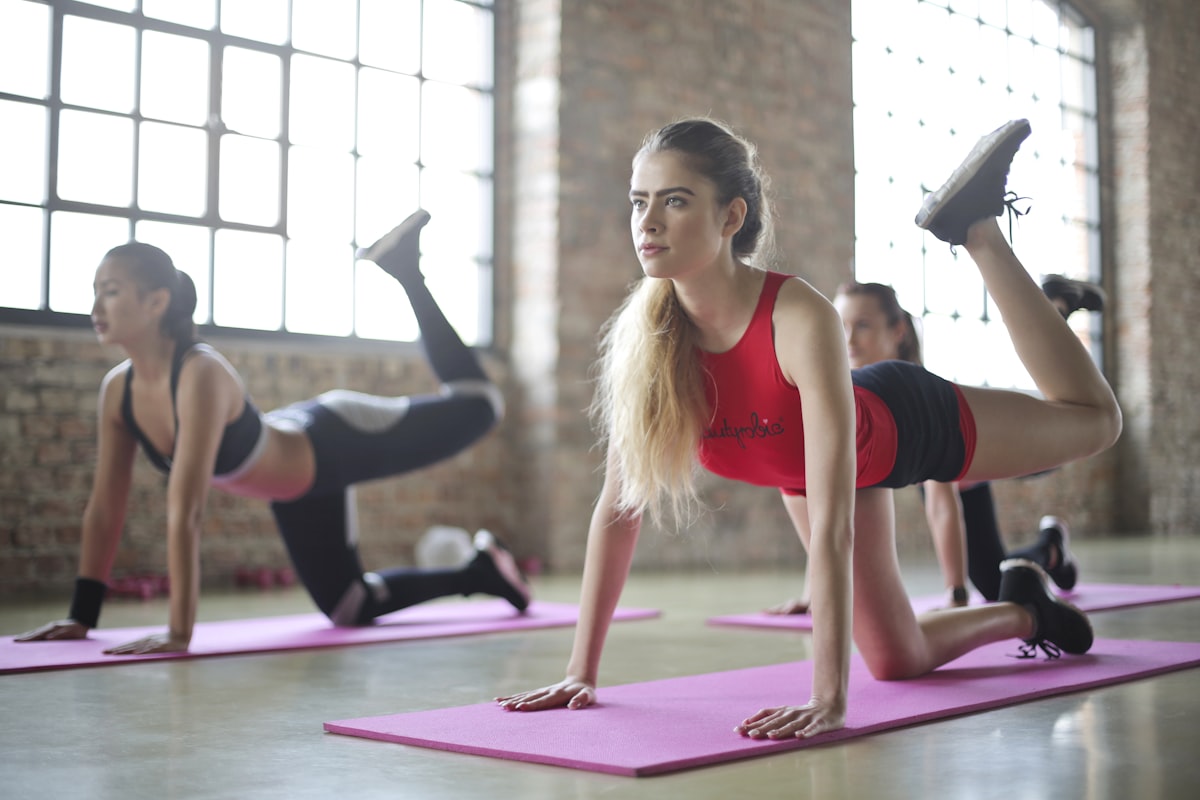
If you live along the Wasatch Front, your body is probably already doing something — skiing Little Cottonwood in February, a road bike up Suncrest, a commute from Lehi that keeps you seated for an hour each way. Reformer work earns its place by addressing what those activities don’t: eccentric control, rotation, single-leg stability, and the deep hip and abdominal work that holds a skier’s knee in line on a long descent.
Whether you’re in Draper, Sandy, Salt Lake City, Park City or further down Utah County, the format question matters less than consistency. If you’re still weighing the reformer against a gym membership entirely, I compared the two directly in reformer Pilates vs the gym. And you can read through the class formats to see how the group sessions are structured and what private work involves.
I’ll also be straight with you: group reformer isn’t for everyone, and neither is private training. Some people need the accountability of a room. Some need silence and specificity. Some do better with a physical therapist first, and if that’s you, I’ll say so.
Still deciding on private vs group reformer Pilates in Utah?
Tell me what you’re working with — an injury history, a goal, a sport, a body that’s changed and you’re not sure how to train it. I’ll tell you honestly which format I’d start you in, and what’s currently open.
How to make the first decision a low-stakes one
You don’t have to get this right permanently. Formats aren’t a commitment to a personality — they’re a tool you pick up for the season you’re in. Start where you’ll actually show up, pay attention to what your body does in week three versus week one, and change course if the feedback tells you to. That’s the whole method: load, observe, adjust.
So if you’ve read this far and still can’t decide between the two, let’s stop guessing. Reach out and ask about openings, tell me about your body, and I’ll point you to the format that gives you the most useful work for the time you’ve got.
— Bianca
Is private reformer Pilates better than a group class?
Better isn’t the right frame — more specific is. A private session gives you continuous correction and a workout shaped around your body that day, which is why it suits rehab-adjacent goals and technical learning. A group class gives you structure, repetition and the energy of the room, which is often what builds the habit. Many people use both.
Should a complete beginner start with privates or a group reformer class?
Either can work. Privates tend to accelerate the learning curve because I can set your springs, footbar and straps and explain why. If you’re generally active, follow verbal cues easily and have no injury you’re protecting, a beginner-oriented group format is a perfectly reasonable starting point.
Can I switch between private and group sessions?
Yes, and it’s a sensible way to train. A common approach is learning the machine one-on-one, then moving into group classes for consistency, with occasional privates when something new comes up — a new sport, a flare-up, a plateau. Reach out and I’ll tell you what’s currently open.
Is the reformer workout itself different in a private session?
The repertoire is the same. The sequencing, spring load and tempo are what change. In a private I’ll build around what your body presents that day; in a group class the sequence is set in advance and I layer individual modifications on top of it.
Do I need prior Pilates experience for reformer work?
No. The reformer’s springs can assist as readily as they resist, which makes it an unusually adaptable machine for people new to the method. What matters more than experience is telling me what your body is dealing with before we start loading it.

Bianca — Founder & Lead Instructor, Alchemize Pilates
I’m a certified reformer Pilates instructor who teaches small-group classes, one-on-one privates and online programs. I care more about how you move than how hard you can make something look. If you’re not sure where to start, reach out — I’d rather hear about your body than guess.