Pilates for Weight Lifters: The Cross-Training Edge You’re Missing
Reformer Pilates designed for bodies that already work hard under the bar.
If you deadlift, squat, bench, and press multiple times a week, you probably don’t think you need Pilates. I hear it all the time from clients along the Wasatch Front — Draper, Sandy, Lehi — who walk in skeptical and walk out converted. Pilates for weight lifters cross training isn’t about replacing your program. It’s about making your program actually sustainable. It fills the gaps that heavy loading creates: restricted mobility, underactive stabilizers, compressed joints, and movement patterns that eventually break down.
Why Weight Lifters Need Pilates for Cross Training
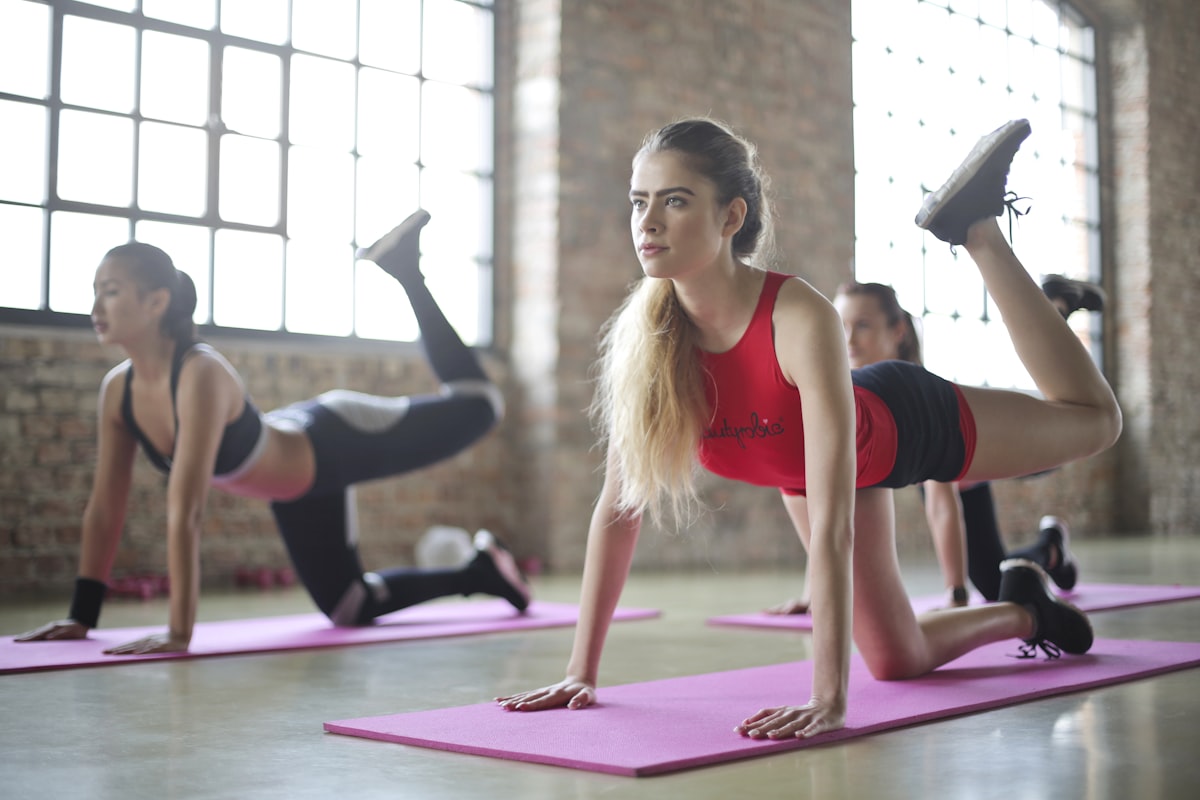
Reformer Pilates complements strength training by targeting what barbells and dumbbells can’t: deep stabilizer activation, spinal articulation, eccentric control, and rotational mobility. Here’s what it specifically addresses for lifters:
- Hip mobility and thoracic extension — critical for clean squats and overhead pressing
- Scapular stability — protects shoulders during bench, rows, and snatches
- Deep core engagement — not crunches, but real transverse abdominis and pelvic floor activation that braces your spine under load
- Eccentric lengthening — the reformer’s spring resistance trains the “lowering” phase, reducing muscle imbalance and injury risk
- Joint decompression — after heavy axial loading, controlled reformer work restores space and fluid movement
Joseph Pilates developed his method in the 1920s partly to rehabilitate injured soldiers. The principles — control, precision, breath, centering — were never about being “gentle.” They were about building resilient, functional bodies. That’s exactly what a lifter needs.
What I See in My Studio With Lifters Who Cross Train

I’ve worked with competitive powerlifters, CrossFit athletes, and recreational gym-goers all across Utah — from Salt Lake City to Utah County. The pattern is almost always the same when they first step onto the reformer.
They’re strong. Obviously. But ask them to articulate through their lumbar spine one vertebra at a time? Or stabilize their pelvis while extending a single leg against spring tension? That’s where the cracks show. One client — a guy who could squat well over 400 pounds — couldn’t hold a single-leg bridge on the reformer without his hip dropping. Not because he was weak. Because his body had learned to compensate, and the reformer exposed it immediately.
Within six weeks of adding one reformer session per week to his lifting schedule, his squat depth improved, his low-back tightness decreased, and his hip shift during heavy pulls disappeared. He didn’t change his lifting program at all. He just added the missing input.
If you’re curious about how reformer Pilates stacks up against traditional gym training, I’ve written a detailed comparison of reformer Pilates vs. the gym that breaks it down honestly.
Pilates for Weight Lifters Cross Training: What a Session Looks Like
When I work with lifters, sessions are intentional. This isn’t a random stretch class. I program around their training split. If you’re pressing heavy on Monday, your Pilates session that week will focus on scapular mobility, thoracic rotation, and shoulder stability — not more shoulder work.
A typical session includes:
- Footwork on the reformer for ankle mobility and single-leg balance
- Long stretch series for anterior chain lengthening and core integration
- Hip opener sequences targeting the deep external rotators
- Arm work on light springs for rotator cuff endurance
- Spinal articulation (bridging, roll-ups) for segmental control
Every movement has a purpose that connects back to your performance under the bar. You can explore all of our current class offerings to find the right session format for your schedule — whether that’s a small group class or a private session.
Who This Is For
You don’t need to be an elite athlete. This is for anyone in Utah who lifts weights regularly and has started to notice the limitations: tight hips that won’t open up no matter how much you foam roll, nagging shoulder impingement, a core that fires in only one dimension, or the sense that you’re strong but brittle.
It’s also for lifters who are smart enough to invest in longevity. You want to still be training at 50, 60, 70. That requires more than progressive overload. It requires intelligent recovery, mobility maintenance, and movement variety.
Ready to experience what reformer Pilates can do for your lifting? Book your first session at Alchemize Pilates.
View class formatsIf you lift heavy and you’ve never tried reformer work, pilates for weight lifters cross training might be the most productive hour you spend all week. Not instead of your barbell work. Alongside it. Come see what your body has been asking for. I’ll meet you on the reformer.
— Bianca
Frequently Asked Questions
Will Pilates make me lose my strength gains?
No. Pilates doesn’t replace your strength training — it supports it. Most of my clients who lift weights add one or two reformer sessions per week and report improved mobility, better recovery, and more stable lifts without any decrease in strength.
How often should a weight lifter do Pilates for cross training?
One to two sessions per week is the sweet spot. That’s enough to improve joint mobility, core stabilization, and muscle balance without interfering with your lifting recovery. I typically recommend scheduling Pilates on a lighter training day or active recovery day.
Is reformer Pilates better than mat Pilates for lifters?
For lifters, yes — I recommend the reformer. The spring-based resistance provides variable load that challenges stabilizers in ways mat work can’t. The reformer also allows for traction and decompression, which is especially valuable after heavy axial loading from squats and deadlifts. You can read more in my reformer vs. gym comparison.
I’m a beginner to Pilates but advanced in the gym — where do I start?
Start with a private session so I can assess your movement patterns and build a plan around your lifting schedule. Gym strength doesn’t automatically translate to reformer proficiency — and that’s the whole point. Check our class formats and ask me what’s currently open.
Can Pilates help with lifting injuries like low back pain or shoulder impingement?
Pilates is excellent for addressing the root causes of common lifting injuries — compensatory patterns, poor scapular control, weak deep stabilizers. While I’m not a physical therapist and always recommend seeing one for acute injuries, many of my clients use reformer Pilates as part of their rehabilitation and long-term injury prevention strategy.