
A tennis serve is a spiral. So is a squash rotation, a pickleball dink, a padel flick off the glass. Every one of them asks your body to load on one leg, rotate through the middle, and decelerate — over and over, for hours. That is exactly why Pilates for tennis and racquet sport players performance keeps coming up in my studio, and why I think it belongs in almost every racquet athlete’s week. The court builds your game. Something else has to build the structure the game is played on.
Why racquet sports quietly build a lopsided body
Racquet sports are asymmetrical by design. One arm swings. One leg usually plants. One side of the trunk does the bulk of the rotating, and the other side spends its life bracing against that rotation. Do that for a season and the body adapts — because adaptation is what bodies do. It gets very good at your dominant pattern and quietly lets the other side go along for the ride.
Here is the direct answer, if you only read one paragraph: Pilates helps racquet sport athletes by training rotation from the deep trunk instead of the low back and shoulder, restoring thoracic spine and hip mobility that repetitive one-sided play erodes, and building the eccentric control needed to decelerate after a lunge or a serve. That combination tends to show up on court as a cleaner kinetic chain and less end-of-match sloppiness.
What I look for in a racquet player’s first session is simple and it rarely surprises me:
- Thoracic rotation — how much turn comes from the mid-back versus how much is stolen from the lumbar spine.
- Single-leg stability — whether the hip can hold the pelvis level under load, or whether the knee dives inward on a lunge.
- Shoulder mechanics — does the shoulder blade glide on the ribcage, or does the arm just yank off a stiff, elevated scapula?
- Breath — shoulder breathers almost always over-recruit the outer abs and lose the deep support that rotation actually needs.
- Deceleration — can you stop as well as you start? Most players can’t, and that’s where injuries live.
Rotation is a full-body skill, not an ab exercise
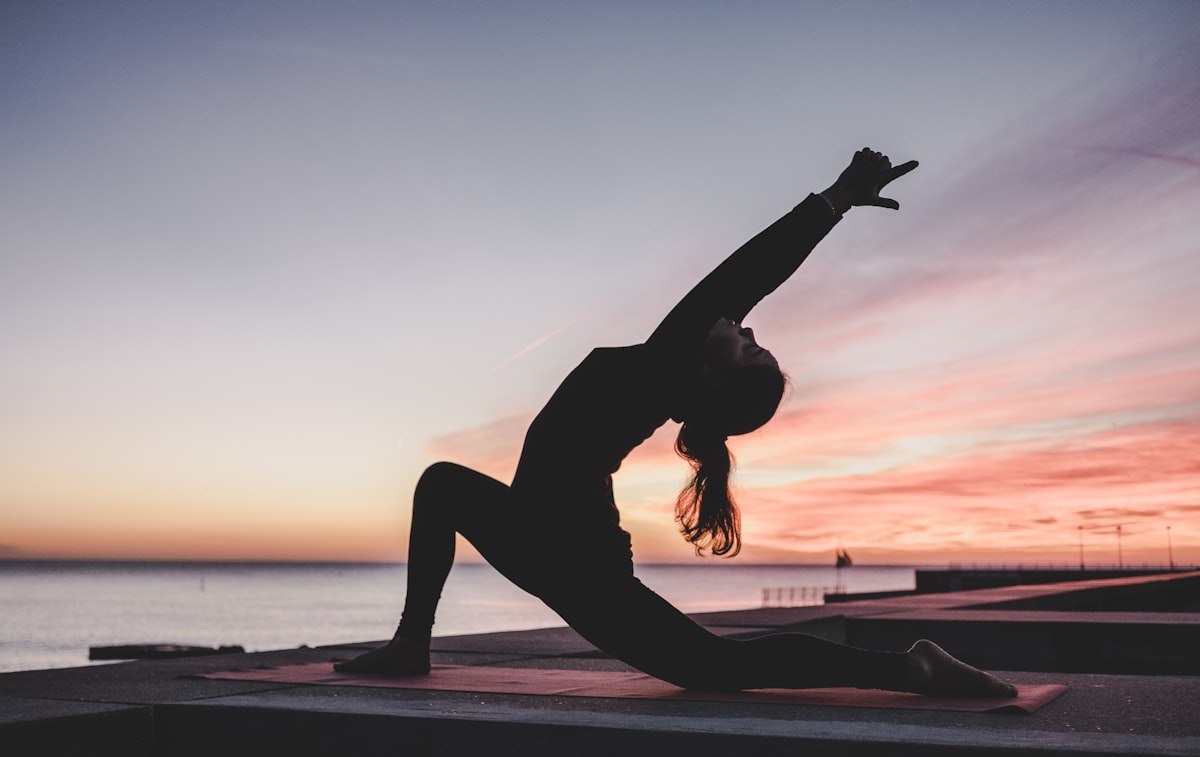
Ask most players where a forehand comes from and they’ll point at the shoulder. Ask a coach and they’ll say the legs. Both are half right. Power travels up from the ground through the hip, across the trunk, out the arm — and the trunk is the transfer point. If the middle leaks, the arm has to make up the difference, and the arm is the smallest structure in the chain.
This is the part Pilates is unusually well suited to. The reformer gives you spring resistance that changes through the range of motion, which means you can train rotation slowly, with feedback, without the ballistic load of a live ball. You learn what it feels like to rotate the ribcage over a stable pelvis. Then you learn to do it while one leg is loaded. Then you learn to stop the rotation on command — which is the skill that protects an elbow and a low back far more than any amount of raw strength does.
Joseph Pilates developed this method in the 1920s, originally training dancers and, notably, boxers — athletes whose sport is also built on rotational power and controlled recovery. The spring-based apparatus wasn’t invented for tennis, but the problem it solves is the same problem a tennis player has.
What Pilates for racquet athletes actually changes
| On-court problem | What’s usually underneath it | What Pilates trains |
|---|---|---|
| Serve loses pop late in a match | Trunk fatigue; arm compensating for a leaky middle | Deep trunk endurance, breath-linked bracing |
| Low back tightens after play | Lumbar spine rotating because the thoracic spine won’t | Segmental thoracic mobility, pelvic control |
| Knee pain on the lunge side | Hip can’t control femur rotation; knee collects the force | Single-leg loading, glute and deep hip work |
| Elbow or shoulder irritation | Scapular instability; arm acting alone | Shoulder blade mechanics on a moving ribcage |
| Slow first step, heavy recovery | Poor eccentric control; no elastic return | Deceleration and controlled lengthening under spring |
I want to be honest about what this is not. Pilates will not build maximal strength the way a barbell does, and it will not replace on-court footwork drills or a proper conditioning block. If you need to squat more weight, go squat. If your split step is late, that’s a coaching problem. Pilates sits underneath both — it makes the strength you build usable and the movement you drill repeatable.
If you’re weighing this against your current gym routine, I wrote a longer comparison of reformer Pilates versus the gym for Utah athletes that goes into where each one genuinely wins. Most competitive players I talk to end up doing both.
The Utah factor: altitude, dry air, and a very long shoulder season

Playing racquet sports along the Wasatch Front is its own thing. Salt Lake City sits above four thousand feet and the air is dry, so recovery demands more from you than it would at sea level. Outdoor courts in Draper and Sandy go cold early and warm late, which means a lot of players compress their season and then play too much of it at once. Indoor pickleball has exploded across Utah County and Lehi, and pickleball is deceptively hard on the body — low, quick, repetitive, and played by a lot of people who came to it later in life.
Then there’s the crossover. Half the racquet players I meet in this valley also ski. Park City and Little Cottonwood mean their winter is spent in a different kind of one-sided loading, and they arrive at spring tennis with hip flexors that have been short since November. If you sit at a desk all week and ski on weekends, the hips usually complain first, and the thoracic spine second.
None of that is a reason to play less. It’s a reason to spend a small, consistent amount of time on the structural work — the mobility, the single-leg control, the breath — so the season doesn’t end early.
How to fit reformer work into a playing week
The most common mistake I see is treating Pilates as a hard workout stacked on top of an already hard week. It isn’t meant to be that. For an athlete in season, it’s a quality session, not a smash session.
A structure that tends to work:
- One to two sessions a week during the season. Enough to hold your mobility and control. Not so much that you’re adding fatigue before matches.
- Place it on a light or off day — or the morning after a heavy match, when controlled movement helps more than rest does.
- Two to three a week in the off-season. This is when you actually change things: build hip strength, unwind rotational asymmetry, rebuild shoulder mechanics.
- Give it four to six weeks before you judge it. Breath and posture changes show up first. Power transfer takes longer, because you’re rewiring a movement habit, not just a muscle.
Expect the first few sessions to feel oddly humbling. Strong athletes often find the slow, small work harder than the explosive work, because the explosive work lets you hide compensations and the slow work does not. The players who progress fastest are the ones who let the work be boring for a while.
Training the side you don’t serve with

You do not need perfect symmetry. A career racquet athlete will always have a dominant side, and chasing a mirror image is a waste of training time. What you need is enough capacity on the non-dominant side that it can share the work when the dominant side is tired or irritated.
On the reformer this is straightforward, because almost everything can be done unilaterally. Single-leg footwork. One-arm pulls against the springs. Side-lying work that loads the hip abductors, which are the quiet stabilizers behind every lateral shuffle to a wide ball. When you take one side at a time, the weaker side can’t hide behind the stronger one — the spring tells you immediately.
The other thing I emphasize with racquet players is lengthening under load. Your sport is full of eccentric moments: the racquet decelerating after contact, the lunge leg absorbing your bodyweight, the trunk stopping a rotation it just created. Spring resistance makes the return phase of every movement meaningful, which is precisely the phase most gym training rushes through.
Where to start if you play in the Salt Lake valley
Start with an honest assessment of your own body. Which way do you turn easily, and which way feels like the door sticks? Can you stand on your lunge leg, bend the knee, and keep your pelvis level without the arch of your foot collapsing? Can you breathe into your back ribs without your shoulders climbing?
Then get eyes on it. A qualified instructor should be able to tell you what they see in the first ten minutes and what they’d prioritize. You can look at the class formats to get a sense of how the work is structured — small-group reformer classes, one-on-one private sessions, and online programs — and if you’re not sure which fits a competitive playing schedule, reach out and I’ll tell you what’s currently open.
If you’re managing an existing injury — an elbow, a rotator cuff, a disc — loop in your physical therapist or physician first. I’m a certified reformer Pilates instructor, not a medical provider, and the best outcomes I see happen when Pilates supports a rehab plan rather than substituting for one.
The short version: your sport asks the same tissues to do the same thing thousands of times a season. Something in your week has to restore rotation, rebuild single-leg control, and teach you to stop as well as you start. Done consistently, Pilates for tennis and racquet sport players performance is less about adding a new workout and more about protecting the one you actually love — the match itself.
— Bianca
How often should a tennis player do Pilates?
One to two sessions a week is usually enough to maintain mobility and trunk control during a competitive season. In the off-season, two to three sessions a week gives you room to actually build hip strength and unwind rotational asymmetry. Place sessions on lighter days so you’re not arriving at matches already fatigued.
Will Pilates help with tennis elbow or shoulder pain?
Indirectly, and that’s worth understanding. Pilates doesn’t treat the elbow or the cuff itself, but it addresses a common contributor: an arm forced to generate and absorb force because the trunk and shoulder blade aren’t doing their share. If you have active pain, work with a physical therapist or physician first and use Pilates alongside that plan, not instead of it.
Is reformer Pilates better than the gym for racquet sport athletes?
They solve different problems. The gym builds maximal strength and power output more efficiently. The reformer builds rotational control, single-leg stability, and eccentric control with feedback you can feel. Most competitive players benefit from both — the reformer work makes gym strength transfer more cleanly onto the court.
Does Pilates help pickleball players too?
Yes, and arguably more than it helps tennis players. Pickleball involves low, quick, repetitive lateral movement in a small space, and many players come to it later in life without a long athletic base. Hip control, ankle and knee stability, and thoracic rotation are exactly what keeps that game sustainable.
How long before I notice a difference in my game?
Give it four to six weeks of consistent practice before you judge it. Breath and postural changes typically show up first, followed by better balance on single-leg movements. Genuine power transfer takes longer, because you’re changing a movement habit rather than just strengthening a muscle.

About Bianca
Bianca is the founder and lead instructor at Alchemize Pilates, a boutique reformer studio serving the Wasatch Front. A certified reformer Pilates instructor, she works with athletes, desk workers, and weekend skiers across Salt Lake City, Draper, Sandy and Utah County — teaching strength that holds up outside the studio.
Leave a Reply