
I started paying attention to pilates for better sleep because of a pattern I kept noticing in my own body. On the nights after I taught or trained on the reformer, I fell asleep faster. Not because I was wrecked. Because I was settled. My breath was lower. My jaw wasn’t holding anything. That difference is not mystical — it’s physiological, and it’s teachable.
If you live along the Wasatch Front, you already know the local version of this problem. We’re an altitude-dry, screen-lit, ski-season-adrenaline kind of state. Salt Lake City winters keep people indoors and hunched. Utah County commutes stack tension into hip flexors. And a lot of us treat the last hour of the day as one more thing to power through.
Why movement quality matters more than movement volume at night
Direct answer: Pilates helps sleep primarily by downshifting the nervous system — slow nasal breathing, long exhales, sustained low-intensity effort, and spinal mobility all reduce sympathetic drive and physical tension, which are two of the most common reasons a tired body still won’t fall asleep. It works through calm, not exhaustion.
Most people assume the road to sleep is more fatigue. Burn yourself out, crash harder. Sometimes that works. Often it backfires, because hard late-day cardio raises core temperature, cortisol and heart rate at exactly the wrong hour. You end up lying in bed physically depleted and neurologically wired — the worst combination there is.
Pilates sits in a different category. Joseph Pilates developed the method in the 1920s and called it “Contrology” — a system built around controlled breath, precise alignment and concentration rather than intensity for its own sake. That original design is exactly why it pairs so well with the end of a day.
How pilates for better sleep works in the body

There are four mechanisms I’d point to, and they stack.
Breath mechanics. Pilates trains lateral rib expansion and a full, unhurried exhale. Extended exhalation increases vagal tone — the parasympathetic side of the nervous system, the side that lowers heart rate and tells the body it’s safe to stop scanning. Most people arrive breathing high into the shoulders and chest. Teach the ribs to move and you’ve handed someone a tool they can use in bed at 11pm without any equipment at all.
Tension release through the spine and hips. Sleep gets interrupted by discomfort far more often than people admit. Sitting all day shortens hip flexors and locks the thoracic spine into flexion. That combination makes lying flat feel unpleasant — low back complains, shoulders don’t rest. Spinal articulation, hip extension work and thoracic rotation change how your body meets a mattress.
Interoception. This is the quiet one, and I think it’s the most underrated. Pilates asks you to notice where you are — which ribs are moving, whether your jaw is clenched, whether the effort is in your glutes or your neck. That skill transfers. People who can feel their own tension can release it. People who can’t just lie there arguing with the ceiling.
Consistent daytime load. Regular moderate exercise improves sleep depth over weeks, not hours. The body wants a clear signal that it worked, moved and used itself. Pilates delivers that without the late-evening adrenaline spike.
Signs your sleep problem is actually a tension problem
I can’t diagnose anyone, and I won’t pretend to. Insomnia has medical causes — sleep apnea, thyroid issues, medication effects, anxiety disorders — and those need a physician, not a reformer. But there’s a recognizable cluster where movement and breath genuinely help:
- You feel tired all evening, then get a second wind at 10pm.
- You can’t find a comfortable position — you flip sides three or four times before settling.
- Your shoulders and jaw are tight when you wake up.
- Your low back aches in the morning and eases once you move.
- Your breathing at rest is shallow and high in the chest.
- You wake between 2 and 4am with your mind already sprinting.
If that list reads like your week, tension and nervous-system load are plausible contributors. That’s workable territory.
A short evening sequence to try tonight
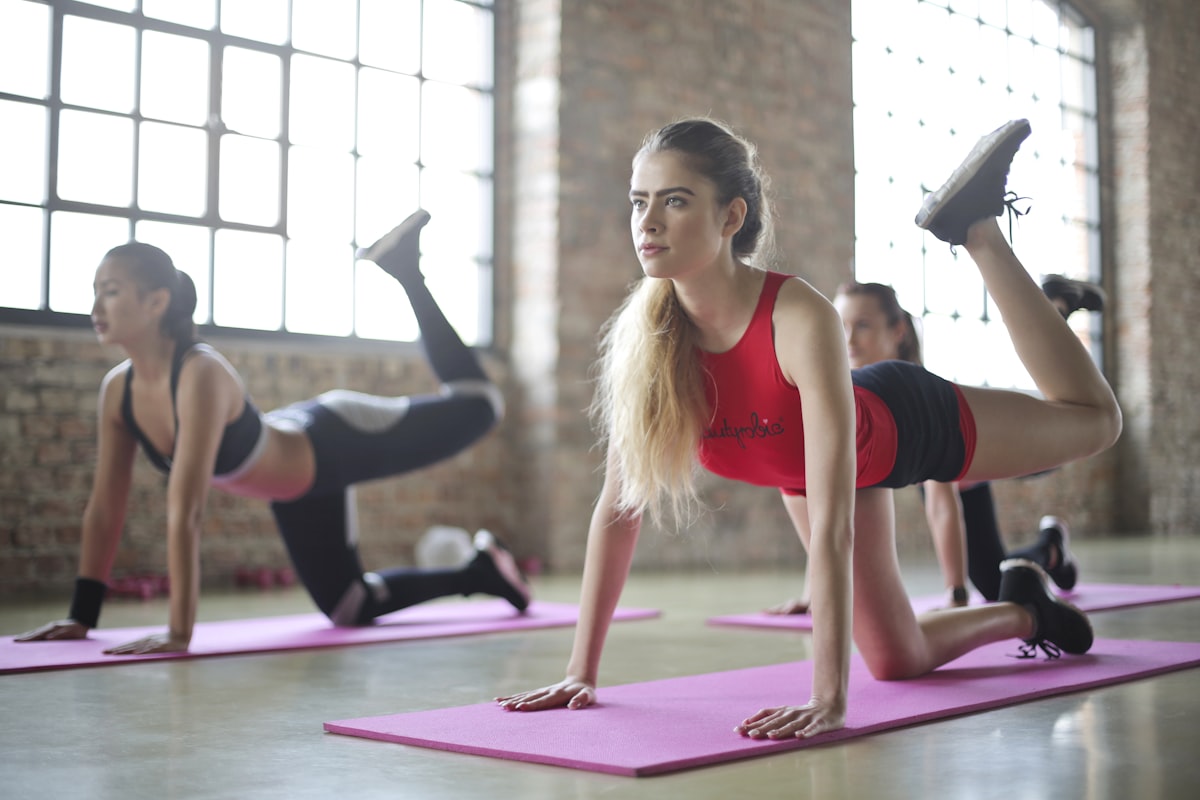
This is mat-based, no props, ten minutes. Keep the effort low. If it feels like a workout, you’ve gone too hard — the goal is regulation, not stimulus.
| Movement | Dose | What to feel for |
|---|---|---|
| Supine lateral breathing, knees bent | 10 breaths | Ribs widening sideways; exhale twice as long as the inhale |
| Pelvic tilts | 8 slow reps | Low back releasing into the floor without gripping the glutes |
| Knee sways / windshield wipers | 6 each side | Rotation through the low spine, shoulders staying heavy |
| Single-leg hip flexor stretch (supine, one knee hugged) | 30 sec each | Length at the front of the extended hip, not a pull in the groin |
| Thread the needle (side-lying or quadruped) | 6 each side | Upper-back rotation; let the exhale carry the turn |
| Legs up the wall or on a chair | 2–3 minutes | Nothing. That’s the point. |
Two honest notes. First, this is not the only approach that works — sleep hygiene basics (consistent wake time, dark room, cutting caffeine after noon, getting real morning light, which is easy in Utah and worth exploiting) are extremely well supported and should come first. Second, if you have a diagnosed condition or you’re pregnant, run any new movement past your provider. I’d rather you ask than guess.
Where reformer work adds something mat work can’t
Mat Pilates is genuinely excellent and free. So why bother with a reformer at all?
Springs. The reformer gives you graded assistance and graded resistance, which means you can access ranges of motion your body won’t offer on its own. Footwork opens the ankles and hips with support. Feet-in-straps work lets the hips move through range while the spine stays neutral and quiet — hard to replicate on a mat. The carriage also provides feedback: it moves unevenly when you’re compensating, so the machine tells you the truth before I have to.
There’s a rhythm factor too. The reformer’s tempo is naturally metronomic, and repetitive, predictable movement is calming to the nervous system in a way that unpredictable movement isn’t. In my studio, the sessions that leave people looking softest in the face are almost always the slow, spring-heavy, breath-led ones — not the sweatiest. You can see the class formats I teach on the class formats page if you want a sense of the range.
Building the habit: what a realistic first month looks like
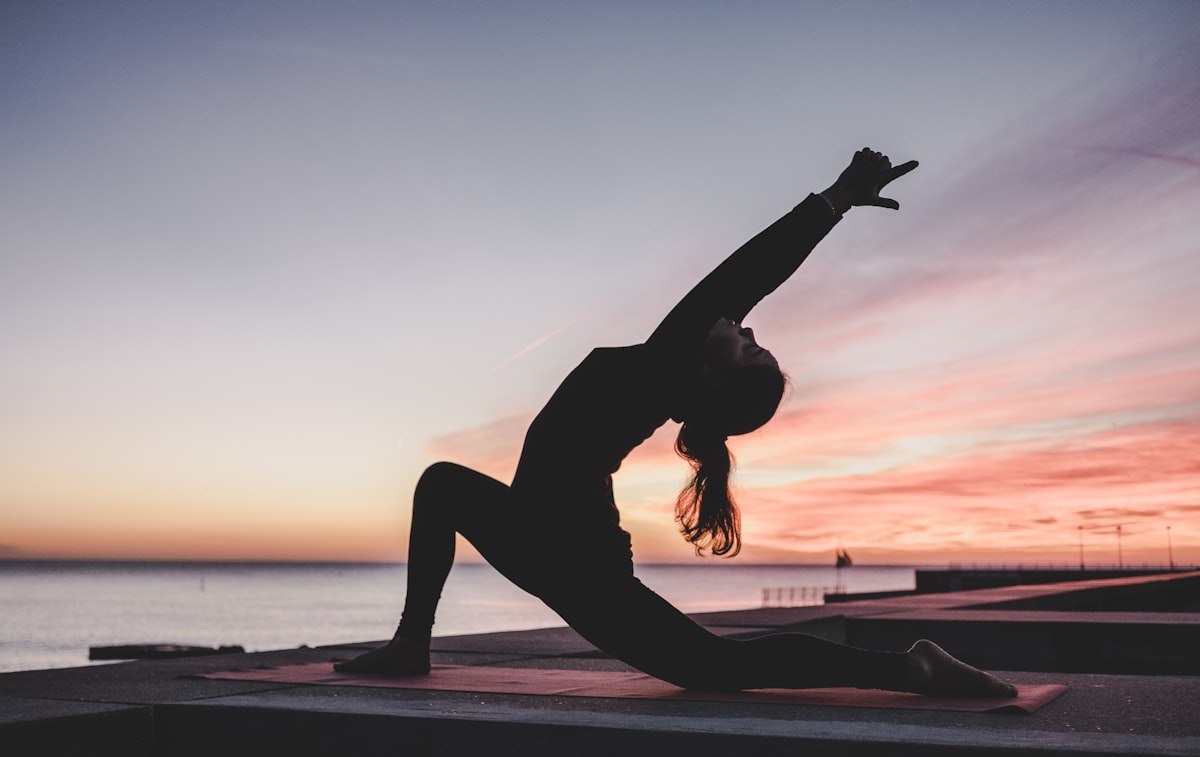
Expect breath and posture changes before you notice sleep changes. That’s the normal order. Breathing mechanics shift within a couple of weeks. Tissue length and strength take longer. Sleep depth typically follows the consistency of the habit rather than the intensity of any one session — which means two thoughtful sessions a week beats one heroic one.
A sane structure for a first month:
- Weeks 1–2: Two studio or guided sessions a week. Learn lateral breathing properly. Add the ten-minute evening sequence three nights a week.
- Weeks 3–4: Keep the sessions. Start using the breath pattern in bed — not as a technique to win at, just as something to do instead of thinking.
- Ongoing: Protect the last 45 minutes before bed. Screens down, lights low, spine moving a little. Boring is the feature.
The people who progress fastest with this are the ones who let it be unremarkable. No milestone, no metric, no tracking app scoring their night. Just a body that got used a reasonable amount and a breath that knows how to slow down.
Utah-specific things worth factoring in
Altitude is real. Higher elevation can fragment sleep, especially in the first nights after arriving from sea level, and dry air makes breathing through the nose harder — which quietly pushes people toward mouth breathing and shallower, more sympathetic respiration. A humidifier is a small thing that matters here.
Season matters too. Inversion weeks in the Salt Lake Valley keep people inside and sedentary. Ski and mountain-bike seasons swing the other way, loading hips and quads hard and late in the day. Both extremes benefit from the same corrective: controlled spinal movement, hip length, and a practice that ends calmer than it started. If you’re in Draper, Sandy, Cottonwood, Lehi or up in Park City and you want help figuring out where to start, get in touch and I’ll tell you what’s currently open.
What I look for when someone tells me they can’t sleep
Three things, in this order.
First, their breath at rest. Do the ribs move, or only the chest and shoulders? Shoulder breathers almost always over-recruit the outer abdominals and carry a braced ribcage all day. That bracing doesn’t switch off at bedtime.
Second, hip extension. Can they lie flat with legs long without the low back arching off the floor? If not, the front of the hip is short, and lying down becomes a low-grade stretch they’re holding all night.
Third, how they respond to slowing down. Some people find low-intensity work immediately soothing. Others get agitated — and that agitation is information. It usually means the nervous system has been running fast for so long that calm feels unfamiliar. Those people need shorter, more frequent exposures to slow work, not one long one.
None of that requires equipment to observe. It just requires someone watching.
The honest limits
I’ll say this plainly: Pilates is not a treatment for insomnia. It’s a way to remove two common obstacles — physical tension and nervous-system overdrive — so that your body’s own sleep drive can do its job. If you snore heavily, wake gasping, or feel unrefreshed no matter how long you sleep, please see a doctor about sleep apnea. If anxiety is running the show, therapy and movement together work better than movement alone. Good tools know their edges.
But within those limits, the effect is meaningful and it’s available to almost anyone. Using pilates for better sleep isn’t about a special routine or a secret exercise. It’s about giving your body enough honest movement during the day, teaching it to exhale fully, and letting the last hour of your evening be quieter than the rest. I’ve felt the difference in my own nights, and it’s the reason I teach the way I do. Start with ten minutes tonight — and if you’d like to work on it in the studio, reach out and ask about openings.
— Bianca
Quick recap
- Sleep improves through regulation, not exhaustion.
- Long exhales and lateral rib breathing raise vagal tone.
- Hip flexor length and thoracic mobility make lying flat comfortable.
- Consistency beats intensity — twice a week, unremarkably.
- Medical sleep disorders need a doctor, not a reformer.
Frequently asked questions
Is it bad to do Pilates right before bed?
Not if you keep it low-intensity. A slow, breath-led ten to fifteen minutes of spinal mobility and stretching is generally calming and is a reasonable pre-bed practice. A hard, fast, sweaty session within an hour of bedtime is a different story — it raises core temperature and heart rate and can delay sleep onset. Match the intensity to the hour.
How long before Pilates affects my sleep?
The breathing piece can help the same night, because a long exhale changes nervous-system state immediately. The structural changes — hip length, spinal mobility, general strength — take longer, usually four to six weeks of consistent practice. Improvements in sleep depth tend to track the consistency of the habit rather than the intensity of any single session.
Is reformer Pilates or mat Pilates better for sleep?
Both work, and they work slightly differently. Mat Pilates is free, portable and perfect for a short evening wind-down at home. The reformer adds spring assistance and resistance, which opens hip and shoulder range more easily and gives the body a steady, rhythmic tempo that many people find deeply settling. Using both is ideal: reformer during the day, mat before bed.
Can Pilates help if my sleep problem is anxiety-related?
It can help, as part of a bigger picture. Breath work and controlled movement reduce physical symptoms of anxiety and give the mind something concrete to attend to. But Pilates is not a substitute for mental health care, and I’d never present it as one. If anxiety is driving your sleep loss, pairing movement with professional support will get you much further than movement alone.
Does altitude in Utah affect how well this works?
Altitude and dry air can genuinely fragment sleep, especially in your first nights at elevation, and dry nasal passages nudge people toward shallow mouth breathing. Pilates breath training helps because it teaches slow, nasal, lateral breathing on purpose. Adding a humidifier and getting bright morning light are simple local adjustments that support the same goal.

About Bianca
I’m a certified reformer Pilates instructor and the founder and lead instructor at Alchemize Pilates in Utah. I teach small-group reformer classes, one-on-one privates and online programs for people along the Wasatch Front — from Salt Lake City and Cottonwood to Draper, Sandy, Lehi and Park City. My focus is breath, alignment and making strength feel sustainable rather than punishing.
Leave a Reply