
Can Pilates Replace Strength Training? The Honest Answer From a Reformer Instructor
It’s the question I get asked more than almost anything else. Someone walks into my studio, fresh from years of barbell training or gym circuits, and wants to know: can Pilates replace strength training? They’re tired. Their joints ache. They want something that feels more sustainable — but they don’t want to lose the strength they’ve built. I respect that question deeply. And I refuse to give a lazy answer.
The truth is layered. It depends on what “strength training” means to you, what your body needs right now, and what you’re actually chasing. So let’s walk through this together — with honesty, nuance, and a few things I’ve learned from teaching hundreds of clients along the Wasatch Front.
Can Pilates Replace Strength Training? The Direct Answer
Pilates can replace traditional strength training for most people whose goals center on functional strength, muscle tone, mobility, and longevity. However, if your primary goal is maximal muscle hypertrophy or powerlifting-level strength, Pilates alone won’t get you there. For the vast majority of people — especially those over 30 seeking sustainable fitness — reformer Pilates provides enough resistance and progressive challenge to build and maintain meaningful strength.

That answer deserves unpacking. So let me explain what I mean — and what I’ve seen with my own eyes over years of teaching.
What We Actually Mean by “Strength Training”
Here’s where the conversation gets muddy. When people ask this question, they’re usually picturing one of two things: either heavy barbell work (squats, deadlifts, bench press) or general resistance training designed to build muscle and improve body composition.
These are very different pursuits.
Traditional strength training in the powerlifting or bodybuilding sense focuses on progressive overload — continuously increasing the load your muscles work against. The goal is hypertrophy (bigger muscles) or maximal force production. The rep ranges are specific. The rest periods are calculated. The external load is the primary variable.
But most people walking into a gym aren’t training for a powerlifting meet. They want to feel strong picking up their kids. They want their bones to stay dense as they age. They want to look toned and feel capable. They want to move without pain when they’re hiking Millcreek Canyon on a Saturday morning.
For that version of strength training — the one that actually applies to daily life — Pilates is not just a substitute. It’s often superior.
How Reformer Pilates Builds Real, Functional Strength
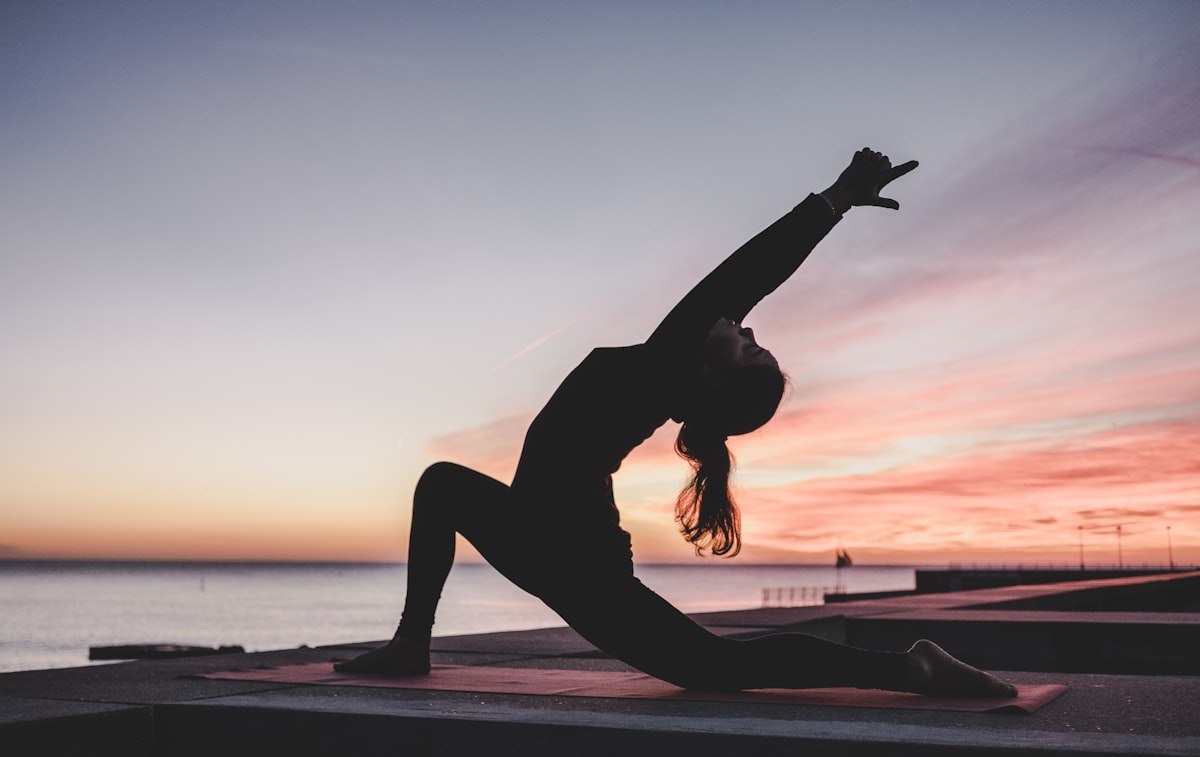
Joseph Pilates developed his method in the 1920s, and he called it “Contrology” — the science of control. That name matters. Pilates isn’t about moving weight from point A to point B. It’s about controlling your body through full ranges of motion, under resistance, with precision.
The reformer — that spring-loaded carriage you see in studios — provides variable resistance. Springs can be adjusted to create lighter or heavier loads. And because the carriage moves, your stabilizer muscles are constantly working. This means you’re not just training the “mirror muscles.” You’re training the deep, intrinsic muscles that actually protect your joints and create lasting strength.
In my reformer classes, I see this transformation constantly. A client who came to me after years of heavy lifting was stunned that she couldn’t hold a single-leg bridge on the reformer for more than a few seconds. Her squat max was impressive. Her stabilization was nonexistent. That gap is where injuries live.
Reformer Pilates builds strength in these specific ways:
- Eccentric loading: The springs create resistance as you lengthen muscles, which is one of the most effective ways to build functional strength and tendon resilience.
- Full-range muscle engagement: Unlike many gym machines that isolate a single joint, Pilates exercises ask multiple muscle groups to coordinate through complete ranges of motion.
- Core integration: Every single reformer exercise is a core exercise. Your deep abdominals, pelvic floor, and spinal stabilizers work continuously.
- Progressive resistance: By adjusting springs, tempo, leverage, and complexity, a skilled instructor can progressively overload your muscles — the same principle that drives strength adaptation in the weight room.
- Joint-friendly loading: Springs create smooth, even resistance that’s gentler on joints than gravity-loaded free weights, making it ideal for people with osteoarthritis, back pain, or prior injuries.
I’ve written a detailed comparison for anyone still weighing these two approaches — you can read my reformer Pilates vs. gym comparison for a side-by-side breakdown that’s specific to what’s available here in Utah.
Where Pilates Falls Short (I’ll Be Honest)
I love what I do. I believe reformer Pilates is one of the most intelligent forms of movement available. But I’d be doing you a disservice if I pretended it’s everything for everyone.
Here are the honest limitations:
Maximal strength and heavy loading. If you want to squat 300 pounds, Pilates won’t get you there. The reformer’s spring resistance tops out — and while it’s more than enough for general strength, it’s not designed for maximal load. You need a barbell for that.
Significant muscle hypertrophy. Building large, visible muscle mass requires high mechanical tension and training volume at specific intensity thresholds. Reformer Pilates will create lean, toned muscle. But if your goal is to dramatically increase muscle size, you’ll need heavier external loads than springs can provide.
Sport-specific power development. Athletes who need explosive power — sprinters, football players, Olympic lifters — need plyometric and heavy resistance training. Pilates is an extraordinary complement to those programs, but it doesn’t replace that specific stimulus.
Notice a pattern? These are all specialized, high-performance goals. For the vast majority of people — the ones who want to be strong, mobile, pain-free, and healthy into their 70s and beyond — Pilates delivers.
Can Pilates Replace Strength Training for Bone Density?

This is a question I hear frequently from my clients in Sandy, Draper, and throughout Utah County — particularly women approaching or in menopause. And it’s a critically important one.
Bone density improves in response to mechanical stress — basically, you need to load your bones. Research shows that resistance training is one of the most effective ways to do this. The question is whether Pilates provides enough load.
The answer: reformer Pilates absolutely provides meaningful resistance for bone health, especially for the spine and lower extremities. Studies have shown that Pilates can improve bone mineral density markers, particularly in postmenopausal women. However, for people at high risk of osteoporosis, I sometimes recommend supplementing with some weight-bearing exercise — even just walking, hiking the Wasatch trails, or adding a few weighted squats.
The beautiful thing is that these approaches aren’t enemies. In my studio, we often design programs that integrate both. The Pilates reformer handles 90% of the work. A few strategic weight-bearing additions fill in the gaps.
What I See With My Clients (Real Results)
I’ve been teaching Pilates for years now. I’ve worked with postpartum mothers, retired athletes, desk workers from the tech corridor in Lehi and Draper, ski enthusiasts getting ready for Park City season, and people recovering from surgery. Here’s what I consistently observe:
Clients who transition from gym-only routines to reformer Pilates report feeling stronger in daily life within 8–12 weeks. They can carry groceries differently. They notice their posture shifting. Their back pain fades. They sleep better. They move with a kind of fluidity they didn’t have before.
One client told me: “I used to bench press 185, and I felt strong at the gym. But I felt broken everywhere else. Now I feel strong in my life.”
That distinction matters more than any number on a barbell.
Another thing I notice: people stay. The injury cycle that plagues heavy lifters — the torn rotator cuff, the herniated disc, the knee that gives out — is dramatically reduced with Pilates. Because every movement is controlled, every joint is stabilized, and every repetition is intentional, my clients’ bodies hold up. Year after year.
The Both/And Approach: My Recommendation
If I’m being fully honest — and I always want to be — the ideal approach for most people isn’t either/or. It’s both/and.
I’d love for every person in Salt Lake City to have a reformer Pilates practice as the foundation of their movement life. Two to three sessions per week will transform your core stability, flexibility, muscular endurance, balance, and functional strength. From there, if you want to add some heavier lifting — great. Your Pilates practice will make you better at it and far less likely to get hurt.
But if you’re someone who can only commit to one modality? If time, budget, or preference means choosing? Pilates is the smarter long-term investment for most bodies. Especially as we age.
I built our class formats at Alchemize to make consistency realistic. Because the best program is the one you actually do.
Who Should Seriously Consider Pilates Over the Gym
Based on what I see every week, these groups tend to benefit most from making Pilates their primary strength practice:
- Adults over 40 seeking sustainable, joint-friendly strength
- Anyone recovering from injury or managing chronic pain
- Postpartum women rebuilding core and pelvic floor function
- Desk workers with postural dysfunction (rounded shoulders, tight hip flexors)
- Former athletes whose bodies need a smarter approach
- Anyone who’s burned out on gym culture and wants movement that feels good
- People focused on longevity, mobility, and aging well
If that sounds like you, I’d love to welcome you to our studio. You can book your first session here — no experience necessary.
The Bottom Line
So — can Pilates replace strength training? For the overwhelming majority of people, yes. Reformer Pilates provides genuine progressive resistance, builds functional muscle, improves bone density, protects your joints, and creates a kind of strength that shows up in your actual life — not just in a gym mirror. It won’t replace a competitive powerlifting program, and I’d never pretend it would. But for building a strong, resilient, capable body that carries you through decades of living well along the Wasatch Front and beyond? Pilates isn’t the substitute. It’s the upgrade.
— Bianca
Frequently Asked Questions
Can Pilates replace strength training for building muscle?
Pilates can build lean, functional muscle and improve muscle tone for most people. However, if your goal is significant muscle hypertrophy (large increases in muscle size), you’ll likely need to supplement with heavier weight training. For general muscle definition and functional strength, reformer Pilates is highly effective.
How many times per week should I do Pilates to replace the gym?
For reformer Pilates to serve as your primary strength practice, I recommend 3 sessions per week. Two sessions will maintain strength, but three provides the progressive challenge needed to continue building. Consistency matters more than intensity — showing up regularly yields better results than sporadic heavy sessions.
Is Pilates enough for bone health and osteoporosis prevention?
Reformer Pilates provides meaningful resistance that supports bone density, particularly in the spine and lower body. For individuals at high risk of osteoporosis, I recommend supplementing Pilates with weight-bearing activities like walking, hiking, or a few weighted exercises. The combination is powerful for long-term bone health.
Will I lose strength if I switch from weight lifting to Pilates?
You may notice a temporary decrease in maximal lift numbers, but most clients report feeling stronger in daily functional movements within 8–12 weeks. You’ll likely gain stability, mobility, and endurance that traditional weight training wasn’t providing. Many people discover strength they didn’t know they were missing.
Is reformer Pilates better than mat Pilates for replacing strength training?
Yes. The reformer’s spring-resistance system provides adjustable, progressive loading that mat Pilates (bodyweight only) cannot match. If your goal is to replace gym-based strength training, reformer Pilates is significantly more effective because it allows for greater resistance variation and full-body eccentric loading.

Keep reading
- Strength Training Alternative Reformer Pilates Utah
- Reformer Pilates for strength: serving Utah women
- Pilates for Men: The Strength Training You’re Missing
- Can You Do Reformer Pilates Every Day? Expert Advice
- Reformer Pilates for Arthritis: Joint-Friendly Strength Training
- Do You Need Grip Socks for Reformer Pilates? The Truth
Leave a Reply