
If you live with widespread pain and bone-deep fatigue, you have probably been told to exercise — and you have probably tried, crashed, and decided movement is not for you. Pilates for fibromyalgia gentle movement therapy exists in the space between those two extremes: not pushing through, not giving up. Something slower, smaller, and far more deliberate than what most people picture when they hear the word “workout.”
I teach reformer Pilates here along the Wasatch Front, and if you are arriving cautiously, that caution is well earned. Chronic pain teaches people that enthusiasm gets punished. So we do the opposite of enthusiasm. We do precision.
Why intensity is the wrong lever for a sensitized nervous system
The short answer: Fibromyalgia involves central sensitization — the nervous system amplifies pain signals rather than the tissue being damaged. Gentle, low-load Pilates works because it delivers movement in doses small enough that the nervous system does not register threat, while still restoring range, circulation, breath capacity, and confidence in the body.
That distinction matters enormously. When someone with a healthy pain system trains hard, soreness is feedback. When someone with a sensitized system trains hard, soreness can be a flare that lasts a week. The lever you pull is not intensity. It is consistency, position, and breath.
Pilates was developed by Joseph Pilates in the 1920s, and much of it was built on bodies that could not do much — bedridden patients, injured dancers, people rehabilitating. The springs on a reformer were never designed only to add resistance. They were designed to assist. That single fact makes the equipment unusually well suited to chronic pain work.
What gentle movement therapy actually looks like on the reformer
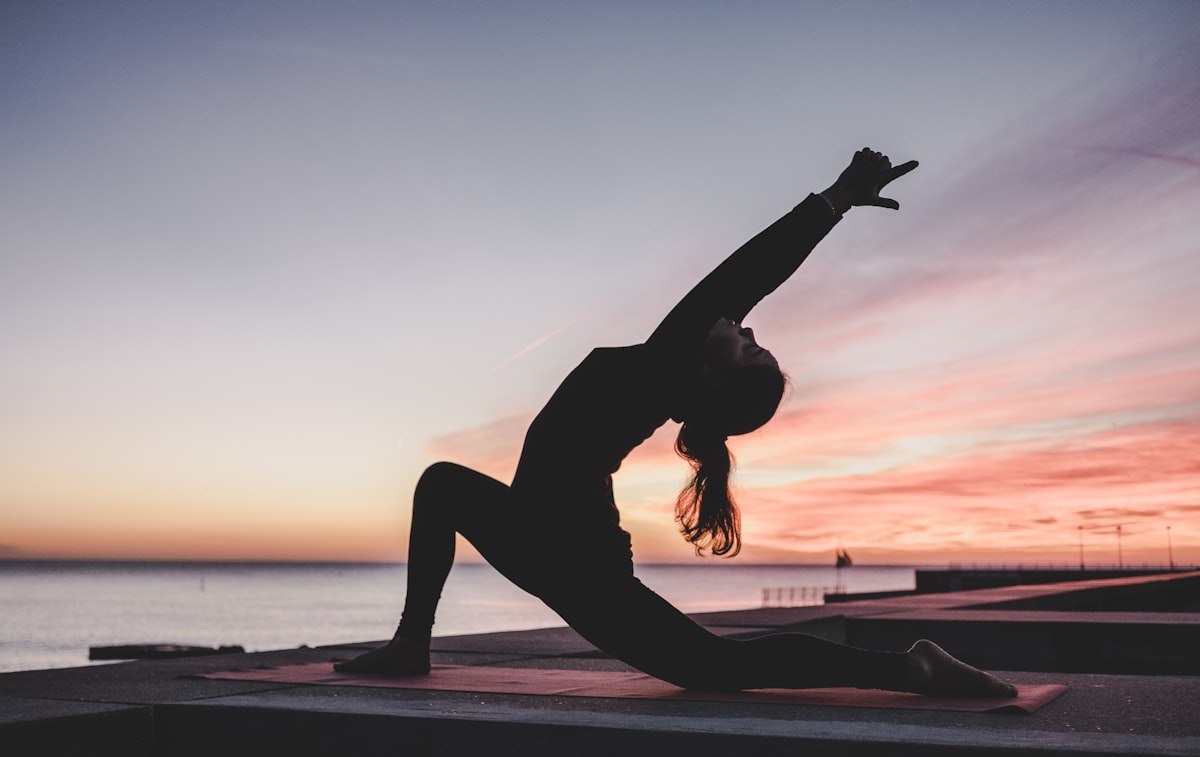
Most people imagine Pilates as ab work. In a chronic pain context, that is close to the least important part of it.
What I actually look for in the first few sessions:
- Where the breath lives. Chronic pain tends to drive breathing up into the neck and shoulders. Shoulder breathers almost always over-recruit the outer abdominals and grip through the jaw. Nothing downstream improves until that changes.
- Which positions are neutral. Supine on the carriage with the feet in straps, with springs supporting the legs, is often the most tolerable place a painful body can be. Gravity is partly removed. That is not a lesser workout — it is a smarter starting line.
- How fast fatigue arrives. Not muscular fatigue. The other kind — the fog that rolls in mid-session. That tells me the dose.
- What the body does after. The session is not the data point. The next 48 hours are.
A gentle session might be footwork with light springs, supported bridging, side-lying leg work, a little thoracic rotation, and a long stretch series. Twenty minutes of actual movement inside a longer window, with real rest built in. No burn. No shaking. No “one more.”
The pacing rule I teach for chronic pain and Pilates
The single most useful concept borrowed from chronic pain rehab is the quota: you decide the amount of work in advance, based on what you can do on a bad day, not a good one. Then you stop there — even when you feel fine.
This is counterintuitive and genuinely hard. On a good day, the temptation to bank progress is enormous. But the boom-and-bust cycle is what keeps most people stuck. Push on Tuesday, collapse Wednesday through Friday, restart Saturday from zero. Nothing accumulates.
| Boom-and-bust approach | Graded, quota-based approach |
|---|---|
| Work to how you feel that day | Work to a pre-set amount |
| Good days get overloaded | Good days stay the same size |
| Bad days get skipped entirely | Bad days get a reduced version, not zero |
| Progress resets constantly | Load increases in small, planned steps |
| Movement becomes something you fear | Movement becomes predictable |
Predictability is the therapeutic ingredient. A nervous system on high alert calms down around things it can forecast.
Why the reformer suits sensitive bodies better than the mat

Mat Pilates is wonderful, and I will not pretend otherwise. But for a painful, deconditioned, fatigued body, the mat asks you to manage your entire bodyweight against gravity with no help. The reformer does not.
Three practical advantages:
- Springs can assist. A heavier spring in a leg-press position means less effort, not more. You can offload a movement until it is genuinely available, then remove assistance a sliver at a time.
- You are supported. Lying on a padded carriage with head support, straps, and a footbar changes how much stabilizing work the small painful muscles have to do.
- The range is guided. The carriage travels on a track. That removes a huge amount of decision-making and wobble, which lowers the cognitive load — and cognitive load is not a small thing when brain fog is part of your diagnosis.
Our small-group reformer classes and one-on-one private sessions both use this equipment, but they suit different starting points. If pain is unpredictable and you need the springs and the tempo adjusted in real time, privates are the honest recommendation. If you have a reasonable baseline and want structure and community, group work can be a good fit. If you are unsure which is right for you, reach out and I’ll tell you what’s currently open and we can talk it through before you commit to anything.
What to expect in the first six to eight weeks
I want to be careful here, because the internet is full of promises about chronic pain that nobody can keep. Pilates is not a cure for fibromyalgia. There is no cure for fibromyalgia. What movement can reasonably influence is function, sleep quality, stiffness, mood, and the fear that builds around motion.
In general — and this is how bodies typically respond to graded exercise, not a claim about any particular person — the sequence tends to go like this:
- Weeks 1–2: Learning positions. Possibly some novel soreness. This is the phase where the temptation to do more is strongest and should be resisted hardest.
- Weeks 3–4: Breath and posture usually shift before strength does. Sitting and standing feel slightly less effortful.
- Weeks 5–8: Morning stiffness often shortens. Range of motion improves. The recovery window after a session narrows.
Strength gains lag behind all of this, and that is fine. The point of gentle movement therapy is not to get strong quickly. It is to make movement non-threatening again so that strength has somewhere to accumulate.
Honest limitations, and the other things that help

I am a certified reformer Pilates instructor. I am not a physician, a physical therapist, or a rheumatologist, and fibromyalgia management is genuinely multidisciplinary. Pilates sits alongside — never instead of — the care team you already have.
Things that work well next to a Pilates practice:
- Warm water exercise. Hydrotherapy has good support in the fibromyalgia literature. Buoyancy does what springs do.
- Walking, in small doses. Utah gives us dry air and long light. A flat fifteen minutes on the Jordan River Parkway beats an ambitious hike in Big Cottonwood that costs you three days.
- Sleep work. Non-restorative sleep drives pain amplification. No exercise program outruns a broken sleep cycle.
- Restorative yoga and breathwork. Different tool, same nervous system target.
A note on Utah specifically: altitude and dry air along the Wasatch Front mean hydration matters more here than most people expect, and winter inversion weeks along the valley floor can flatten energy for reasons that have nothing to do with your training. Plan for smaller doses in January. That is not backsliding — that is pacing.
How to start without setting off a flare
If you are considering pilates for fibromyalgia as gentle movement therapy, start smaller than your ego wants.
- Talk to your physician or PT first, especially if you have other diagnoses in the mix.
- Begin one-on-one if you can, so springs and tempo can be individualized while you learn.
- Set a quota for the first session and honor it, good day or bad.
- Track the 48 hours after, not the hour during.
- Reduce, do not skip, on hard days. Five minutes of breathing and ankle circles keeps the thread intact.
- Expect the timeline to be longer than any fitness marketing suggests. Slow is the strategy, not the consolation prize.
You can look through the class formats here, and if you would rather just ask a person whether this is a reasonable fit for your body, get in touch through the booking page and I will give you a straight answer — including if I think another approach would serve you better first.
The quiet case for showing up small
The thing nobody tells you about chronic pain is how much of the battle is about trust. Not trusting your body is exhausting in its own right. Every stair, every grocery bag, every offer to go up to Park City for the weekend runs through a mental risk calculation.
What careful, well-dosed movement gives back is not primarily muscle. It is evidence. A session that does not cost you anything the next day is a data point. Ten of them are an argument. Enough of them and the calculation starts to change.
That is the real work of pilates for fibromyalgia gentle movement therapy — not chasing intensity, but rebuilding a relationship with a body that has felt unreliable for a long time. It is slow. It is unglamorous. It is, in my experience teaching along the Wasatch Front, one of the more worthwhile things a person can do with a Tuesday morning.
Frequently asked questions about Pilates and fibromyalgia
Is Pilates safe if I have fibromyalgia?
For most people, yes, when the load is appropriate and the pacing is deliberate. Low-impact, controlled exercise is widely recommended in fibromyalgia management. The risk is not the movement itself — it is doing too much too soon. Clear it with your physician or physical therapist first, especially if you have coexisting conditions.
Will Pilates make my pain worse?
It can, temporarily, if the dose is wrong. That is why quota-based pacing matters so much. A well-dosed session should leave you feeling loose or mildly worked, not wiped out. If the 48 hours afterward are rough, the answer is to reduce the amount, not to abandon the practice.
Should I start with private sessions or group classes?
If your symptoms are unpredictable or you are new to movement, one-on-one is usually the better starting point, because springs, range, and tempo can be adjusted for you in the moment. Small-group reformer classes work well once you have a stable baseline. Reach out and I’ll tell you what’s currently open and we can figure out which makes sense.
How often should I practice?
Consistency beats frequency. Two shorter sessions a week that you can reliably recover from will do more than one long session that costs you the rest of the week. Many people also add very brief daily breathing or mobility work at home between sessions.
Is reformer Pilates better than mat Pilates for chronic pain?
Often, yes — because the reformer’s springs can assist rather than only resist, and the carriage provides support and a guided range of motion. Mat Pilates is valuable too, but it asks the body to manage full bodyweight against gravity with no help, which is a bigger ask for a painful, fatigued system.
— Bianca

About Bianca
Bianca is the founder and lead instructor at Alchemize Pilates, a boutique reformer studio serving clients across the Wasatch Front — Salt Lake City, Cottonwood, Sandy, Draper, Lehi and Utah County. A certified reformer Pilates instructor, she specializes in precise, unhurried teaching for bodies that need a slower on-ramp. She writes about movement, recovery, and the long game of feeling at home in your own body.
Leave a Reply